Does Ford Own Shelby
As an Amazon Associate we earn from qualifying purchases.
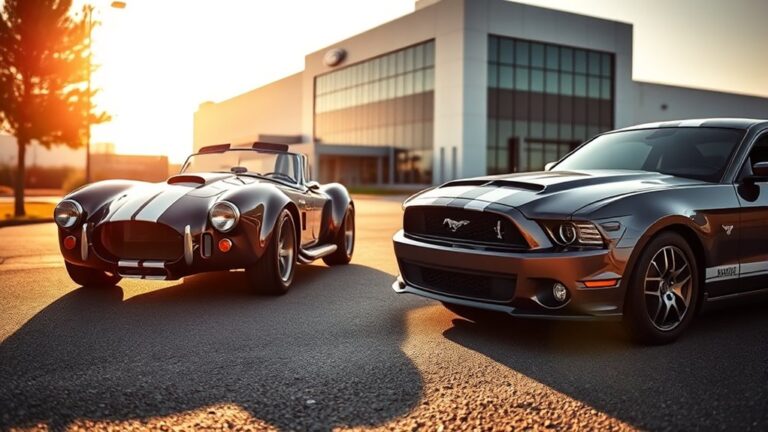
You may wonder if Ford actually owns Shelby, but the evidence says otherwise. Shelby American still operates as an independent, privately held company that licenses the Shelby name and works with Ford on select performance cars and parts.
Ford controls the core platforms and production, while Shelby keeps branding and engineering input. That split explains the confusion, and it’s where the real story starts.
Key Takeaways
- No, Ford does not own Shelby; Shelby American operates as an independent performance brand.
- Shelby owns and controls its trademarks, while Ford only licenses certain Shelby names and models.
- Ford and Shelby collaborate on performance Mustangs, but the relationship is contractual, not corporate ownership.
- Ford builds the vehicles and Shelby adds branding, tuning, and limited-run performance packages.
- Their partnership boosts Mustang’s halo effect, but Shelby remains a separate company.
Does Ford Own Shelby Today?
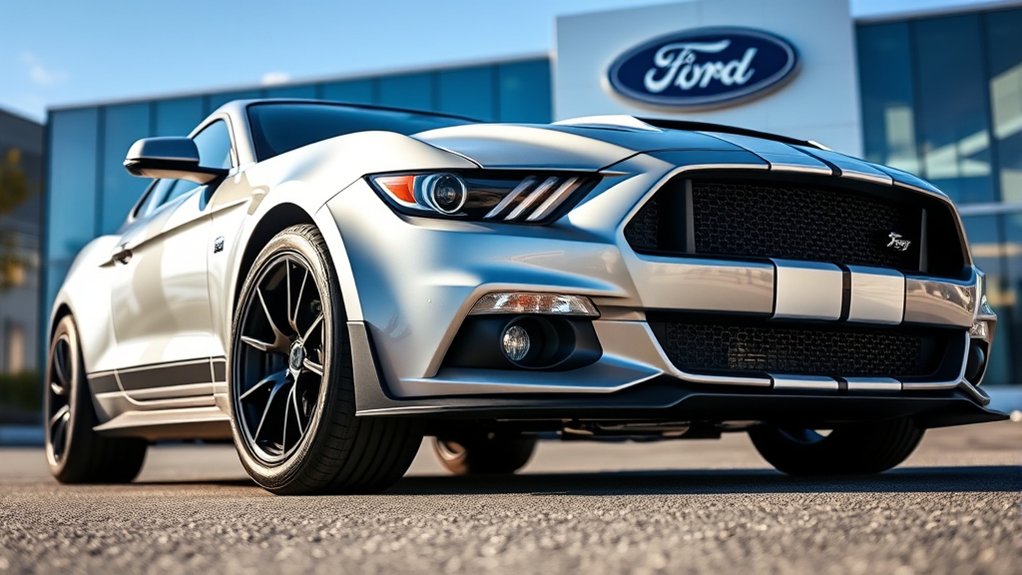
No. Ford does not own Shelby today. You should treat Shelby as a separate performance name used in limited, strategic ways.
Ford’s connection is operational, not ownership-based, and that distinction matters when you analyze branding strategy. Shelby targets niche markets, especially buyers who want high-output Mustangs with heritage cues and premium positioning.
The result is a collaboration model: Ford supplies the platform, and Shelby adds value through tuning, styling, and exclusivity. You can see this in pricing, production volume, and badge placement.
Those signals show a controlled brand extension rather than full corporate control. So if you’re asking whether Ford owns Shelby outright, the data says no; Ford leverages the name to reinforce performance credibility without absorbing the brand itself.
Who Owns the Shelby Brand Now?
You’ll find that the Shelby brand is owned and managed by Shelby American, the company Carroll Shelby founded and that still controls the name today. Ford doesn’t own the brand, but it does hold specific licensing and collaboration rights tied to certain Shelby-badged vehicles and performance programs.
That split means you should separate brand ownership from product and trademark agreements when you assess Ford’s role.
Shelby Brand Ownership
Today, Shelby is owned and managed by Carroll Shelby International, with Shelby American serving as the core brand and performance arm behind the name. You can trace ownership to Shelby Licensing, which controls trademarks and royalty streams, while Ford only partners on select projects.
That structure keeps the brand independent and lets you see how creative branding and marketing strategy protect equity.
| Entity | Role |
|---|---|
| Carroll Shelby International | Owns and manages rights |
| Shelby Licensing | Handles trademarks |
| Ford | Licensing partner |
You should view this as a split model: Ford supplies platforms, but Shelby controls brand identity. The data points to a clear conclusion: Ford doesn’t own Shelby, and the brand’s value comes from controlled licensing, heritage management, and targeted performance positioning.
Shelby American Today
So, who owns Shelby American today? You do well to separate the brand from Ford: Shelby American operates as a privately held company under the Carroll Shelby family’s estate and business interests.
The name carries decades of history and branding, but it isn’t Ford’s corporate asset. Instead, Shelby American focuses on licensed production, aftermarket parts, and performance collaborations with automakers and suppliers.
- Shelby controls its own brand identity.
- Ford builds some models that carry Shelby-tuned names.
- Third-party partners support engineering and distribution.
- The company monetizes heritage through trademarks, merchandise, and limited-run vehicles.
In practical terms, you’re looking at an independent marque that leverages its legacy while partnering strategically, not a division owned by Ford.
Ford And Shelby Rights
Who owns the Shelby brand now, and what rights does Ford actually have? You should know Shelby American controls branding ownership, while Ford holds limited licensing rights for specific co-branded vehicles and historical references.
That split keeps their relationship legal, not proprietary. In practice, you see controversial partnerships shaped by contracts, not control.
| Entity | Rights |
|---|---|
| Shelby American | Owns Shelby trademarks |
| Ford | Licenses selected names |
| Dealers | Sell approved models |
| Buyers | Receive co-branded vehicles |
| Courts | Enforce agreements |
You can think of it as a shared road with firm boundaries. Ford may build Shelby-badged performance cars, but it doesn’t own the brand outright.
Shelby decides how its name appears, and Ford follows the agreement’s scope, timing, and model-specific limits.
How Ford and Shelby Started Working Together?
Ford and Shelby first teamed up in the early 1960s, when Carroll Shelby began building high-performance cars that could help Ford challenge Chevrolet on the track and in showrooms. You can trace the deal to Ford’s need for speed, credibility, and sharper Ford partnerships.
Shelby brought racing insight; Ford supplied engineering, funding, and production scale. The collaboration moved fast because both sides saw measurable upside. 1. Ford gained performance legitimacy. 2. Shelby gained factory backing. 3. Shared testing improved output. 4. Shelby branding gave Ford’s image a harder edge.
You should view this as a strategic alliance, not a merger. Each side kept control of its own identity while aligning on goals, and that structure made the relationship durable.
The Cars That Made Ford and Shelby Famous?
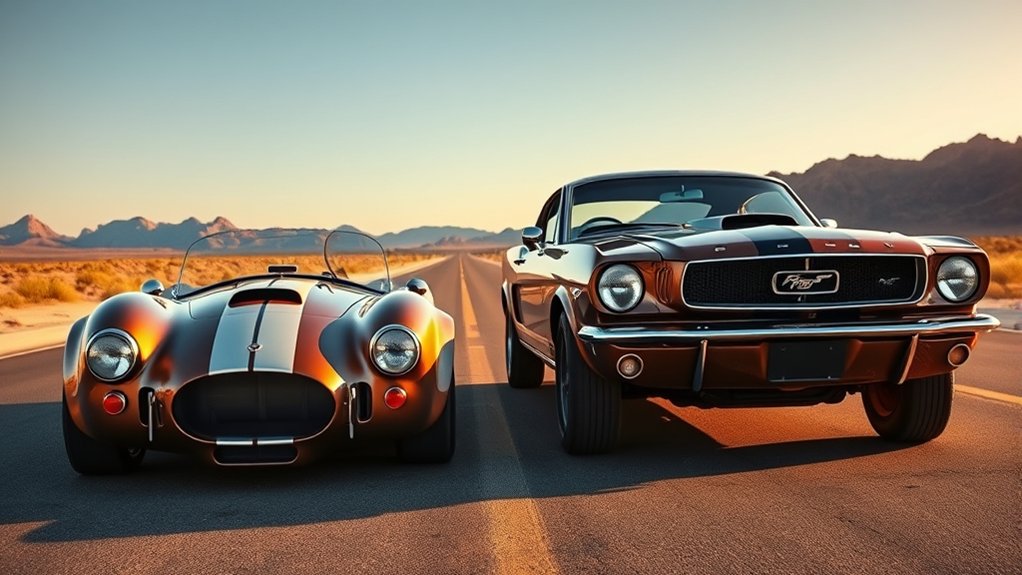
You can trace Ford and Shelby’s fame to two defining nameplates: the Shelby Cobra and the Mustang. The Cobra proved Shelby could turn lightweight engineering and big power into race-winning results, while the Mustang gave Ford a high-volume platform for measurable performance gains.
Together, they built a brand identity that still shapes how you evaluate both companies today.
Shelby Cobra Legacy
The Shelby Cobra legacy is the core reason the Ford Shelby relationship still matters today: the AC Shelby Cobra, especially the 289 and 427 variants, turned a lightweight British chassis into a brutal American performance icon and gave Shelby a measurable racing and sales impact.
You can trace its value through clear metrics, not nostalgia, and ignore any unrelated topic or random discussion.
- It won races.
- It moved showroom interest.
- It built Shelby’s brand equity.
- It proved Ford-backed engineering could beat heavier rivals.
When you assess Ford and Shelby, you see the Cobra as proof of concept: limited production, high visibility, and outsized cultural return. That legacy still defines how you judge ownership, licensing, and historical influence today.
Mustang Performance Heritage
Mustang performance heritage is where the Ford-Shelby story became a mass-market phenomenon, because Shelby’s upgrades turned Ford’s pony car into a legitimate track and street threat. You can see the impact in the GT350 and GT500: stiffer suspension, stronger brakes, higher output, and sharper aerodynamics. Those changes didn’t just sell cars; they built identity.
| Model | Core gain | Market effect |
|---|---|---|
| GT350 | Handling | Club-racing credibility |
| GT500 | Power | Halo-car demand |
| Boss rivals | Benchmark | Forced Ford response |
If you study the numbers, you’ll notice Shelby gave Ford performance credibility and volume together. That’s why heritage debates keep resurfacing, and why branding ethics matter: you’re not just buying badges, you’re buying a shared legacy.
What Ford Owns in Shelby Models?
Ford owns the core Mustang platform, the drivetrain engineering, and the production infrastructure behind Shelby-branded Mustangs, while Shelby American typically contributes performance tuning, badging, and limited-run conversion work. You can trace Ford ownership in the hardware, safety systems, and mass-production economics that support each Shelby model.
Brand licensing lets Ford use the Shelby name while keeping control of the base vehicle.
- Platform: Ford designs the chassis and body structure.
- Powertrain: Ford supplies engines, transmissions, and calibration.
- Manufacturing: Ford runs assembly, quality control, and supplier integration.
- Licensing: Shelby branding adds market value without transferring ownership.
That split means you’re buying a Ford-built performance car with Shelby identity layered on top. Ford holds the asset base; Shelby’s role stays contractual, specific, and limited.
Where Shelby American Fits Today?
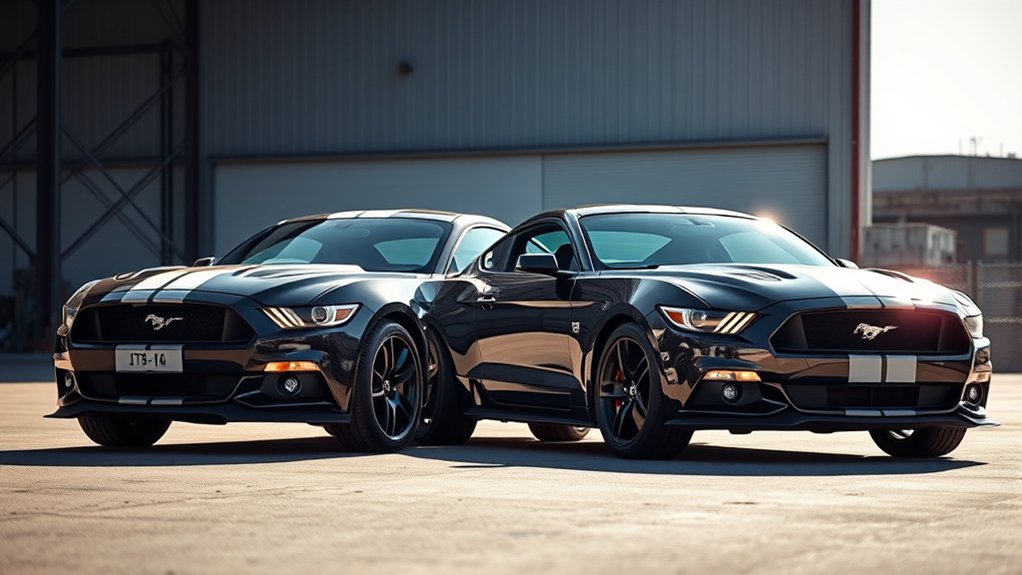
Today, Shelby American fits in as a specialized performance partner, not a Ford division. You can think of it as a low-volume engineering and branding operation that works around Ford platforms.
A specialized performance partner, Shelby American operates as a low-volume engineering and branding outfit around Ford platforms.
Shelby American focuses on limited-run Mustangs, aftermarket parts, and licensed performance packages, while Ford handles mass production, global distribution, and core vehicle architecture. That split keeps the business lean and measurable.
You’ll also see it relies on distributor relationships to move parts and vehicles efficiently, plus branding strategies that preserve exclusivity and price premiums. The result is a niche role with clear boundaries: Ford supplies the base product, and Shelby American adds identity, tuning, and scarcity.
In market terms, that makes Shelby relevant, profitable, and distinct without being owned by Ford.
Why People Think Ford Owns Shelby?
Because Shelby and Ford have been tied together for decades, it’s easy to assume they’re the same company. You see that overlap in badges, launch events, and shared performance models, and the line blurs fast. The confusion comes from 4 factors:
- Ford has sold Shelby-branded Mustangs.
- Shelby parts and trim often appear on Ford platforms.
- Carroll Shelby’s name stayed visible through licensing.
- Marketing campaigns intentionally linked the brands.
Those branding strategies created durable marketing myths, especially when Ford used Shelby for halo cars that boosted showroom traffic. You can track the pattern in sales data: limited-run Shelby models drew attention to Ford, not ownership.
What the Ford-Shelby Relationship Means Today?
What matters now is less about ownership and more about how the two brands operate in practice. You can see Ford and Shelby as linked by brand partnerships, not a simple parent-subsidiary structure.
Ford builds the vehicles, while Shelby adds performance identity, trim strategy, and historical cachet. That split matters because it shapes pricing, licensing, and customer perception.
You’re really looking at marketing rights and product collaboration, not total control. Shelby American still uses its own badge, engineering decisions, and aftermarket influence, while Ford benefits from the halo effect on Mustang sales.
In practice, the relationship helps Ford sell aspirational performance models and lets Shelby stay relevant without becoming a mass-market division. The data point is straightforward: shared equity, separate operations, mutual gain.
Frequently Asked Questions
When Did Ford First Collaborate With Carroll Shelby?
Ford first collaborated with Carroll Shelby in 1964, when you see the Shelby collaboration begin with the Cobra-based Ford GT40 program, setting up a data-driven performance partnership that reshaped motorsports and street performance.
Is Shelby American Still an Independent Company?
Yes, Shelby American still operates as an independent company, though you’ll see corporate partnerships shape its projects. Like a lone workshop sharing blueprints with neighbors, its independence status remains intact while collaboration boosts reach and performance.
Which Shelby Models Were Built on Ford Platforms?
You’ll find most modern Shelby models built on Ford platform partnerships, especially the GT500, GT350, and GT.
Shelby engineering collaborations also shaped earlier Cobras, Mustang-based Super Snakes, and other limited-production performance variants.
Did Carroll Shelby Ever Work Directly for Ford?
No, you’ll find Carroll Shelby didn’t work directly for Ford; he operated independently. His Ford collaboration came through contracts and partnerships, not employment, shaping iconic performance projects with sharp, selective, strategically aligned engineering.
Are Modern Shelby Mustangs Officially Made by Ford?
No, you’re not getting a pure Ford product; modern Shelby Mustangs come from Ford and Shelby licensing. Monitoring ownership and branding strategy shape badges, engineering roles, and limited-series approvals across the lineup.
Conclusion
So, does Ford own Shelby? No—you’re looking at a partnership, not a takeover. Ford builds the hardware; Shelby layers on the legend. Shelby American still operates independently, licensing its name and shaping the performance identity you associate with those wild, snarling cars.
If you think Ford swallowed Shelby whole, that’s a myth doing burnout laps. Today, the relationship is contractual, selective, and fiercely brand-driven—more like a precision-tuned alliance than a corporate merger.
In conclusion, Ford does not own Shelby but collaborates closely with the iconic brand to deliver high-performance vehicles that carry the Shelby legacy.


