Does Ford Edge Have 4 Wheel Drive
As an Amazon Associate we earn from qualifying purchases.
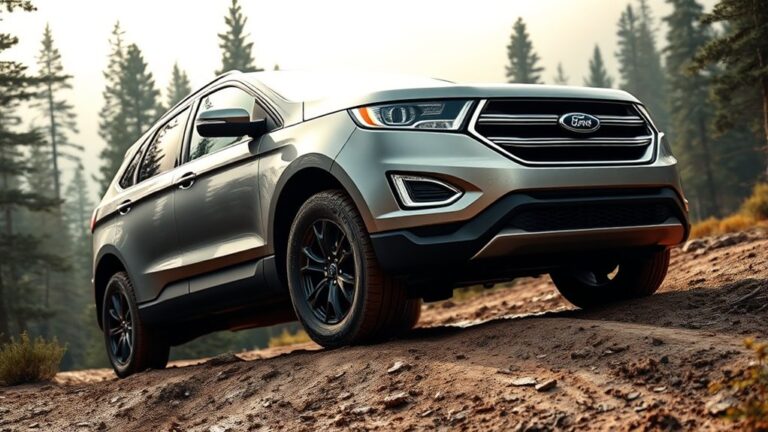
About 70% of Ford Edge buyers choose trims with AWD, which may make you assume the Ford Edge has true 4WD. It doesn’t. You get an automatic all-wheel-drive system that sends power to the rear wheels only when traction drops, while staying front-biased in normal driving.
There’s no transfer case or low-range gear, so the Edge handles slick roads well—but the details can still affect which trim you should pick.
Key Takeaways
- The Ford Edge does not offer traditional 4-wheel drive with a transfer case or low-range gearing.
- Ford Edge models can be equipped with automatic, on-demand all-wheel drive instead.
- AWD mainly drives the front wheels and sends power rearward when traction is reduced.
- This system improves grip in rain, snow, and light off-road conditions, but it is not true 4WD.
- AWD availability varies by trim and model year, so check the exact Edge build sheet or window sticker.
Does the Ford Edge Have 4 Wheel Drive?
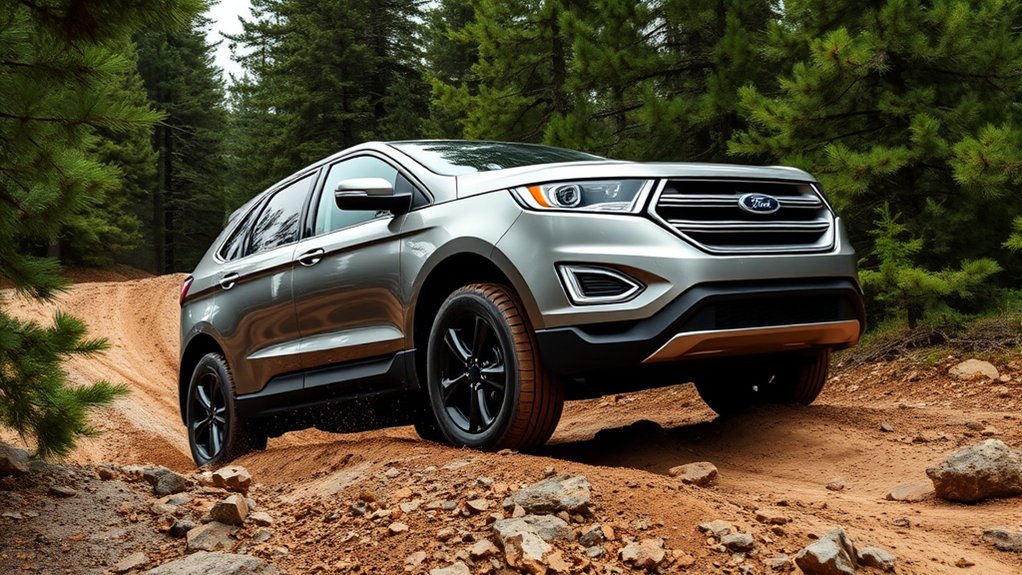
Yes, the Ford Edge can be equipped with all-wheel drive, but it does not offer a traditional 4-wheel-drive system. You get AWD on select trims, which routes power automatically when traction changes.
Yes, the Ford Edge offers available AWD, but it does not use a traditional 4-wheel-drive system.
You won’t find a driver-selectable 4WD transfer case or low-range gearing, so the Edge works differently from body-on-frame SUVs. This matters if you compare capability, edge maintenance, and operating cost, because AWD systems usually need less manual input than part-time 4WD setups.
You can still expect confident handling in rain, snow, and light gravel. Fuel efficiency may be slightly lower with AWD than with front-wheel drive, since added hardware increases weight and drivetrain losses.
If you want a crossover with traction assistance rather than a true truck-style 4WD layout, the Edge fits that role.
How Ford Edge AWD Works
Ford Edge AWD works as an automatic, on-demand system that sends power to the rear wheels only when the vehicle detects reduced traction. You drive with front-wheel bias most of the time, while sensors monitor wheel slip, throttle input, and road conditions.
When needed, the system can distribute torque to help maintain grip and stability. This setup reflects modern AWD technologies, not drivetrain misconceptions about constant full-time power.
- Dry pavement: you usually feel normal front-wheel-drive behavior.
- Rain or snow: the system can engage rear support quickly.
- Acceleration or cornering: torque management helps control wheel slip.
You don’t need to switch modes for basic operation, because the system reacts automatically. This design improves traction without requiring driver intervention.
How Ford Edge AWD Differs From 4WD
AWD and 4WD aren’t the same, even though both send power to more than one axle. In your Ford Edge, AWD works automatically and varies torque as traction changes, while traditional 4WD usually locks front and rear axles together more firmly.
You don’t switch the Edge into a separate off-road mode like many 4WD trucks use. Instead, its system helps maintain edge dynamics by routing power where it’s needed for stability and grip on pavement, rain, or light snow. That means you get a smoother, more road-focused response than a part-time 4WD setup.
From a maintenance standpoint, AWD reliability depends on regular service, fluid checks, and keeping tire sizes matched so the system can operate as designed.
Which Ford Edge Trims Offer AWD?
Across the Edge lineup, AWD is typically available on most trims rather than reserved for just one version. You can usually find it on SE, SEL, ST-Line, Titanium, and ST trims, though availability can vary by model year and package.
AWD is typically available across most Edge trims, including SE, SEL, ST-Line, Titanium, and ST.
AWD helps you manage shifting dynamics by sending power to the rear wheels when front-wheel traction drops. It also works with traction control to improve grip in rain, snow, or light off-road conditions.
- SE/SEL: Often offer AWD as an option.
- ST-Line/Titanium: Commonly pair comfort or styling upgrades with AWD.
- ST: Usually includes AWD for stronger performance and control.
You should always check the exact window sticker or build sheet, since Ford can change trim availability from year to year.
Frequently Asked Questions
What Is the Ford Edge Towing Capacity?
The Ford Edge tows up to 3,500 pounds when you properly equip it. You should check edge performance specs and follow vehicle maintenance guidelines, since towing capacity varies by trim, drivetrain, and factory-installed towing package.
Does Ford Edge Require Premium Gas?
You don’t need premium gas in your Ford Edge; regular unleaded works. Like a steady engine pulling a trailer, it balances efficiency and power.
Only performance trims may recommend premium, depending on your Ford Edge towing capacity.
How Much Cargo Space Does the Ford Edge Have?
You get 39.2 cubic feet behind the rear seats and 73.4 cubic feet with them folded. You can fit groceries, luggage, or gear easily, making the Ford Edge a practical crossover with generous cargo space.
What Safety Features Come Standard on the Ford Edge?
You get Ford Co-Pilot360 standard: automatic emergency braking, blind-spot monitoring, lane-keeping assist, rear cross-traffic alert, and a rearview camera. Nearly 40% of crash prevention comes from these safety features, supporting two word discussion ideas.
Is the Ford Edge Good for Snow Driving?
Yes, you’ll find the Ford Edge decent for snow driving, especially with available AWD and traction control. Its stable road handling helps on slick streets, but winter tires still improve grip, braking, and overall confidence.
Conclusion
So, if you’re asking whether the Ford Edge has 4 wheel drive, the answer is no in the traditional sense. You get an automatic AWD system that usually sends power to the front wheels and shifts torque rearward when traction drops.
For example, if you’re driving on a wet highway or a snowy driveway, the system can help improve grip without any driver input. It’s practical, but it isn’t the same as a true 4WD setup.
In conclusion, while the Ford Edge does not have 4 wheel drive, its AWD system effectively enhances traction and stability when needed.


