Does 2000 Ford f150 Have a Triton Engine
As an Amazon Associate we earn from qualifying purchases.
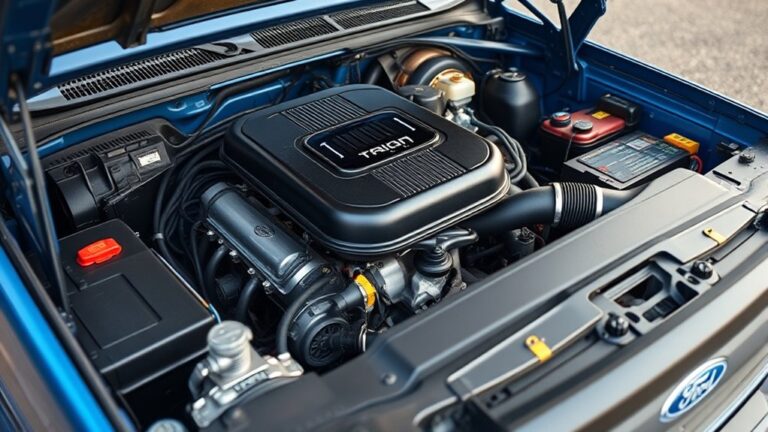
If you’re wondering whether a 2000 Ford F-150 has a Triton engine, the answer depends on the specific model. If you’re looking at a 2000 Ford F-150 with a 5.4L badge, you’re looking at a Triton V8.
Ford also offered the 4.6L Triton V8 in many trims, while some trucks came with a 4.2L V6 instead. You can confirm what’s under the hood by checking the VIN, engine cover, or emissions label.
The differences between these engines matter more than you might think. Understanding which Triton engine your truck has can impact maintenance and performance expectations.
Key Takeaways
- Yes, the 2000 Ford F-150 could come with Triton V8 engines.
- Available Triton options were the 4.6L V8 and 5.4L V8.
- Some 2000 F-150s also used a 4.2L V6, which is not a Triton V8.
- The VIN’s 8th character is the best way to verify the exact engine.
- Triton V8s offered stronger towing and hauling performance than the V6.
Does the 2000 Ford F-150 Have a Triton Engine?
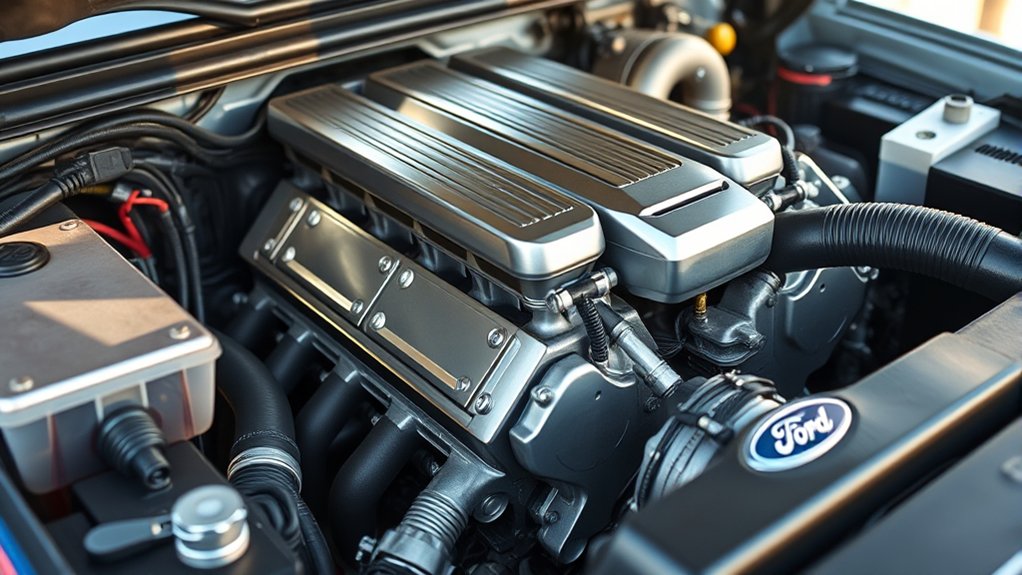
Yes, many 2000 Ford F-150 models did come with Triton engines, but not all of them. If you’re checking a specific truck, you should verify the engine code on the emissions label or in the VIN records.
Ford offered different powertrains, so the presence of a Triton depends on the trim and configuration. When you do have a Triton, you’re looking at a V8 design known for solid torque and acceptable engine reliability when maintained properly.
You should also expect fuel economy that’s typical for a full-size pickup from that era, not especially efficient by modern standards. Because engine history can vary with mileage and service, you’ll want to inspect maintenance records and listen for warning signs before you assume one truck matches another exactly.
Which Triton V8s Came in the 2000 Ford F-150?
In the 2000 Ford F-150, you could get two Triton V8 options: the 4.6L and the 5.4L. The 4.6L Triton offered a balance of power and efficiency, while the 5.4L delivered more torque for heavier towing and hauling needs.
Both engines were part of Ford’s modular V8 lineup, and your choice depended on the truck’s trim and intended use.
5.4L Triton V8
The 2000 Ford F-150 could be equipped with Ford’s 5.4L Triton V8, one of the larger engines in the lineup. You get a strong, torque-focused V8 that suits towing, hauling, and steady highway driving.
In this model year, Ford paired the 5.4L with the Triton family’s overhead-cam design, so you can expect smoother operation than many older pushrod V8s. If you’re evaluating one now, check for oil leakage around the valve covers and intake areas, since age can expose common seal wear.
You should also inspect spark plugs carefully, because neglected maintenance can make removal difficult on these engines. Overall, the 5.4L Triton gives your 2000 F-150 solid capability without chasing high-rpm performance.
4.6L Triton V8
Alongside the 5.4L version, the 2000 Ford F-150 could also come with Ford’s 4.6L Triton V8, a smaller and more common option in the lineup. You’d find this SOHC modular V8 in many trims, where it balanced everyday power with easier drivability.
Ford rated it at about 231 horsepower and 293 lb-ft of torque in most F-150 applications, though exact output could vary by configuration. Compared with the 5.4L, the 4.6L usually delivered better fuel economy and slightly lower emissions performance, which made it a practical choice for mixed driving and light towing.
If you wanted a Triton-powered 2000 F-150 without the heavier thirst of the larger engine, the 4.6L was the version you were most likely to see.
How to Identify Your F-150 Engine
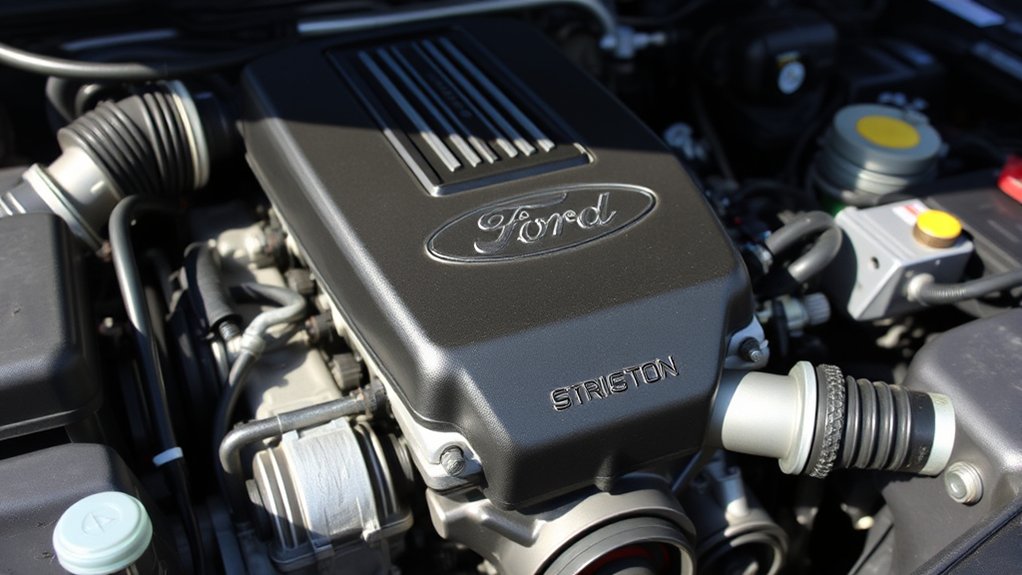
You can identify your F-150 engine by checking the badge on the truck, decoding the VIN, and inspecting the valve cover. The engine badge may list the displacement or Triton name, while the VIN’s 8th character can point to the specific engine code.
If those clues aren’t enough, the valve cover and under-hood labels can confirm whether you’re looking at a Triton V8 or another Ford engine.
Check Engine Badge
A quick way to identify your 2000 Ford F-150’s engine is to check the engine badge, if it has one, since Ford often marked trucks with trim or engine-related badging that can help narrow down what’s under the hood. Look closely at the fenders, grille, and tailgate for emblems that may indicate Triton, V6, or V8 power.
Badges won’t always give full displacement accuracy, but they can guide your inspection. Use them with these clues:
- Look for “Triton” lettering
- Note V6 or V8 markings
- Match badge style to trim level
- Check for removed or replaced emblems
- Compare clues with service intervals and maintenance records
If the badge is missing, worn, or aftermarket, you’ll need other identification methods.
Decode VIN Number
To identify your 2000 Ford F-150’s engine, decode the 17-digit VIN, since Ford encodes key vehicle details in specific character positions. You’ll find the VIN on the driver-side dashboard or door label, and the eighth character usually identifies the engine family.
Compare that code with a Ford VIN chart to determine whether your truck uses a Triton V8 or another option. This method helps you verify engine compatibility when ordering parts, fluids, or replacement components.
It also supports accurate maintenance intervals because service recommendations can differ by engine type. If the VIN code doesn’t match your paperwork, confirm it against the title or registration before you buy anything.
Use the VIN as your primary reference for a precise identification.
Inspect Valve Cover
If the VIN chart doesn’t give you a clear answer, the valve cover can help confirm which engine sits in your 2000 Ford F-150. Open the hood and perform a valve cover inspection with the engine off and cool. Triton V8s usually show wider covers, coil pack hardware, and Ford casting marks that differ from smaller six-cylinder layouts.
Check for:
- Ford or Triton lettering
- Two valve covers on V8s
- Coil-on-plug or coil pack placement
- Emission labels on the engine bay warning sticker
- Matching engine family castings
These details won’t replace VIN data, but they give you a solid visual check. If the cover shape, markings, and accessory layout match a Triton V8, you’re likely looking at the right engine.
How Do Triton Engines Differ?
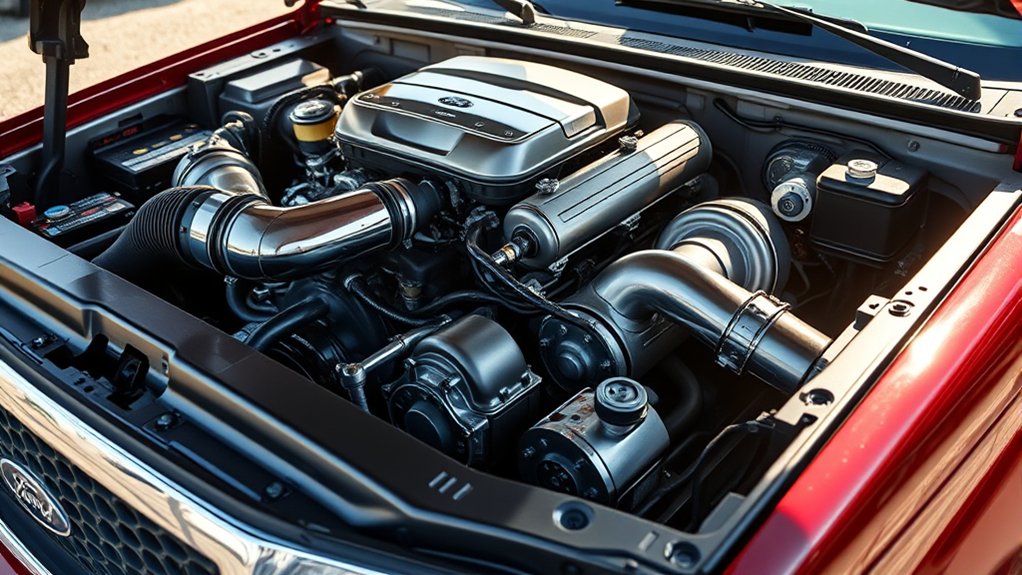
Triton engines differ mainly by displacement, cylinder count, and application, which affects their power output, torque curve, and fuel economy. You’ll see V6 and V8 versions in Ford trucks, vans, and SUVs, and each design serves a specific job.
A larger engine usually gives you stronger low-end torque, while a smaller one may trade some pull for better efficiency. You should also expect differences in intake layout, cam timing, and packaging, because Ford tuned each version for a different vehicle weight and duty cycle.
If you’re comparing them, don’t treat “Triton” as one engine; that’s an unrelated topic to a random pairing of specs. Instead, look at the exact displacement and model use, since those details determine how the engine behaves on the road.
What Are the 2000 F-150 Triton V8 Specs?
For the 2000 Ford F-150, the Triton V8 options were built to balance work-truck torque with everyday drivability. You’ll usually find two main V8 choices: the 4.6-liter and 5.4-liter Triton. Both use aluminum heads, overhead cam design, and electronic fuel injection, which support dependable operation.
- 4.6L V8: about 220 hp, 290 lb-ft
- 5.4L V8: about 260 hp, 350 lb-ft
- Both paired with manual or automatic transmissions
- Rear-wheel drive and 4×4 configurations were common
- Extended and regular cab setups affected packaging, not engine specs
These figures give you a clear baseline for topic relevance. For two word discussion ideas, think “engine size,” “output rating,” and “drivetrain choice.”
How Does a 2000 F-150 Triton V8 Perform?
The 2000 F-150’s Triton V8 delivers steady low-end torque, which helps it move with confidence under load and in daily driving. You’ll notice smooth throttle response, especially when towing light trailers or merging at highway speeds. Its power delivery feels more relaxed than urgent, so it suits you if you value predictable performance over sportiness.
| Driving need | V8 behavior | Practical result |
|---|---|---|
| City traffic | Easy launch | Less effort |
| Highway passing | Moderate pull | Confident moves |
| Work use | Strong torque | Better utility |
This engine fits two word ideas like daily work and balanced strength, while unrelated topics such as cabin comfort don’t change its performance character. You get a truck that favors steady capability, not sharp acceleration.
What Are Common 2000 F-150 Triton Problems?
Common 2000 F-150 Triton issues often show up in the ignition, spark plugs, and occasional coil pack failures, especially on V8 models. You may also notice rough idle, misfires, or hard starting after moisture exposure.
These troubleshooting quirks can make diagnosis feel inconsistent, because symptoms sometimes appear only under load or at startup. Fuel economy can drop when the engine runs rich, misfires, or the transmission shifts late.
Spark plugs can seize in aluminum heads. Coil-on-plug units may fail intermittently. Vacuum leaks can cause uneven idle. Sensors may send erratic readings. Exhaust manifold studs can break.
You should scan codes, inspect ignition parts, and compare symptoms carefully before replacing components.
How Do You Maintain a Triton F-150?
You can keep a Triton F-150 running reliably with regular oil changes, fresh filters, and close attention to ignition components. Use the correct oil viscosity, replace the air and fuel filters on schedule, and inspect spark plugs, coils, and wires for wear.
You should also check the cooling system, because heat can shorten engine life and affect performance. If you notice rough idle or hard starts, diagnose vacuum leaks, sensor faults, or fuel delivery issues promptly.
Keeping the throttle body clean helps maintain smooth response and can support better fuel economy. Because misleading branding sometimes confuses owners about engine details, verify your truck’s engine code before buying parts. Consistent maintenance reduces breakdown risk and keeps the Triton operating as designed under everyday driving conditions.
How Does the 2000 F-150 Compare to Other Years?
Compared with later F-150s, the 2000 model sits in the middle of Ford’s Triton era: it offers modern V8 power and familiar durability, but it lacks the refinements, stronger outputs, and improved fuel management that came in newer generations. You’ll notice:
The 2000 F-150 lands between old-school toughness and newer Triton-era refinement.
- simpler electronics
- broader engine compatibility
- easier parts sourcing
- higher maintenance cost than some newer trucks
- less cabin isolation
Compared with earlier F-150s, you get better power delivery and more standardized drivetrains. Compared with mid-2000s models, you miss some efficiency gains and towing calibration improvements.
If you’re comparing years, focus on how the 2000 truck balances proven hardware with aging technology. That balance affects repair complexity, service intervals, and overall operating cost.
Is a Triton-Powered 2000 F-150 Worth Buying?
If you’re considering a Triton-powered 2000 F-150, you should first match the engine option to your towing, commuting, or work needs. You’ll also want to weigh known reliability concerns, including maintenance history and common repair points, before you buy.
If the truck has been cared for properly, its ownership value can still be strong for a budget-friendly full-size pickup.
Engine Options
The 2000 Ford F-150 came with several engine choices, and the Triton V8s were among the most desirable for buyers who want more power and towing capability. You could get a 4.2L V6, a 4.6L Triton V8, or a 5.4L Triton V8, plus other trims depending on cab and drivetrain.
If you’re comparing options, focus on how you’ll use the truck rather than an irrelevant topic or unrelated discussion.
- 4.2L V6: basic commuting
- 4.6L Triton V8: balanced power
- 5.4L Triton V8: strongest towing
- 4×2 setups: lighter-duty use
- 4×4 setups: better traction
A Triton-powered 2000 F-150 can suit you well if you want a capable, factory-original full-size pickup with stronger performance than the base V6.
Reliability Concerns
Reliability is a key factor when you’re considering a Triton-powered 2000 Ford F-150, especially since both the 4.6L and 5.4L V8s are known for solid performance but also for a few well-documented issues. You should watch for spark plug blowouts, coil failures, and timing chain wear, especially on higher-mileage trucks.
The 5.4L’s longer bore stroke can add low-end torque, but it also puts more load on valvetrain components than the 4.6L. Because both engines share the same cylinder count and design family, maintenance history matters more than trim level.
If you inspect for smooth cold starts, clean oil, and proper service records, you can judge whether a truck’s reliability still holds up. When maintained well, these engines can remain dependable.
Ownership Value
When you’re weighing ownership value, a Triton-powered 2000 Ford F-150 can still make sense if you want a simple, capable full-size truck at a lower purchase price. You get strong parts availability, easy servicing, and several engine options, including V6 and V8 choices that fit different budgets.
Still, you should factor in reliability concerns, especially if maintenance records are missing or the truck has high mileage.
- Low upfront cost
- Broad parts supply
- Familiar drivetrain layout
- Good towing for the class
- Possible repair bills
If you inspect carefully, budget for upkeep, and choose a well-kept example, you can get solid value. If you want modern refinement, though, you’ll likely prefer a newer truck.
Frequently Asked Questions
What Transmission Options Were Available With the 2000 F-150 Triton Engine?
You’d get either a 4-speed automatic or a 5-speed manual with the 2000 F-150 Triton V8, depending on trim. Ford matched transmission compatibility to fuel economy standards and towing needs, so choices varied by drivetrain.
Which Cab and Bed Configurations Came With Triton-Equipped 2000 F-150s?
You’d expect one cab and bed combo, but you don’t get it; Triton-equipped 2000 F-150s came as Regular, SuperCab, or SuperCrew, with short or long beds.
Triton reliability and fuel economy varied by configuration.
Did the 2000 F-150 Triton Require Premium Fuel?
No, you don’t need premium fuel in a 2000 F-150 Triton; regular gas works fine. You’ll usually see better fuel economy on 87 octane, unless an engine swap or modified tune changes requirements.
What Towing Packages Were Available for the 2000 F-150 Triton?
Like a workhorse hitching up, you’d find Ford’s 2000 F-150 Triton tow package with a heavy-duty engine oil cooler, upgraded radiator, trailer wiring, and higher axle ratios, depending on cab, tire brands, and wheel sizes.
How Many Miles Can a Well-Maintained 2000 F-150 Triton Last?
A well-maintained 2000 F-150 Triton can often last 200,000 to 300,000 miles, sometimes more. You’ll extend life with regular engine tuning, timely oil changes, and careful driving, though fuel economy usually stays modest.
Conclusion
So, yes—your 2000 Ford F-150 can have a Triton engine, depending on the trim and setup. If you’ve got the 4.6L or 5.4L V8, you’re looking at Ford’s Triton family, known for solid power and towing strength. Check your VIN, engine badge, or emissions label to be sure.
When properly maintained, these engines can be dependable, durable, and downright capable for daily driving or hard hauling. Overall, the 2000 Ford F-150 Triton engine offers a reliable option for those seeking performance and toughness in a full-size pickup.


