Did Henry Ford Invent the Automobile
As an Amazon Associate we earn from qualifying purchases.
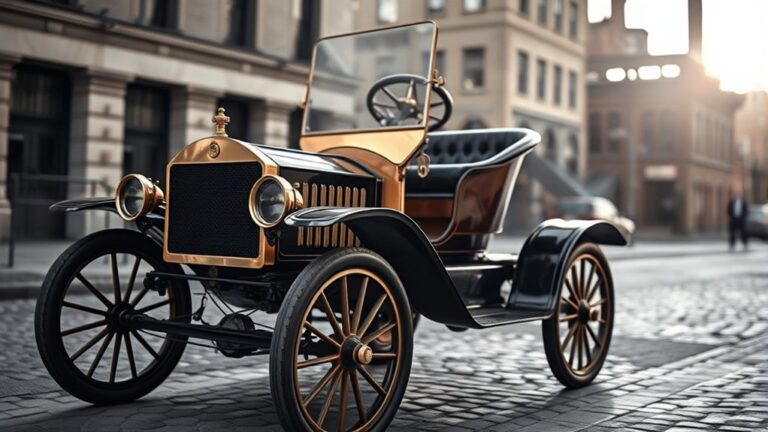
You might gently miss the mark if you assume Henry Ford invented the automobile. The truth is, Henry Ford did not invent the automobile. Karl Benz holds the strongest claim to creating the first practical gasoline-powered car in 1886.
What Ford did change was production: he refined assembly lines, standardized parts, and cut prices so far that cars moved from novelty to necessity. That shift reshaped ownership, and the full story gets more interesting from there.
Key Takeaways
- No, Henry Ford did not invent the automobile; his major contribution was mass-producing affordable cars.
- The first true automobile is usually credited to Karl Benz’s 1885/1886 Benz Patent Motorwagen.
- Earlier pioneers like Cugnot, Trevithick, Daimler, and Benz advanced steam and gasoline vehicle development.
- Ford’s breakthrough was the moving assembly line, which lowered costs and increased production.
- Ford transformed car ownership by making vehicles reliable, affordable, and accessible to middle-class buyers.
Did Henry Ford Invent the Automobile?
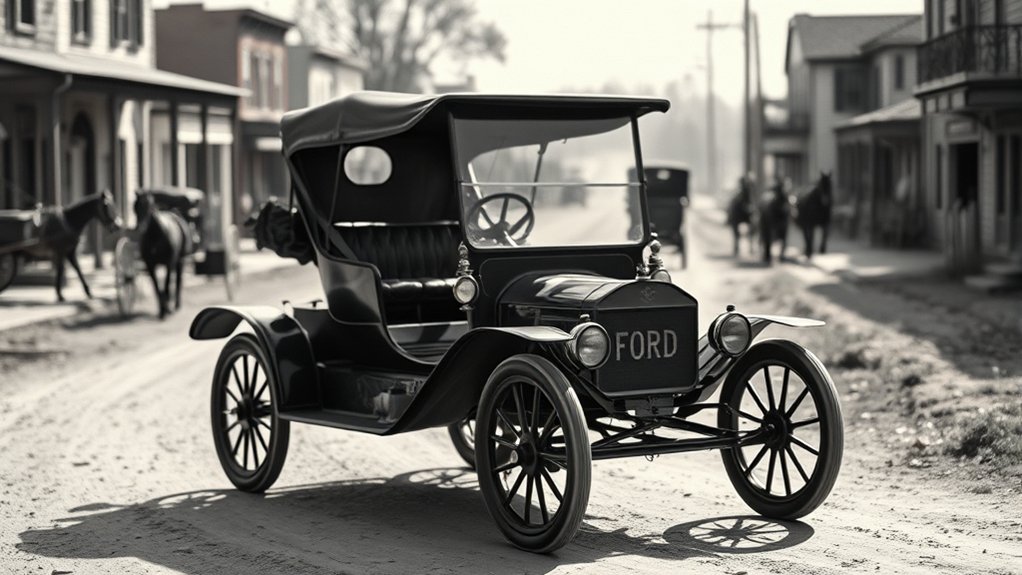
No, Henry Ford did not invent the automobile. You should see this as one of the most persistent innovation myths, because Ford’s real contribution was manufacturing, not origination.
He built companies, refined production methods, and made cars affordable for many buyers. That achievement matters, but it’s different from invention.
When you examine the record, you’ll find that Ford’s name became dominant through scale, efficiency, and celebrity branding, which often blur public memory. You can trace his influence to business strategy, labor systems, and mass-market design, not the first car itself.
Who Invented the First Automobile?
If you ask who invented the first automobile, you’ll find that the answer points to several early pioneers rather than one simple name. Historians usually identify Karl Benz’s 1885 Benz Patent Motorwagen as the first true automobile because it was a practical, gasoline-powered vehicle built for transport.
You can also see that earlier inventors contributed key ideas, but Benz turned them into a working machine.
Early Automobile Pioneers
Who really invented the first automobile depends on how you define “automobile,” because several inventors built self-propelled vehicles long before Henry Ford entered the picture. You can trace early pioneers through experiments with steam, electric power, and gasoline engines. Their work shows a gradual engineering shift, not a single breakthrough.
| Inventor | Year | Contribution |
|---|---|---|
| Cugnot | 1769 | Steam road vehicle |
| Trevithick | 1801 | High-pressure steam carriage |
| Bollée | 1873 | Practical road vehicle |
| Daimler | 1885 | Lightweight gasoline engine |
| Benz | 1886 | Integrated automobile design |
When you compare these machines, horsepower ratings help you see progress in speed and efficiency, but they don’t settle authorship. The first automobile was a sequence of innovations, and Ford later perfected mass production, not the original invention.
Benz Patent Motorwagen
The Benz Patent Motorwagen is often treated as the first true automobile because Karl Benz designed it as a complete, gasoline-powered road vehicle rather than a modified carriage. When you examine the benz patent filed in 1886, you see a three-wheeled machine with a lightweight engine, a tubular frame, and controls built for self-propelled travel.
The motorwagen used an internal combustion engine, electric ignition, a carburetor, and chain drive, all of which made it mechanically distinct from horse-drawn transport. You should note that Benz didn’t merely adapt existing hardware; he integrated power, steering, and braking into one system.
That’s why historians usually credit him with inventing the first practical automobile, even though later inventors improved speed, reliability, and mass production.
What Ford Actually Changed?
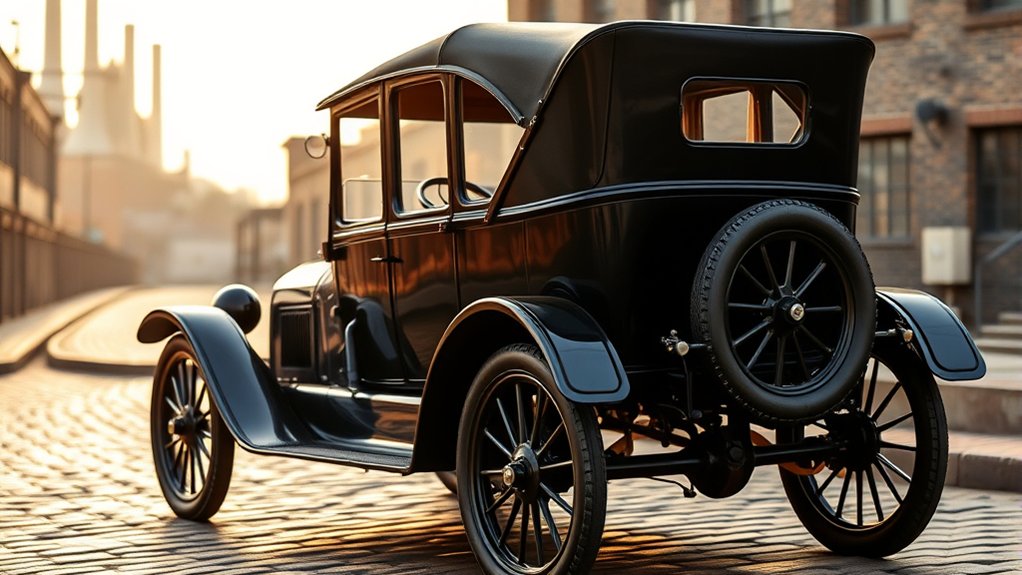
You can see Ford’s real impact in how he reorganized car production around the moving assembly line, which cut build times and lowered costs. That shift helped make automobiles affordable for a much larger market, not just wealthy buyers.
He also pushed standardized parts, which improved consistency, simplified repairs, and made large-scale manufacturing more efficient.
Assembly Line Production
So what did Henry Ford actually change? You can trace his biggest shift to assembly line production, not the invention of the car. Ford and his managers reorganized work into smaller, repeatable tasks, so each worker handled one step instead of building a vehicle from start to finish.
That change cut wasted motion, improved scheduling, and let you measure output more precisely. It also forced tighter coordination among parts suppliers, machinery, and factory layout.
In practice, Ford used moving assembly techniques to standardize operations and improve throughput. You should see this as a management innovation that changed manufacturing economics and revenue streams, while also shaping labor unions’ response to repetitive, intensified work.
The core advance was process design, not a new automobile concept.
Affordable Mass Market
| Change | Effect |
|---|---|
| Lower price | Expanded demand |
| Higher wages | Supported purchasing power |
| Mass output | Reached broad buyers |
You should read this as market transformation, not invention. Ford linked efficient production with affordability, turning cars into everyday goods and reshaping expectations about mobility, status, and ownership across the United States.
Standardized Car Parts
What Ford changed most was not the automobile itself, but the way it was built. You can trace his real innovation to standardized parts, which let workers make each component to the same dimensions.
That consistency reduced fitting time, cut waste, and made repairs easier for buyers. In Ford’s plants, interchangeable pieces supported mass production, so one station could repeat a task instead of customizing every car.
You shouldn’t confuse this with inventing the car; earlier makers already produced automobiles. Ford’s contribution was industrial discipline: simplify designs, divide labor, and keep tolerances tight enough for assembly-line output.
When you study his system, you see a manufacturing breakthrough that lowered costs and expanded access, not a new vehicle concept.
How Ford Changed Car Manufacturing
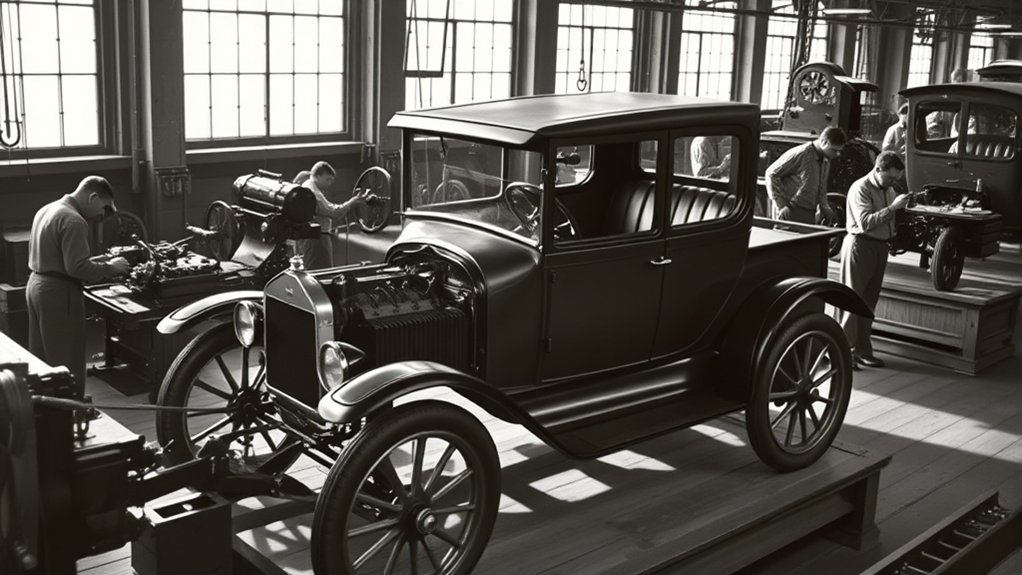
Henry Ford did not invent the automobile, but he fundamentally changed how cars were built by making mass production practical and affordable. You can trace his impact through an innovations timeline that linked moving assembly methods, machine tooling, and workflow control.
He reorganized factories so each worker performed a narrow task, which increased output and reduced wasted motion. This approach also reshaped labor relations, because repetitive work demanded tighter management, higher wages, and new hiring practices.
- Standardized processes cut variability.
- Conveyor systems sped assembly.
- Interchangeable parts simplified repairs.
- Plant layout improved efficiency.
- Management enforced precise timing.
You see a manufacturing system designed for volume, consistency, and cost reduction. Ford’s real contribution wasn’t invention alone; it was turning car production into an industrial process.
Why the Model T Mattered
The Model T mattered because it turned Ford’s manufacturing system into something ordinary Americans could actually buy and use. In historical context, you see a car built for durability, simple maintenance, and lower cost, not luxury.
That shift expanded road travel beyond elites and made ownership a practical choice for families, farmers, and small businesses. You can compare its impact with these two word discussion ideas:
| Feature | Effect | Buyer |
|---|---|---|
| Simple engine | Easier repairs | Farmers |
| High clearance | Rough roads | Rural drivers |
| Low price | Wider access | Wage earners |
| Standard parts | Less downtime | Mechanics |
| Reliable design | Daily use | Families |
You’re looking at a machine that reshaped demand by matching mobility to everyday budgets and conditions.
Why the Assembly Line Was a Big Deal
An assembly line mattered because it changed automobile production from slow, craft-based assembly into a coordinated process that could turn out far more cars in far less time. You can see its impact in measurable gains:
- Parts moved to workers, not the other way around.
- Tasks became narrow and repeatable.
- Output rose while unit costs fell.
- Standardization improved interchangeability.
- Mass production reshaped wages, prices, and demand.
That efficiency helped Ford scale production, but it also created economic disruption across related trades. You should note that labor unions later focused on the pace, discipline, and power imbalance built into factory work. In other words, the assembly line wasn’t just a factory innovation; it changed how you think about industrial labor, consumer access, and modern manufacturing.
Common Myths About Henry Ford
That industrial breakthrough also fuels some of the most persistent myths about Ford, especially the idea that he singlehandedly invented the automobile. You can separate myth vs fact by checking the record: Ford didn’t design the first car, and he didn’t work alone.
That industrial breakthrough also fuels myths: Ford didn’t invent the automobile, and he certainly didn’t do it alone.
Earlier engineers in Europe and the United States built gasoline-powered vehicles decades before his Model T. What Ford did do was refine production, pricing, and reliability at scale.
Another myth comes from media portrayal, which often turns him into a lone genius rather than a manager, promoter, and system builder. You should also note that his fame grew because journalists and advertisers simplified a complex industrial story.
The facts show a capable innovator, not the inventor of the automobile itself.
How Ford Shaped Modern Car Ownership
How did Ford change the way people owned cars? You can trace modern car ownership to Henry Ford’s mass-production system, which cut prices and made the Model T reachable for middle-class buyers. Instead of a luxury item, the car became a practical household asset.
- Lower production costs
- Standardized parts
- Wider dealer networks
- Easy repairability
- More predictable financing
You’d also see new expectations emerge: personal mobility, regular maintenance, and family travel by road. Ford’s methods didn’t invent the automobile, but they reshaped access to it.
Frequently Asked Questions
Did Henry Ford Design the First Gasoline Engine?
No, you shouldn’t think Henry Ford designed the first gasoline engine; that’s an unrelated topic. You can trace gasoline-engine development to earlier inventors, not Ford.
In speculative fiction, you might imagine otherwise, but evidence doesn’t support it.
What Year Did Ford Build His First Car?
In 1896, you’d note Ford built his first car, the Quadricycle; that’s the first car year. Early invention influences from bicycles and engines shaped it, and you can trace his technical leap clearly.
How Did Ford’s Pricing Compare With Other Automakers?
You’d find Ford pricing was usually lower than competitor pricing, especially for Model Ts. He used mass production and efficiency to cut costs, so you could buy cars cheaper than most rivals’ vehicles.
Did Ford Own the First Car Factory?
No, you don’t find Ford owning the first car factory. First factory questions point to earlier makers, and pricing history shows Ford’s later mass-production model lowered costs rather than originating automobile manufacturing.
Which Inventors Influenced Ford’s Automotive Ideas?
You’d note that Ford’s automotive ideas were shaped by the influence of steam carmakers and early motor builders like Nicolas Cugnot, Karl Benz, Gottlieb Daimler, and Ransom Olds, whose designs guided his engineering thinking.
Conclusion
No, you shouldn’t picture Henry Ford as the lone blacksmith of the automobile. Instead, imagine a long road lit by many lanterns: Karl Benz sparks the first engine-driven carriage, and Ford builds the bridge that lets millions cross it.
You see his real legacy in the assembly line, standard parts, and the Model T’s reach. He didn’t invent the car, but he transformed it into a vehicle you could actually own.
In conclusion, Henry Ford did not invent the automobile, but his innovations revolutionized how cars were made and made them accessible to the masses.


