Did Henry Ford Invent the Assembly Line
As an Amazon Associate we earn from qualifying purchases.
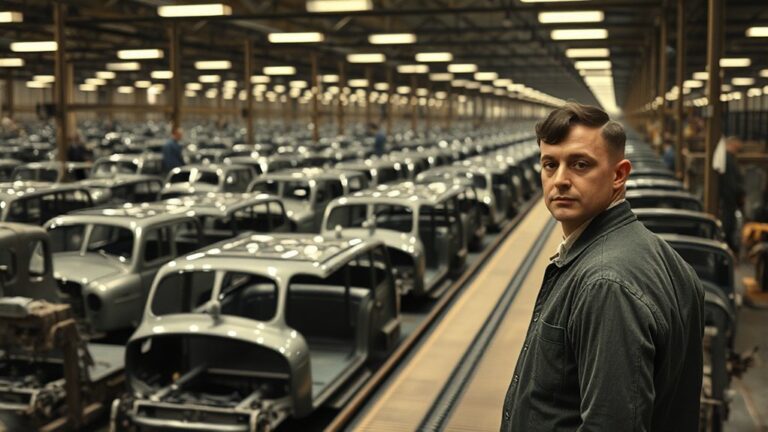
If you look at a Ford plant making Model Ts, you might assume Henry Ford invented the assembly line outright. The assembly line is often credited to him, but he didn’t invent it from scratch. Earlier manufacturers had already used standardized parts, divided labor, and sequential handoffs.
Ford’s real achievement was to tighten those ideas into a faster, continuous system that cut costs and time. That shift changed mass production, but the full story is more layered than the usual legend suggests.
Key Takeaways
- Henry Ford did not invent the assembly line; he refined and scaled earlier production methods into a highly efficient system.
- Assembly-line ideas existed before Ford in crafts, factories, and standardized mass-production processes.
- Ford’s innovation was reorganizing work so parts moved to workers, reducing time and lowering costs.
- The Model T made Ford’s system famous because its standardized design and high output showed mass production at scale.
- Ford’s system changed labor by increasing repetition and pace, while also offering higher wages and lower turnover.
Did Henry Ford Invent the Assembly Line?
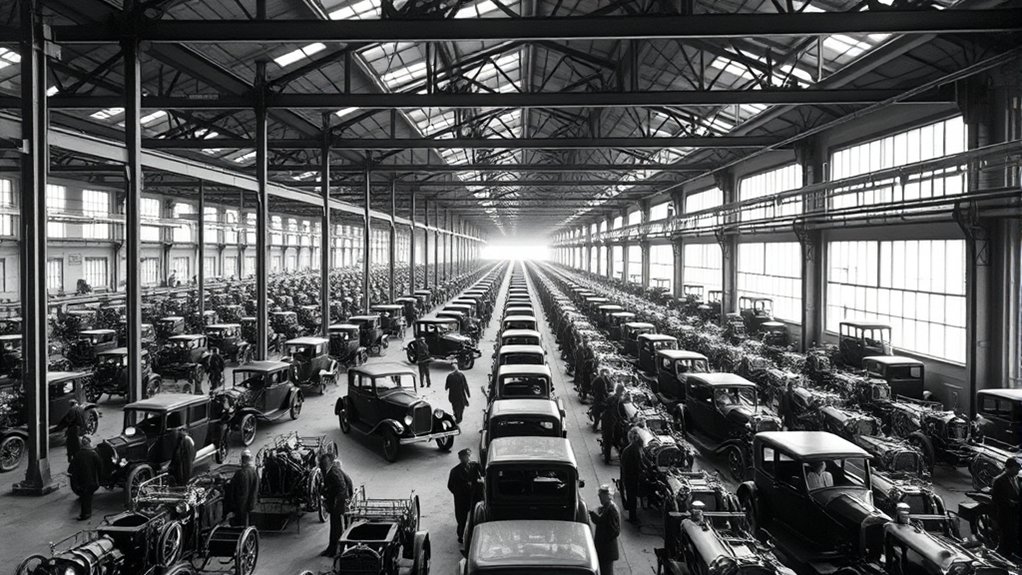
Not exactly. You can’t credit Henry Ford with inventing the assembly line itself, because the basic idea predated him and already circulated in industrial practice. What you can say is that Ford innovation mattered enormously: you see it in how he refined, synchronized, and scaled moving production for automobiles.
That distinction matters because invention and implementation aren’t the same thing. If you ask whether Ford transformed manufacturing, the evidence says yes. If you ask whether he created the concept from nothing, the answer is no.
The idea not relevant is that a single genius suddenly replaced all prior method. Instead, you should view Ford as an accelerator of existing methods, turning a useful production approach into a landmark system of mass manufacture.
What Came Before Ford’s Assembly Line?
Long before Ford, manufacturers had already experimented with dividing work into repeatable steps and moving products past successive stations. You can trace this logic back to before industrialization, when skilled craft dominated production and each artisan controlled a full product. As markets expanded, producers tested ways to coordinate labor more tightly.
| Era | Production logic |
|---|---|
| Before industrialization | skilled craft, one maker, one object |
| Early factories | separate tasks, timed handoffs |
| Mass production precursors | flow methods, standardized parts |
That history matters because the debate over artisans vs machines isn’t about a single inventor. It’s about a gradual shift in organization, measurement, and scale. Ford built on these earlier experiments, but he didn’t create the underlying idea from nothing. You should see the assembly line as an outcome of longer industrial learning.
What Did Ford Actually Change in Manufacturing?
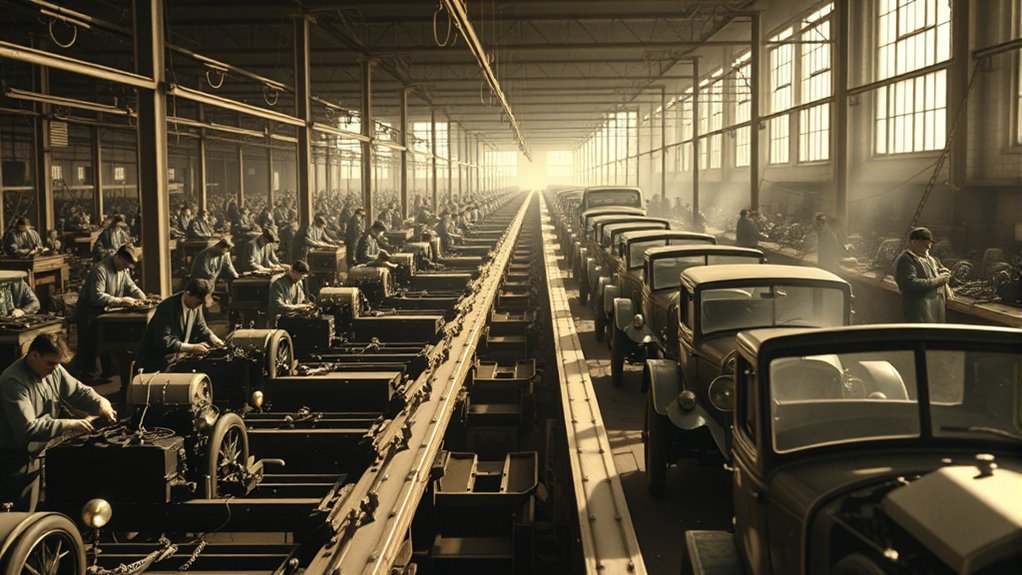
Ford’s major change wasn’t inventing the basic idea of an assembly line, but turning it into a highly efficient system for true mass production. You can see his efficiency overhaul in the way Ford reorganized tasks, moved parts to workers, and cut wasted motion.
He paired standardization with tighter coordination, so each station did one repeatable job. That shift reduced time, lowered costs, and made output predictable. It also reshaped labor expectations through a wage revolution that helped stabilize the workforce.
Faster work
Less waste
More consistency
Stronger worker retention
Why the Model T Made the Assembly Line Famous
The Model T made Ford’s assembly line famous because it turned an industrial efficiency experiment into something millions of people could actually see, buy, and talk about. You can trace its fame to the car’s broad market: ordinary families noticed the product, not just the factory method.
| Factor | Why it mattered | Effect |
|---|---|---|
| Affordable price | Broadened demand | More public attention |
| Standard design | Simplified comparison | Easier to replicate |
| High output | Filled roads | Visible proof of scale |
Because you could observe Model T cars everywhere, the assembly line became a cultural symbol, not only a shop-floor tactic. Its assembly pace drew notice, while wage effects at Ford also fed headlines and debate. That mix of product success, labor policy, and scale made the method famous far beyond Detroit.
Why Ford’s Assembly Line Cut Production Time
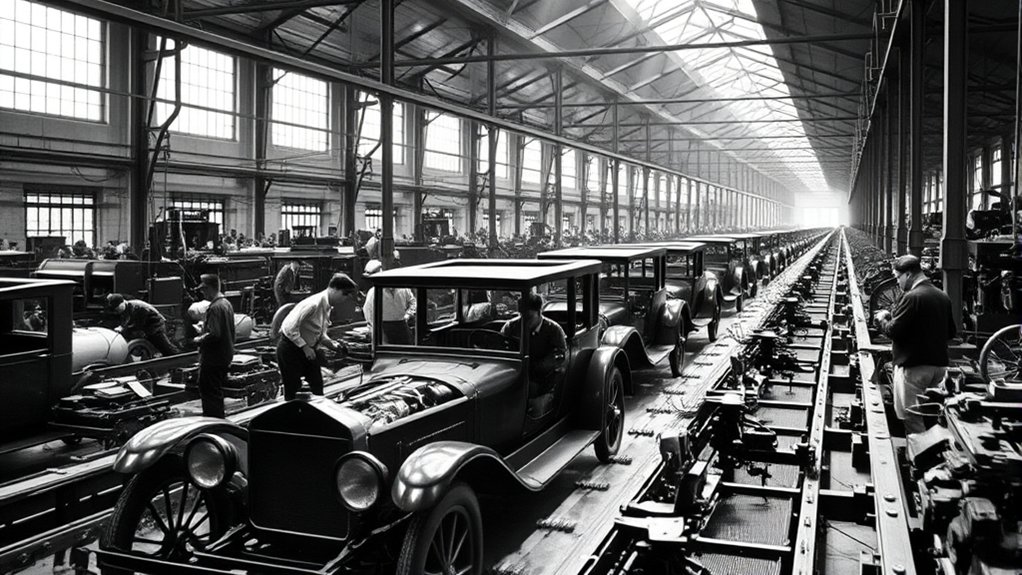
What made Ford’s assembly line so fast was not one single invention but the way it reorganized work into small, timed steps. You can see the gain when parts move to workers instead of workers roaming for parts. That cut waiting, backtracking, and confusion, so each task finished sooner.
You feel the pace tighten.
You notice wasted motion disappear.
You see standardized parts fit faster.
You grasp how timing beats guesswork.
Historians often separate assembly line myths from the evidence: Ford didn’t create the idea from nothing, but he refined it at scale. Likewise, wage scarcity myths can distract you from the real issue here, which is flow efficiency. By reducing delays and balancing tasks, Ford’s system turned many slow handoffs into one continuous process.
How the Assembly Line Changed Workers and Wages
As assembly line speed rose, Ford also changed the labor model behind it: workers no longer needed broad craft skills, but they had to repeat a narrow task all day at an intense pace. You can see the tradeoff in the pay structure.
Ford raised wages to reduce turnover and attract dependable labor, but the work itself became more monotonous and physically taxing. That shift reshaped factory life: you’d gain steadier pay, yet lose much autonomy on the shop floor.
The routine also sharpened concerns about worker safety, since repeated motions and faster pacing increased fatigue and mistakes. At the same time, the system limited speculative labor unions by fragmenting tasks and weakening skilled-worker bargaining power.
Why Ford Became the Face of the Assembly Line
Why did Henry Ford become the public face of the assembly line? You can trace it to scale, publicity, and timing. Ford’s plants made the method visible to millions, while his brand tied mass production to cheaper cars and modern progress.
Historians note that earlier industries used similar techniques, but Ford’s name stuck because his company marketed the system aggressively and journalists repeated the story. That repetition shaped efficiency myths and distorted labor perceptions.
You see a simple hero story. You miss the many builders before Ford. You feel awe at speed and output. You also overlook the human costs.
Frequently Asked Questions
What Industries Used Assembly Lines Before Ford?
You’d find assembly lines earlier in meatpacking, flour milling, firearms, and watchmaking. Industrial history shows these sectors used task specialization, while labor dynamics shifted toward repetitive, coordinated work long before Ford scaled them.
How Did Ford’s Line Affect Product Quality?
Ford’s line improved consistency by standardizing tasks, so you’d get fewer defects and tighter tolerances, though quality tradeoffs emerged from speed pressures.
If you think speed means sloppiness, evidence shows assembly efficiency often raised reliability overall.
Did Ford Patent the Moving Assembly Line?
No, you shouldn’t assume Ford patented the moving assembly line; assembly line myths often overstate his role. Patent considerations mattered, but he mainly refined existing ideas and methods rather than owning the concept outright.
What Were the Environmental Impacts of Assembly Lines?
You’d see environmental impacts from assembly lines through higher energy use, resource depletion, and waste generation. They can boost output efficiently, but you’d also increase extraction, emissions, and pollution unless you adopt cleaner processes.
How Did Assembly Lines Influence Later Automation?
You can trace later automation directly to assembly lines: they boosted assembly efficiency and labor specialization, so you’d see machines and robots taking over repetitive steps. Engineers standardize workflows, reduce errors, and scale production.
Conclusion
So, you can say Henry Ford didn’t invent the assembly line, but he did make it work at scale. Earlier factories already used division of labor and moving parts, yet Ford tightened the process like a clock, speeding production and lowering costs.
His system helped the Model T reach ordinary buyers and made the assembly line famous. When you look at modern manufacturing, you’re really seeing Ford’s powerful refinement of an idea that was already in motion.
In conclusion, Henry Ford didn’t invent the assembly line, but his innovations transformed it into the efficient system we recognize today.


