Did Ford Win Le Mans
As an Amazon Associate we earn from qualifying purchases.
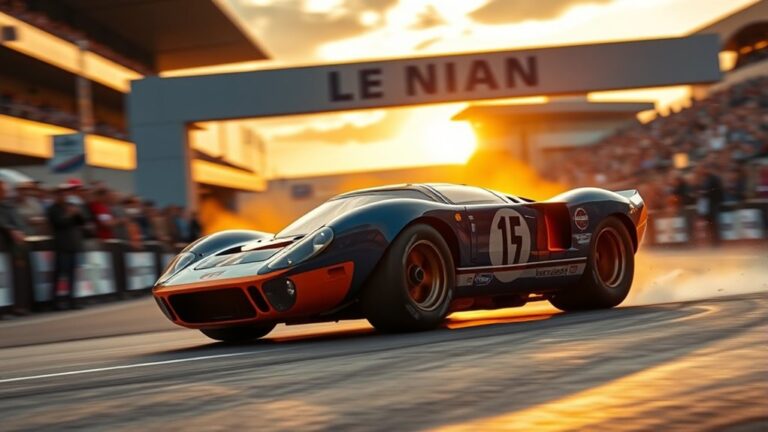
Yes—if you’re asking whether Ford won Le Mans, the answer is four times in the classic era: 1966, 1967, 1968, and 1969.
But the real story isn’t just the wins. You’re looking at a case where aerodynamics, reliability, cooling, and race strategy beat prestige and raw ambition.
The GT40 program changed endurance racing, and the details behind that shift are where things get interesting.
Key Takeaways
- Yes. Ford won Le Mans four times in a row: 1966, 1967, 1968, and 1969.
- The wins came through the GT40 program, a purpose-built endurance racing car.
- Ford’s victories were overall Le Mans wins, not just class wins.
- The program proved that reliability, strategy, and engineering mattered more than speed alone.
- Ford’s Le Mans success became a major symbol of the Ford vs. Ferrari rivalry.
Did Ford Win Le Mans?
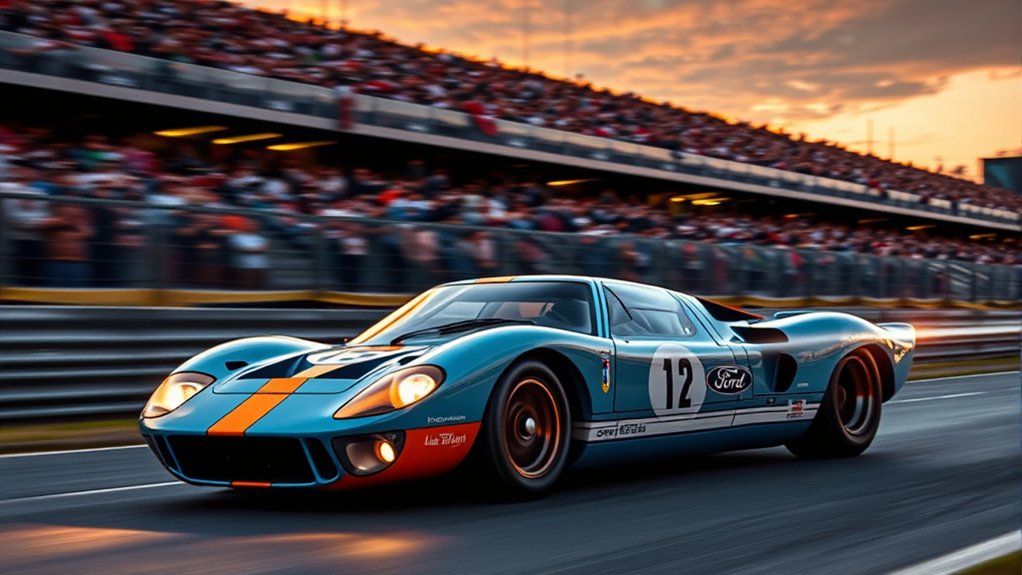
Yes, Ford did win Le Mans, and the company’s victory came in one of the race’s most famous eras. You can point to Ford’s GT40 program as the proof: it delivered outright wins at Le Mans in 1966, then repeated the result in 1967, 1968, and 1969.
That span shows more than speed; it shows Ford innovation in aerodynamics, durability, and race engineering. You’ll also see corporate branding at work, because the victories strengthened Ford’s image as a global performance manufacturer.
Le Mans demanded sustained high-speed reliability, and Ford met that requirement with a purpose-built endurance car. So, if you’re asking whether Ford won Le Mans, the answer is unequivocally yes, and its success remains one of motorsport’s clearest examples of strategic engineering.
Why Ford Challenged Ferrari
You can trace Ford’s challenge to Ferrari to a direct rivalry that intensified after failed acquisition talks and exposed Ford’s desire to beat a dominant marque on the world stage.
That pressure led Ford to launch the GT40 project, a purpose-built endurance car aimed at defeating Ferrari at Le Mans. Ferrari’s racing dominance made the target clear, and Ford treated the effort as both a technical program and a corporate response.
Ferrari Rivalry
Ford challenged Ferrari because the company wanted a visible, high-performance victory that could validate its engineering, strengthen its racing image, and prove it could beat Europe’s elite on their own terms. You can see why the rivalry mattered: Ferrari set the benchmark for prestige, speed, and endurance credibility, while Ford needed a direct answer.
The contest wasn’t just about trophies; it shaped history myths and delivered major marketing impact.
- Ferrari symbolized craftsmanship and race pedigree.
- Ford represented scale, resources, and technical ambition.
- Beating Ferrari meant winning authority, not just a race.
When you study this matchup, you’re seeing a business decision expressed through motorsport, where brand identity and competitive proof became inseparable.
GT40 Project
The GT40 project emerged after Ford’s failed Ferrari acquisition in 1963, when the company redirected its ambition into building a car that could defeat Ferrari at Le Mans on engineering merit. You can trace Ford’s motive to control prestige through endurance racing, not just sales.
Engineers targeted low drag, high-speed stability, and compact packaging to suit long-distance competition. The GT40’s shape reflected racing aesthetics, with a flat nose, truncated tail, and minimal frontal area.
Its name came from the 40-inch height, underscoring the program’s exacting dimensions. Behind the styling, you see a purpose-built chassis, advanced aerodynamics, and a discipline that shaped GT40 heritage.
Ford wasn’t chasing ornament; it was building a credible weapon for Le Mans credibility and technical legitimacy.
Racing Dominance
Why did Ford go after Ferrari at Le Mans? You can trace it to racing dominance: Ferrari controlled endurance prestige, and Ford needed a technical win that matched its corporate strategy. Beating Ferrari would’ve validated the GT40, but it also shifted marketing narratives from showroom sales to global engineering credibility.
- Ferrari set the benchmark in prototype performance.
- Ford needed proof that its V8 platform could sustain 24-hour speed.
- A Le Mans victory would’ve linked product image to competitive reliability.
You should see this as more than rivalry. Ford targeted Ferrari because dominance at Le Mans delivered measurable brand leverage, recruitment appeal, and engineering status. In that context, the race wasn’t just sport; it was a high-stakes test of industrial power and strategic execution.
How Ford Beat Ferrari
You can trace Ford’s win over Ferrari to a focused response to an intense rivalry, where Ford treated Le Mans as a systems problem rather than a branding contest. You’d see the GT40 evolve through repeated testing, aerodynamic refinement, and durability upgrades until it could survive Ferrari’s pace over 24 hours.
On race day, Ford paired raw speed with disciplined strategy, using team coordination, pit execution, and reliability to turn engineering progress into victory.
Ferrari Rivalry
Few motorsport rivalries match Ford versus Ferrari at Le Mans. You can trace Ford’s challenge to racing economics: the company spent heavily to outbid a far smaller, more agile rival. Ferrari’s strength came from disciplined execution, but Ford attacked with scale, data, and corporate resolve.
You see the contest shaped by automotive design priorities, where reliability, top speed, and aerodynamic efficiency mattered more than style.
- Ford forced Ferrari into a resources race.
- Ferrari stayed dangerous through racecraft and prestige.
- Le Mans rewarded endurance, not reputation.
When you compare the teams, you notice Ford didn’t just buy speed; it built a program meant to pressure Ferrari on every lap. That rivalry defined the era and changed endurance racing’s competitive logic.
GT40 Development
Ford beat Ferrari by turning the GT40 into a purpose-built endurance weapon, not a styling exercise. You see a low, rigid chassis shaped for stability at speed, with an integrated monocoque and carefully tuned suspension geometry.
Ford’s engineers chased reliability as hard as outright pace, because Le Mans punishes weak cooling, brakes, and driveline components. They widened the car’s development base, closed innovation gaps with outside expertise, and iterated quickly after early failures.
Aerodynamics, gearbox durability, and weight distribution all improved through relentless testing. You also see Ford using marketing tactics to support the program, but the car itself had to earn credibility on track.
Every revision targeted one problem: make the GT40 faster, stronger, and easier to survive over 24 hours.
Race-Day Strategy
On race day, Ford beat Ferrari by treating Le Mans like a systems test, not a sprint. You can see the advantage in strategy planning: Ford set conservative pace targets, monitored tire wear, and kept fuel windows predictable. That let you control risk while Ferrari chased outright speed.
Pit timing mattered just as much. Ford synchronized stops to driver stints, brake checks, and weather shifts, so you avoided costly unscheduled service.
- Keep the car within a stable thermal range.
- Match stint length to fuel and tire data.
- Use every pit stop to reset the race plan.
You’re not just racing laps; you’re managing probability. Ford’s disciplined execution forced Ferrari into pressure, errors, and mechanical stress.
What Was the Ford GT40?
The GT40 was Ford’s purpose-built endurance racer, engineered in the 1960s to beat Ferrari at long-distance events like Le Mans. You’re looking at a low, mid-engine prototype built for speed, stability, and reliability over brutal 24-hour stints.
Its name came from its roughly 40-inch roof height, not from marketing flair. The chassis evolved through several versions, using lightweight construction, aerodynamic shaping, and powerful V8 engines to deliver competitive pace on the Mulsanne straight and beyond.
If you strip away history myths, you see boardroom strategy translated into metal: Ford wanted a racing weapon that could validate the brand on the world stage. The GT40 wasn’t a road car with racing tweaks; it was a focused endurance machine from the start.
Which Years Did Ford Win Le Mans?
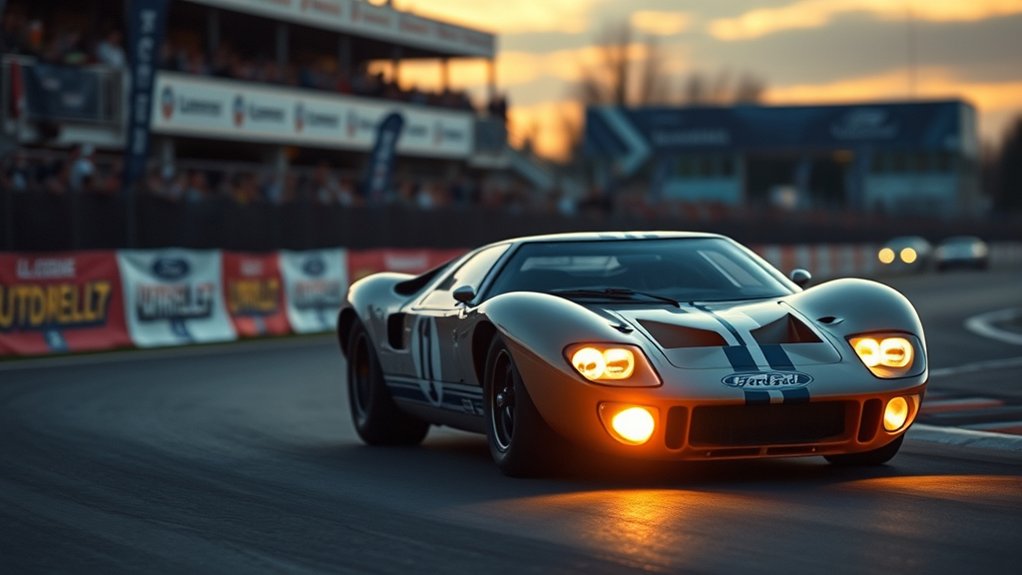
Ford won Le Mans in 1966, 1967, 1968, and 1969, ending Ferrari’s dominance with four straight victories. You can trace each result to the GT40 program’s maturation, where innovation timing aligned with race execution and marketing strategy.
Ford’s four Le Mans wins from 1966 to 1969 marked a defining triumph of the GT40 program.
- 1966: GT40 Mk II, overall win
- 1967: GT40 Mk IV, overall win
- 1968: GT40 Mk I, overall win
- 1969: GT40 Mk I, overall win
You should note that these four years define Ford’s only Le Mans victories, and they frame the brand’s endurance-racing legacy. In each case, Ford paired engineering updates with disciplined team management, then used the wins to reinforce a performance image that extended beyond the circuit.
Why Le Mans Is So Hard to Win?
Le Mans is hard to win because you’re balancing outright pace, mechanical durability, fuel efficiency, driver consistency, and race strategy over 24 hours. You can’t just chase lap time; you have to protect brakes, tires, gearbox, and engine while staying near the front.
Traffic management matters because you’ll constantly pass slower classes and avoid mistakes in dark, rain, or heat. Small innovation gaps in aerodynamics, cooling, or hybrid deployment can decide whether you finish first or fall behind.
You also need flawless pit execution, because one slow stop or penalty can erase hours of work. Teams study data relentlessly, but the race still punishes overconfidence. That’s why success at Le Mans often reflects precision, resilience, and execution more than marketing angles or raw speed alone.
Why Ford’s Victory Still Matters
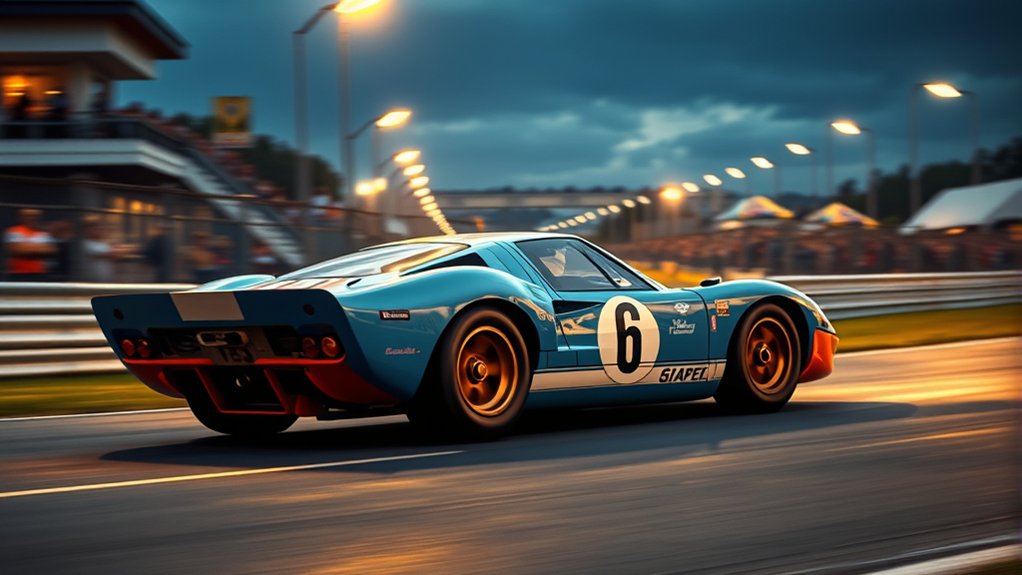
Why does Ford’s Le Mans win still matter? Because you can trace modern endurance racing’s core priorities directly to it: reliability, systems integration, and race pace over a full 24-hour cycle. Ford didn’t just beat Ferrari; it validated a data-driven program that used innovative aerodynamics, cooling efficiency, and pit strategy as competitive weapons. You still see its impact in how teams design and operate hypercars today.
Ford’s Le Mans win still matters because it proved reliability, integration, and race pace beat prestige.
- You learn that speed alone won’t win Le Mans.
- You see how endurance psychology shapes driver and crew performance.
- You understand that engineering discipline can outperform prestige.
That lesson stays relevant because every Le Mans entry still faces the same equation: maximize performance, limit failure, and execute under pressure.
Frequently Asked Questions
How Much Did Ford Spend to Win Le Mans?
You’d estimate Ford spent about $25 million to win Le Mans in 1966, including Ford sponsorship and marketing strategy costs.
You’re seeing a calculated, high-budget effort aimed at beating Ferrari and boosting brand credibility.
Who Drove Ford’s Winning Le Mans Cars?
You’d find Ford’s winning Le Mans cars were driven by Bruce McLaren, Chris Amon, Dan Gurney, A.J. Foyt, and Mark Donohue. Why digress into a two word, unrelated discussion, topics elsewhere, when the driver lineups are clear?
What Engine Did the GT40 Use at Le Mans?
You’d see a 4.7-liter, then 7.0-liter, Ford V8 in the GT40 at Le Mans; you can trace engine choices alongside aero developments that improved cooling, stability, and top-speed performance.
How Many Times Did Ford Race at Le Mans?
You can say Ford raced Le Mans many times, mainly from 1964 to 1969, entering multiple cars each year.
You’d count its factory efforts and later returns, which totaled several race entries.
What Happened to Ferrari After Ford’s Victory?
Ferrari regrouped, sharpened its engineering, and launched a Ferrari revival. You’d see Sportsmanship rivalries intensify as both brands chased speed, reliability, and prestige, pushing endurance racing into a brighter, louder, more technical era.
Conclusion
So, yes—you can say Ford won Le Mans, and it didn’t happen by luck. In a race built to punish ego, Ford beat Ferrari with spreadsheets, cooling ducts, pit discipline, and brutal reliability.
Ironically, the blue oval’s greatest victory wasn’t about looking fast; it was about staying alive for 24 hours. You now know why the GT40 still matters: it proved that engineering, not prestige, is what really wins endurance racing.
In the end, Ford won Le Mans by mastering the details that kept their car on the track when others faltered.


