Did Ford Make a 460 Small Bore Motor Sport Block
As an Amazon Associate we earn from qualifying purchases.
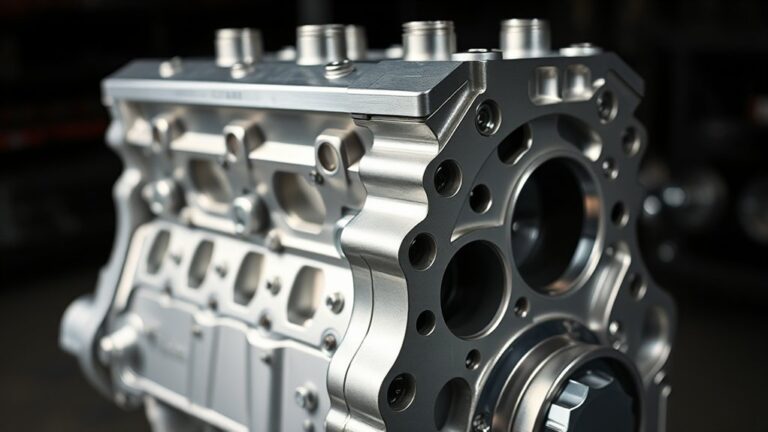
Ford’s 460 small bore Motor Sport block is often discussed, but it’s important to clarify the facts.
The 460 engine is part of Ford’s 385-series big-block family, featuring a stock bore size of 4.360 inches. This bore size never aligned with the concept of a factory “small-bore Motorsport block.”
You can find various truck, heavy-duty, and marine castings, as well as Motorsport parts and service blocks related to the 460. However, there is no documented OEM production block that supports the existence of the rumored small-bore Motorsport version.
The confusion mainly arises from where the claim originated. Once you understand that, the available block options become much clearer.
Key Takeaways
- Ford did not make an official 460 small-bore Motorsport block.
- The rumor likely came from Motorsport catalog wording and aftermarket shorthand.
- A stock 460 is a 385-series big-block with 4.36-inch bore spacing and tall-deck dimensions.
- Ford did cast different 460 blocks for trucks, heavy-duty, and service use, but not a unique small-bore version.
- Verify any block by casting number, date code, and actual bore measurement to confirm authenticity.
Was There Ever a Ford 460 Small-Bore Motorsport Block?
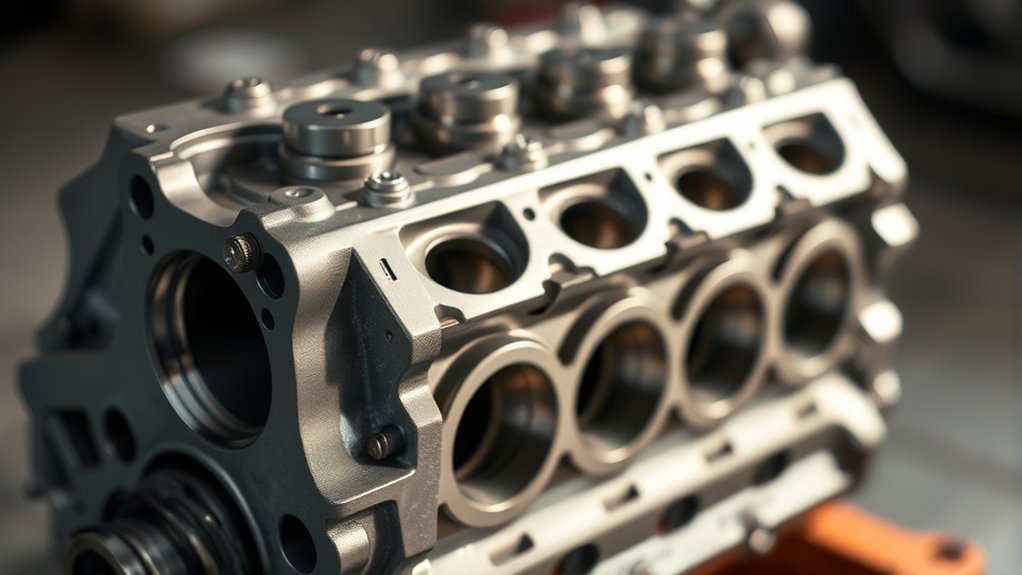
No, Ford did not produce an official “460 small-bore Motorsport block” as a distinct production engine family. When you trace Ford’s records, you find the standard 460, a 385-series big-block, and later Motorsport-branded performance parts, but not a factory engine matching that label.
The phrase likely grew from an unrelated rumor or off topic discussion about aftermarket blocks, bore-shifted machine work, or racing preparation. If you’re researching period literature, you’ll see Ford Motorsport catalogs and engine-builder notes refer to components, not a separate small-bore 460 casting.
The 460’s factory architecture stayed tied to its production dimensions, and enthusiasts sometimes blur that with custom builds. So, you should treat “460 small-bore Motorsport block” as an informal claim, not documented Ford nomenclature or a verified OEM offering.
What Makes the Stock Ford 460 a Big-Block?
The stock Ford 460 earns its big-block label from both its physical size and its engineering place in Ford’s 385-series family. You can see that in its 4.36-inch bore spacing, tall deck, and massive cast-iron structure, which Ford designed to support heavy-duty torque, not compact packaging.
Its 385-series architecture also aligns it with other Ford big-block V8s of the era, so it sits far above small-block dimensions and priorities.
- Large external dimensions shape chassis fitment
- Long stroke favors low-rpm torque
- Heavy casting reflects truck and full-size applications
If you’re sorting discussion ideas, focus on displacement, deck height, and factory intent. Skip irrelevant topics like aftermarket hype or race-only myths; they don’t explain why the 460’s stock design clearly belongs in Ford’s big-block camp.
Which Ford 460 Blocks Did Ford Cast?
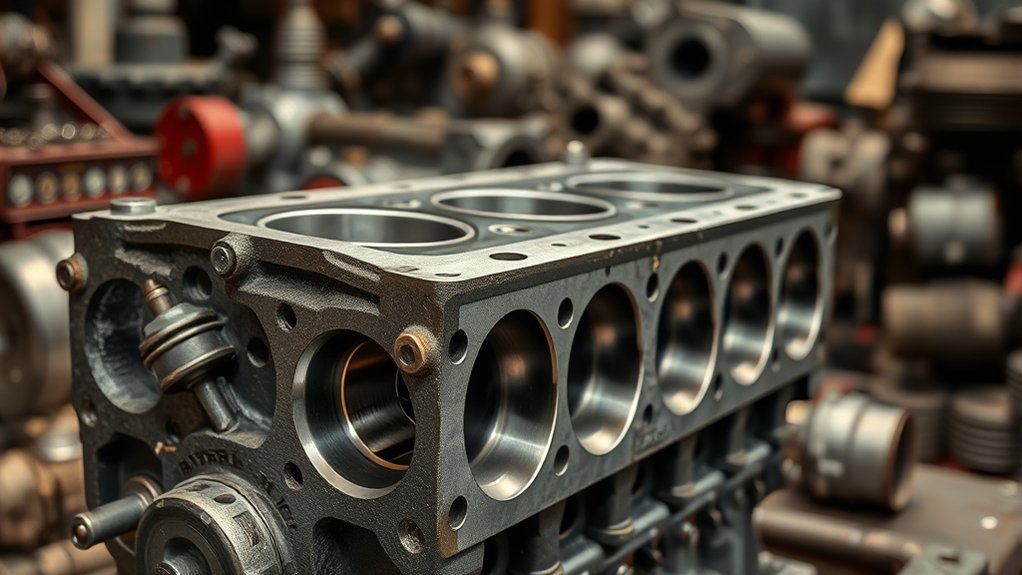
You’ll find that Ford cast several 460 block variants over the years, with standard production blocks forming the backbone of most truck and passenger-car applications.
You can also spot heavy-duty versions by their thicker main webs, revised oiling features, and other durability-focused changes that Ford used in later service and industrial builds.
To identify the exact casting, you should check the casting number, date code, and any raised foundry marks on the block’s sides and rear.
460 Block Castings
Ford’s 460 big-block story starts with a straightforward fact: Ford cast several distinct 385-series 460 blocks, but not a factory “small bore” Motorsport version. When you study the block casting numbers, you’ll see production changes centered on foundry revisions, deck height control, and machining tolerances rather than a special racing casting.
Early 460 castings show standard passenger-car and truck service use. Later castings reflect routine engineering updates, not a reduced-bore design. You won’t find a Ford Motorsport 460 small-bore block in period catalogs or engineering releases.
If you’re comparing castings, look for raised identifiers, date codes, and core-support details. Those clues help you separate genuine Ford production blocks from myths that grew around aftermarket and NASCAR-style builds.
Heavy Duty Versions
Heavy-duty 460 blocks appeared in Ford’s production lineup as service-oriented castings built for trucks, towing, and other high-load applications, not as a special Motorsport small-bore variant. You’re looking at standard 385-series architecture that Ford beefed up for durability, with thicker bulkheads, stronger webbing, and cooling capacity suited to sustained work.
Ford cast these versions for F-Series pickups, medium-duty trucks, and later service replacements, where torque mattered more than high-rpm experimentation. You won’t find evidence that Ford mass-produced a unique Motorsport block for the 460 in this era.
Most claims come from speculative rumors or confusion with factory prototypes and engineering tests that never reached regular production. If you trace the historical record, Ford’s heavy-duty 460s were practical castings, not exotic performance one-offs.
Key Identification Marks
When you’re trying to identify which 460 blocks Ford actually cast, the casting and engineering marks matter more than rumors about a mythical Motorsport small-bore version. You should inspect the block casting number on the bellhousing flange, then match it to Ford’s engineering prefix and date code.
Genuine 460 blocks usually show 385-series architecture, not a special Motorsport casting. Check the lifter valley, freeze plugs, and deck surfaces for factory texture and machining patterns. Your bore measurement should confirm the standard 4.360-inch bore, because a smaller bore points to machining history, not a Ford-cast variant.
Verify the casting date before assuming rarity.
Compare the engineering code to known 460 applications.
Measure cylinder wall thickness if overbore claims appear.
Where Did the Small-Bore 460 Rumor Start?
The small-bore 460 rumor seems to have grown out of a mix of real Ford casting changes, parts-book shorthand, and decades of enthusiast retelling. You can trace its rumor origins to late-1970s and 1980s discussions when racers compared 429 and 460 service blocks, then passed along two word discussion ideas like “small bore” and “boss block” without verifying casting specs.
Ford Motorsport catalogs sometimes listed bare blocks, machining notes, or displacement families separately, and that shorthand encouraged confusion. You also see the myth spread through magazine tech columns, swap-meet talk, and early internet forums, where repeated claims outran factory documentation.
In practice, you’re usually looking at a standard 460 architecture with machining or identification differences, not a unique Ford-production small-bore 460 Sport block.
How Did Ford Motorsport Big-Blocks Differ?
Ford Motorsport’s big-block offerings differed from standard production castings in a few practical ways: they were aimed at racers, they often came as bare blocks or service parts, and they could include revised machining, thicker material in key areas, and different identification features depending on the application. You’d see these parts discussed in two word discussion ideas like “service block” or “race casting,” because Ford sold them to support competition, not to replace every showroom 460.
They used specific casting numbers and service markings. They emphasized repeatable machining over showroom finish. They fueled reliability myths by sounding rarer than they were.
If you’re sorting lore from factory practice, you should focus on Ford’s cataloged Motorsport parts, not internet claims about a special small-bore 460 block.
How to Build a Stronger Ford 460
To strengthen a Ford 460, you start with the weak points the factory left exposed: the block, main support, oiling system, and rotating assembly. You’ll improve reliability by adding four-bolt main hardware where the casting allows, align-honing the mains, and balancing the crankshaft, rods, and pistons as a matched set.
Research on Ford big-block development shows that windage control and consistent oil pressure matter more than peak horsepower claims. Use forged internals, premium bearings, and a quality pan with baffling.
If you’re chasing high rpm, upgrade the valvetrain and limit harmonics with a damper that’s correctly matched to the engine. The small bore rumor origins often trace back to confusion with other Ford performance blocks, not the 460 itself, so build from documented casting data, not folklore.
What to Check Before Buying a Ford 460 Block
When you’re evaluating a Ford 460 block, start by confirming the casting numbers, since Ford’s big-block production details can identify the block’s original era and specification.
Next, inspect the main cap condition for cracks, machining marks, or mismatched hardware, because cap integrity affects crankshaft support and rebuild potential. Finally, measure the bores carefully for taper, wear, and overbore history so you know whether the block can still support a reliable 460 build.
Casting Numbers
Before you hand over money for a Ford 460 block, check the casting number on the block itself, because that’s the fastest way to confirm what you’re actually buying. Ford’s big-block 385-series castings tell you the year, foundry, and application, and they help you separate real parts from swapped or re-stamped pieces.
If you’re chasing the small bore rumor origins, the casting code is where the story starts to unravel. Look for the engineering prefix on the skirt, then match it against Ford reference tables and production years.
- Verify the full casting number, not just partial digits.
- Compare the date code to the claimed vehicle year.
- Confirm whether the block came from passenger car, truck, or marine service.
Main Cap Condition
Next, inspect the main caps because they tell you a lot about how hard a Ford 460 block has lived. You should check that each cap matches its original position, sits flat, and shows no fretting, cracking, or elongation around the bolt holes.
On 429/460 Lima blocks, the factory two-bolt caps were cast iron, and abuse usually leaves witness marks where the cap has shifted against the register. Look for broken dowels, damaged threads, or signs someone swapped caps without proper alignment.
If the caps have been torqued repeatedly, the parting lines can peen or gall. Stay focused on this evidence and skip unrelated topics or broad discussion ideas; cap integrity helps you judge whether the block’s bottom end is still trustworthy before you buy it.
Bore Measurements
After you’ve checked the main caps, move to the bores, because cylinder condition often tells you more about a Ford 460 block’s real history than the casting number does. You should measure each cylinder with a dial bore gauge at several depths and in two directions to catch taper, out-of-round, and ridge wear.
A true small bore claim should match the factory 460’s 4.360-inch standard, not a fantasy casting from rumor origins. Look for overbore machining marks, sleeve repairs, and any signs that a block has already been bored too far for safe rebuild margins.
Check deck-to-bore squareness
Compare all eight cylinders
Verify sonic thickness before boring
Frequently Asked Questions
How Can I Identify a Genuine Ford 460 Block Casting?
You can identify a genuine Ford 460 casting by checking the raised casting number, date code, and factory engineering marks; verify truck, Lincoln, or Thunderbird origin. Because of reliability concerns, compare against aftermarket sourcing records.
Are Aftermarket 460 Blocks Better Than Original Ford Castings?
Aftermarket 460 blocks often outshine originals; you’ll gain stronger cylinders, better metallurgy, and modern tolerances. It’s a tidal wave of improvement.
Still, you should weigh cost, originality, and intended use against Ford casting pedigree.
Which Years Had the Strongest Factory Ford 460 Blocks?
You’ll find the strongest Ford 460 factory blocks in the 1970-79 castings, especially mid-to-late ’70s truck and Lincoln versions. Ford strength blocks varied little, and identification myths often exaggerate year-to-year differences.
Can a Ford 460 Fit Where a 429 Block Was Used?
No, you can’t bolt a Ford 460 where a 429 block sat without checking mounts, oil pan, headers, and accessory clearance.
Your Ford 460 compatibility research should confirm spacing, because no direct swap guarantees fit.
What Signs Show a Ford 460 Block Has Been Overbored?
You’ll spot overbore signs by measuring cylinder walls, checking ridge wear, and reading block markings. If boring exceeds spec, thin walls, pitting, or mismatched pistons often betray it. Use a machinist’s bore gauge.
Conclusion
So, no—you shouldn’t chase a mythical Ford 460 small-bore Motorsport block, because the trail leads to smoke, not steel. Ford’s 460 was a 385-series big-block with a standard 4.360-inch bore, and Motorsport focused on parts and service castings, not a separate small-bore production block.
If you’re building one, verify the casting, measure the bore, and buy on facts, not folklore. In this hunt, the badge can glitter, but the block tells the truth. Ultimately, there is no genuine Ford 460 small-bore Motorsport block to be found.


