Can You Use a Regular Plug on f150 Lighting
As an Amazon Associate we earn from qualifying purchases.
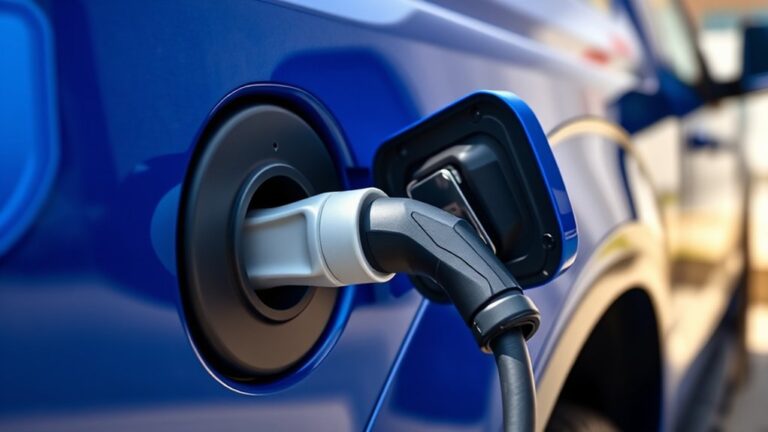
Yes, you can use a regular plug on an F-150 Lightning, specifically a standard 120-volt outlet. However, this limits you to Level 1 charging.
That means you’ll get roughly 1.4 kW at 12 amps, which is slow but workable for overnight top-offs or low-mileage use. The real question isn’t whether it works, but whether it fits your routine, your circuit, and your charging needs.
The details change the answer.
Key Takeaways
- Yes, a regular 120-volt household plug can charge the F-150 Lightning with a mobile connector.
- It provides Level 1 charging, which is slow but useful for overnight top-offs and limited daily driving.
- Expect roughly 1.4 kW from a 12-amp draw, so full recovery takes much longer than Level 2 charging.
- Use a grounded, dedicated, good-condition outlet; avoid worn cords, extension cords, and loose connections.
- Upgrade to 240-volt charging if you need faster overnight recovery or drive more miles each day.
Can You Use a Regular Plug on the F-150 Lightning?
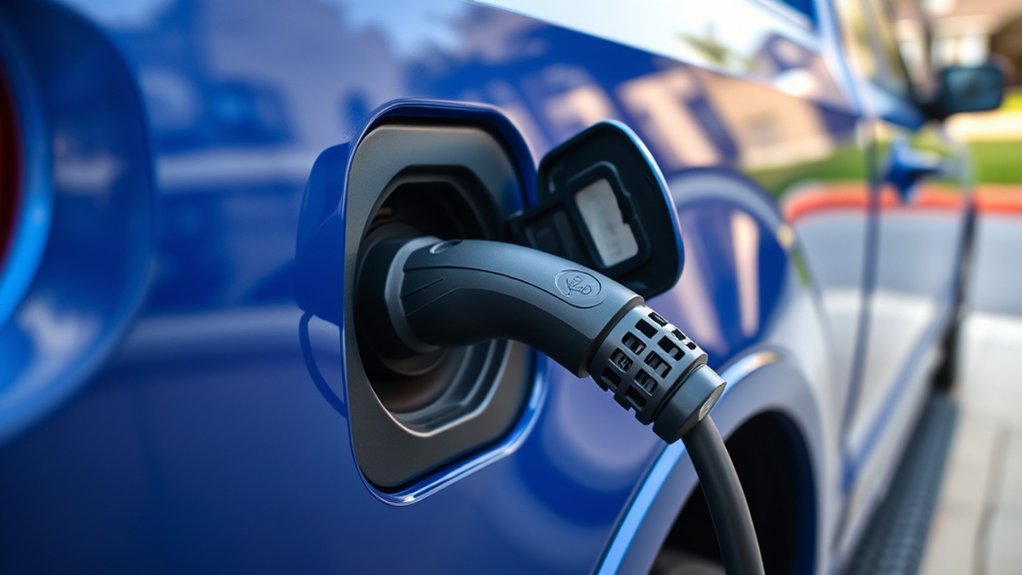
Yes, you can use a regular household plug on the F-150 Lightning, but only for Level 1 charging through the truck’s mobile connector. You connect the truck to a standard 120-volt outlet, and your regular plug becomes a low-power home charging source.
This setup is practical when you drive limited daily miles, park overnight, and don’t need rapid replenishment. You should verify that the outlet is grounded, dedicated, and in good condition, because shared circuits can limit performance or create electrical strain.
You’ll get the slowest charging rate available, so it works best as a fallback or routine overnight option. For many owners, this method supports basic home charging without installing additional equipment, but it won’t match the speed of higher-voltage alternatives.
How Level 1 Charging Works
Level 1 charging works by drawing 120-volt AC power from a standard household outlet and converting it through the F-150 Lightning’s onboard charger into DC power for the battery. When you plug into a regular outlet, the truck checks power compatibility before charging begins.
The onboard charger regulates voltage, current, and safety limits, so you don’t feed battery cells directly from wall power. You use the mobile charge cord to manage the connection, and the vehicle monitors temperature, load, and fault conditions throughout the session.
This method uses simple infrastructure, but it depends on circuit quality, outlet integrity, and continuous AC input. Because the system accepts household power, Level 1 charging is electrically straightforward, though it remains the slowest onboard charging mode available.
What a 120-Volt Outlet Can Actually Do
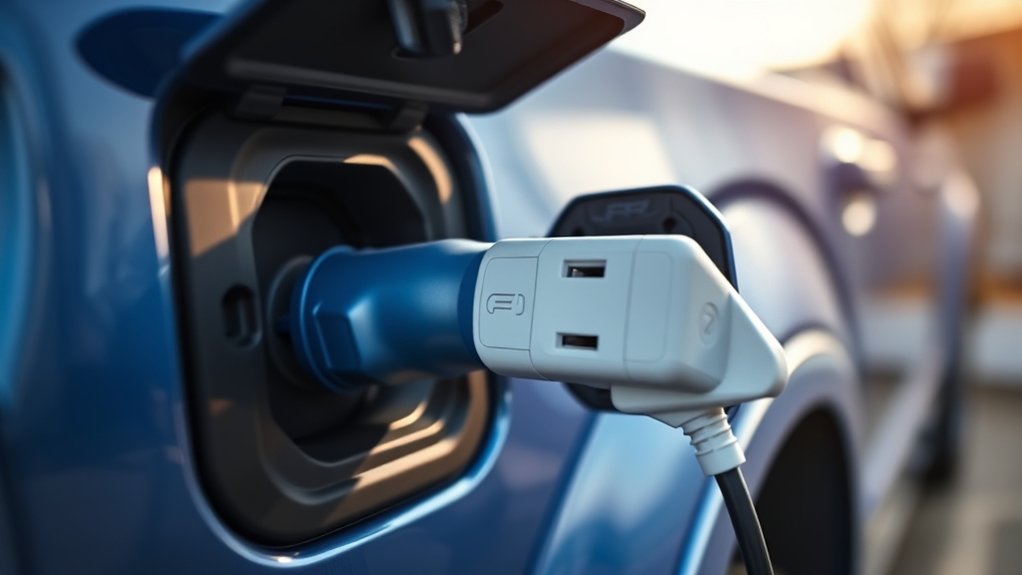
A 120-volt outlet delivers limited power, so you can only draw a modest amount of energy at a time. That means your device or F-150 Lightning will charge slowly compared with higher-voltage options, especially when the battery demand is high.
You’ll get the best results for light-duty charging, overnight top-offs, and situations where speed isn’t critical.
Outlet Power Limits
A 120-volt outlet in the F-150 Lightning isn’t a general-purpose high-power source; it’s a limited inverter output designed for light-duty loads. These typically include small electronics, battery chargers, tools, or appliances with modest wattage demand.
You should treat it like a regular outlet with tighter constraints, not as a substitute for home charging. The system can supply useful auxiliary power, but you must check each device’s watt rating before plugging in.
| Load Type | Typical Use | Suitability |
|---|---|---|
| Phone charger | Low draw | Safe |
| Laptop charger | Moderate draw | Usually safe |
| Space heater | High draw | Not suitable |
If you exceed the outlet’s limit, you’ll trip protection and cut power.
Device Charging Speed
How fast can a 120-volt outlet in the F-150 Lightning charge your devices? A regular plug delivers standard household voltage, so your charging speed depends on the device’s watt draw and the outlet’s continuous limit.
At 12 amps, you can supply about 1,440 watts before losses, which means a phone, laptop, tablet, or camera battery charges normally, not rapidly. You’ll see efficient top-ups for low-demand electronics, but high-capacity items take longer because the outlet can’t increase voltage or current beyond its design.
The system behaves like any other AC source: device chargers convert that power, and their internal limits determine the real rate. So, in practical terms, you get stable, predictable charging speed, not fast-charging performance, from the regular plug.
Best Use Cases
For everyday tasks, a 120-volt outlet in the F-150 Lightning works best as a low-demand power source for devices that charge through standard AC adapters. You can run a laptop, phone charger, camera battery, or small fan with a regular plug, as long as the draw stays within the outlet’s rated limits.
It’s also practical for inflating tires, powering a CPAP, or keeping a tool battery topped off during short stops. You shouldn’t expect it to handle heat-generating appliances, compressors, or high-wattage kitchen gear.
Check the label on each device and compare it to the outlet’s output. Safety considerations matter: use dry connections, avoid damaged cords, and don’t overload the circuit. Treat the outlet as convenience power, not a substitute for household mains.
How Fast Does the F-150 Lightning Charge on 120 Volts?
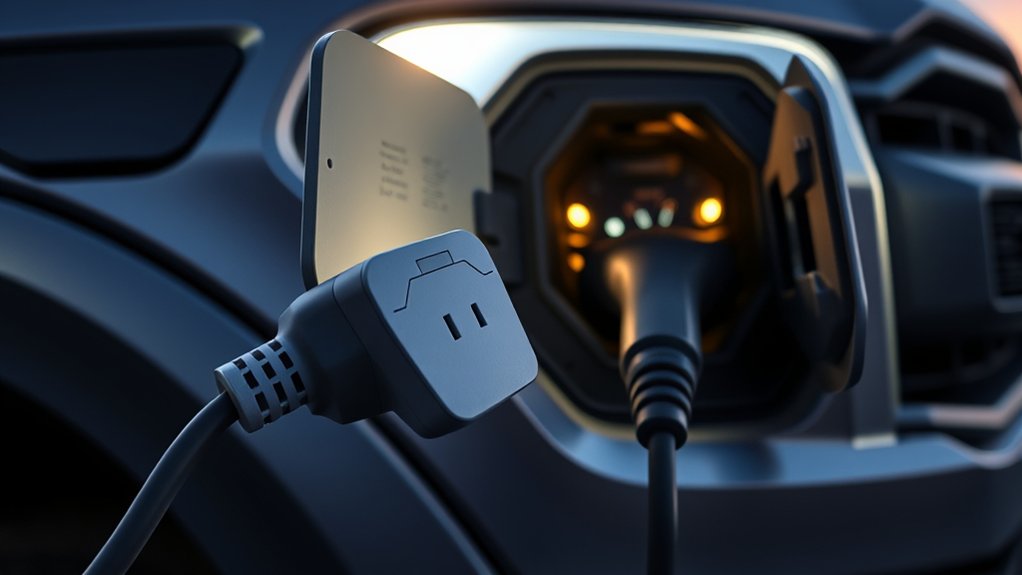
On 120-volt household power, the F-150 Lightning adds range slowly, typically recovering only a few miles of driving per hour of charging. You can use a regular plug, but 120 volt limits cap power near 1.3 to 1.4 kW, so the truck replenishes energy at a modest rate.
In practical terms, you may gain roughly 3 to 5 miles of range per hour, depending on battery size, temperature, and accessory load. That means overnight charging helps with short commutes, but it won’t quickly restore a deeply depleted pack.
You should view 120-volt charging as maintenance charging, not a primary refueling method. For predictable daily use, you’ll need longer dwell times or a higher-voltage circuit to increase charging throughput.
What Charging Cable Do You Need?
What charging cable do you need for an F-150 Lightning? You need the portable Ford Mobile Power Cord or a compatible Level 1 EVSE that ends in a J1772 connector. That cable lets you charge from a 120 volt outlet using a regular plug, so you can connect at home without special hardware.
- Input plug: standard household 5-15 plug for the 120 volt outlet
- Vehicle connector: J1772 handle for the Lightning charge port
- Cable rating: UL-listed, weather-resistant, and sized for continuous duty
You should verify amperage and cord length before you buy. A longer cable helps if your outlet sits far from the truck, but it shouldn’t create unnecessary voltage drop. Use only equipment rated for EV charging, not an extension cord.
When to Upgrade to a 240-Volt Charger
A 120-volt regular plug works for light daily mileage, but it charges the F-150 Lightning slowly, so you’ll eventually want 240 volts if you drive more than a few dozen miles a day or need a faster turnaround. Upgrade when your routine consistently leaves you below your preferred buffer by the next departure.
A 240-volt charger also makes sense if you share the truck, rely on overnight recovery, or want better load management at home. Check plug compatibility with your panel, outlet type, and EVSE rating before you buy.
You should also review cord safety, ensuring the cable won’t overheat, kink, or stretch across walkways. If your usage pattern is predictable and higher, 240 volts isn’t a luxury; it’s the practical baseline.
How Long F-150 Lightning Charging Takes
Charging time for an F-150 Lightning depends mainly on voltage, amperage, battery size, and your starting state of charge. You can estimate duration by dividing usable battery energy by effective charging power, then adding taper losses near full. On a 120-volt outlet, you’ll see slow recovery; on a 240-volt circuit, the rate rises sharply.
Charging time for an F-150 Lightning depends on voltage, amperage, battery size, and starting state of charge.
- Standard cord: best for overnight top-offs, not rapid replenishment.
- 240-volt EVSE: much shorter sessions, often enough for daily cycling.
- DC fast charging: quickest when you need range now.
For two word discussion ideas, compare “charge rate” and “battery size.” Mention subtopic irrelevance only if you’re ignoring weather and driving habits, because they also change results.
Safety Tips for Charging at Home
When you charge an F-150 Lightning at home, you should use a dedicated outlet or EVSE on a circuit that can safely handle the load. Check charging safety by verifying the breaker rating, wire gauge, and receptacle condition before each session.
You shouldn’t rely on worn cords, loose connections, or adapters that don’t match the vehicle’s current draw. Outlet compatibility matters because an undersized outlet can overheat, trip breakers, or damage equipment.
Keep the plug dry, avoid extension cords, and inspect for discoloration, melting, or unusual warmth during charging. If you notice any fault codes or interruptions, stop charging and have the circuit evaluated by a qualified electrician.
Regular inspection helps you reduce risk and maintain consistent, efficient home charging.
Which Charging Setup Fits Your Routine?
Your daily driving range and overnight parking window determine whether a standard 120V outlet, 240V Level 2 unit, or higher-capacity setup fits your routine. You’ll need to match plug type to charge rate, because a regular outlet adds range slowly, while a dedicated circuit cuts recovery time considerably.
Compare your typical energy use, charging duration, and electrical capacity before you choose a setup.
Daily Charging Needs
How you charge your F-150 Lightning each day should match your driving pattern, available outlet capacity, and how much range you need by morning. If you drive short distances, a lower-power setup can recover energy overnight without stress.
If your commute is longer, you’ll need a more aggressive daily strategy to avoid arriving undercharged. The irrelevant topic of weekend road trips, and the unrelated concept of towing max loads, don’t determine your nightly routine.
- Measure your average daily miles.
- Compare that demand with overnight charging hours.
- Leave a buffer for temperature losses and detours.
You want consistent state of charge, minimal outlet strain, and predictable readiness. That keeps your routine efficient and prevents charging from becoming a daily variable.
Plug Type Options
Which plug type fits your routine depends on how much energy you need to restore each night and how much current your home circuit can safely supply. A regular plug on a home outlet gives you Level 1 charging, which is the slowest option but often enough if you drive fewer miles and park for long periods.
If you need faster recovery, a 240-volt Level 2 setup delivers much more power and reduces downtime. You should compare your daily mileage, battery size, and available amperage before choosing.
A regular plug is convenient because it uses existing infrastructure, yet it can struggle to refill the battery overnight. For heavier use, a dedicated circuit and charger usually fit better.
Frequently Asked Questions
Can a Regular Outlet Damage the F-150 Lightning Battery?
No, a regular outlet won’t damage your F-150 Lightning battery if you use approved charging equipment; you’ll just charge slower.
You should still monitor battery safety, wiring quality, and outlet condition to avoid overheating.
Does Level 1 Charging Work in Cold Weather?
Yes, level 1 charging works in cold weather, though it’ll slow like a winter river. You’ll still charge from a regular outlet, but battery safety systems may reduce power until the pack warms.
Can I Charge Outdoors in the Rain Safely?
Yes, you can charge outdoors in rain safely if you use outdoor charging equipment rated for wet conditions, keep connectors off puddles, and verify rain safety seals.
You shouldn’t use damaged cords or exposed outlets.
Will Charging Slow Down if Other Appliances Are Running?
Yes, charging can slow if other appliances run. You’ll split circuit capacity, increasing idle power losses and reducing available current.
As they say, “don’t overload the line.” Solar compatibility helps, but household demand still limits charging speed.
Does the F-150 Lightning Come With a Mobile Charger?
Yes, you’ll usually get a mobile charger with the F-150 Lightning, letting you charge from a regular outlet.
You’ll protect battery health by limiting heat and monitoring current, especially during longer overnight charging sessions.
Conclusion
Yes, you can plug your F-150 Lightning into a regular 120-volt outlet, but you’re in Level 1 territory—steady, safe, and slow, like a marathon paced by a metronome. You’ll get about 1.4 kW at 12 amps, enough for overnight top-offs, not quick refills.
If your driving demands more, you’ll need a 240-volt setup. Check your outlet, keep the circuit dedicated, and charge with the patience of a ticking clock.
In conclusion, while you can use a regular plug on F-150 Lightning, it’s best suited for slow charging sessions rather than fast energy replenishment.


