Are Ford Rangers Good Trucks
As an Amazon Associate we earn from qualifying purchases.
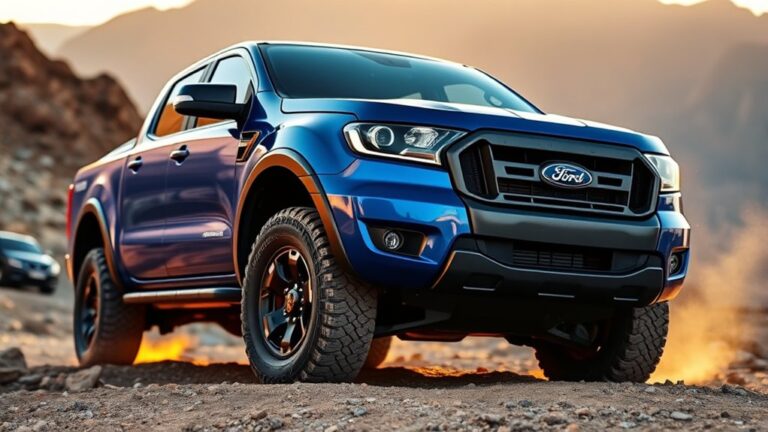
If you’re wondering whether Ford Rangers are good trucks, the short answer is yes for many drivers, but the details matter. You get a midsize pickup that’s easy to live with, capable enough for work, and more efficient than many full-size rivals.
Still, you’ll want to weigh towing needs, rear-seat space, and long-term costs before deciding. The real question is how well it fits your routine, and that’s where things get more interesting.
Key Takeaways
- Ford Rangers are good trucks for buyers wanting a practical midsize pickup with everyday usability and solid work capability.
- They offer responsive turbocharged power, competitive fuel economy, and a manageable size for commuting and parking.
- Towing and hauling are strong for light to moderate jobs, with proper configuration around 7,500 pounds.
- They ride comfortably overall, though rough pavement and rear-seat space are weaker points.
- Reliability and ownership costs are generally reasonable, but maintenance matters, especially with turbocharged engines and electronics.
Are Ford Rangers Good Trucks for Daily Use?
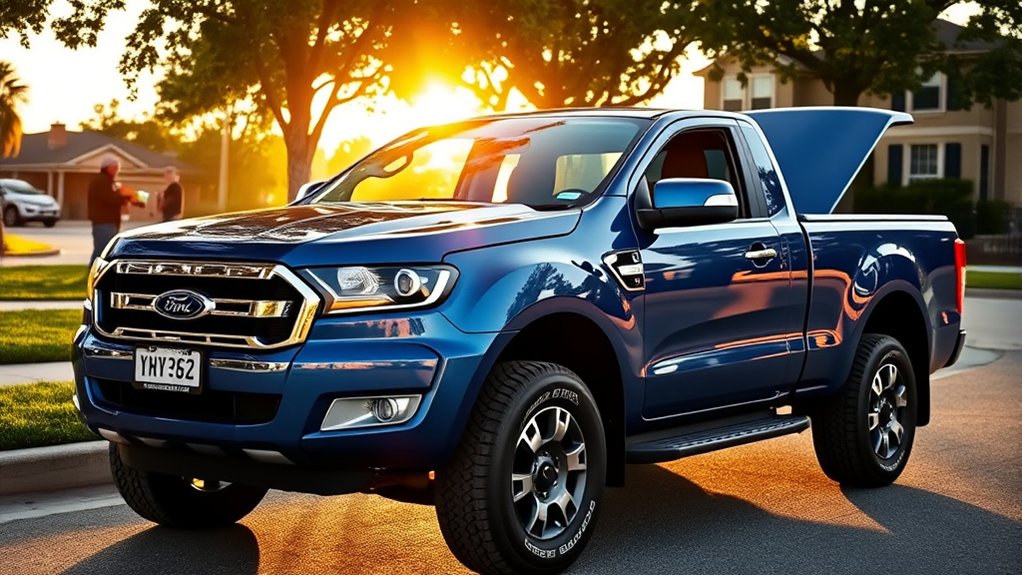
Yes, Ford Rangers can work well for daily use because they balance manageable size, decent fuel economy, and enough practicality for most commuting and errand-running needs. You get a truck that’s easier to park and maneuver than larger pickups, which matters in tight city lots and crowded streets.
You should also separate reliability myths from real ownership data, since many concerns come from older models or isolated reports rather than broad patterns. For most drivers, the Ranger’s cabin, ride quality, and cargo flexibility make it suitable for weekday tasks.
Its off road capability may matter less during daily driving, but it adds confidence if your routine includes rough roads, bad weather, or occasional weekend travel. That versatility makes it a practical choice for you.
Ford Ranger Strengths for Buyers
What makes the Ford Ranger appealing to buyers is its balance of capability, size, and value. You get a midsize truck that’s easier to maneuver than a full-size pickup while still offering solid towing and hauling for many needs.
Its turbocharged engine gives you responsive power, and the chassis feels composed in mixed driving. If you’re comparing pickups, the Ranger creates useful comparison angles against rivals because it blends work-ready utility with everyday usability.
You can also find topic ideas in its available trims and packages, which let you tailor the truck toward comfort, tech, or off-road use. For many buyers, that mix makes the Ranger a practical choice without pushing you into a larger, costlier truck.
Ford Ranger Weaknesses to Know
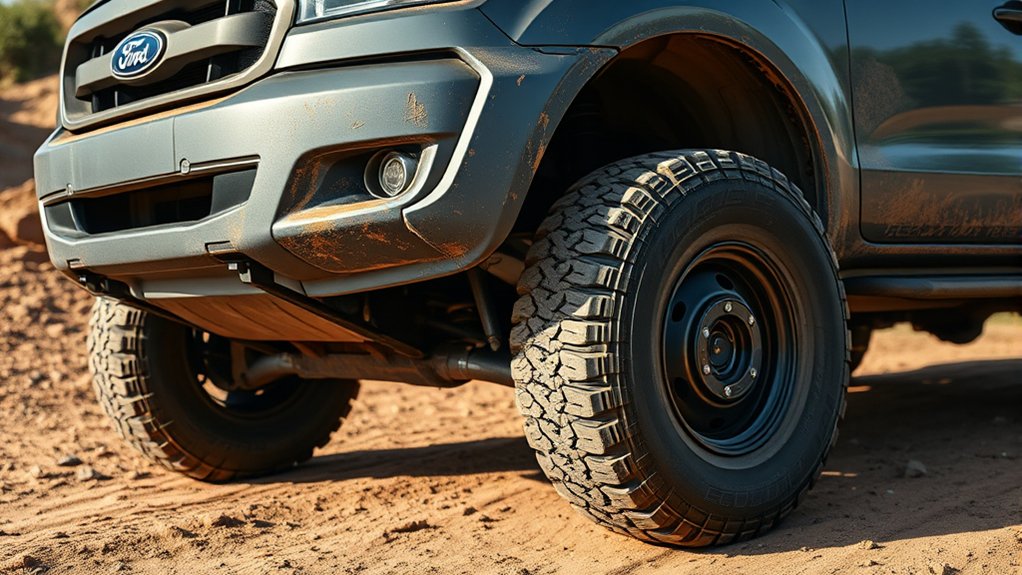
You’ll also notice a few trade-offs with the Ford Ranger that can affect daily use. Its ride can feel less composed over rough pavement, its towing limits may fall short of some rivals, and cabin space isn’t as generous as larger trucks.
If you’re comparing options, these weaknesses matter as much as the Ranger’s strengths.
Ride Quality Limits
Ride quality is one of the Ford Ranger’s main tradeoffs, especially if you spend a lot of time on rough pavement or empty bed mileage. You’ll notice the suspension tune leans firm, which helps control body motion but also passes sharper impacts into the cabin.
On patched streets, expansion joints, and broken asphalt, the truck can feel busier than some rivals, and the rear end may hop more over successive bumps. That doesn’t make it uncomfortable, but it does mean you should expect more texture from the road than from a softer midsize pickup.
If you prioritize a settled, carlike ride, the Ranger’s setup may seem less forgiving. If you value stability and a composed chassis, though, its firmness can still make sense in everyday driving.
Towing Capacity Gaps
Towing is another area where the Ford Ranger shows clear limits compared with some midsize rivals. You can still use it for light boats, small campers, and utility trailers, but its towing capacity doesn’t leave much cushion once you factor in passengers, cargo, and hitch weight.
That means you’ll need to watch ratings closely if you plan frequent towing. The truck’s payload limits can also narrow your options, especially when you load tools or bed gear alongside a trailer setup. In practice, the Ranger works best when your needs stay moderate rather than ambitious.
If you want a midsize truck for occasional towing, it’s capable enough. If you need maximum trailer ratings or more flexibility, you may want to compare other models before deciding.
Interior Space Constraints
Space limitations are another weakness to keep in mind with the Ford Ranger, especially if you plan to use it as a daily driver or family truck. You’ll notice the interior space feels tighter than in some rivals, particularly in the rear seats. If you regularly carry adults, kids, or gear, that matters.
Cabin storage is also limited, so you may need to get creative with bags, tools, and smaller items.
- Rear-seat legroom can feel cramped on longer drives.
- Cabin storage spaces don’t match full-size truck convenience.
- Interior space works better for occasional passengers than constant use.
If you value maneuverability, the Ranger still makes sense. But if you want maximum comfort and flexible storage, you’ll likely prefer a roomier truck.
How Much the Ford Ranger Can Tow and Haul
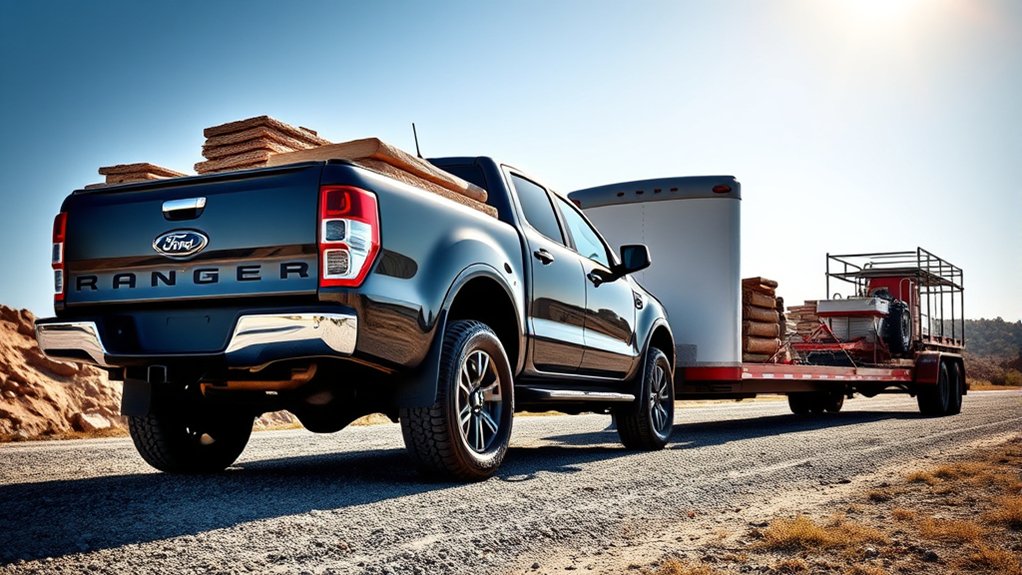
When you look at the Ford Ranger’s towing capacity, you’ll find that the exact limit depends on the cab, bed, and equipment you choose. You also need to check payload ratings, since they determine how much weight you can carry in the cab and bed without overloading the truck.
Engine and drivetrain choices matter too, because they directly affect how confidently the Ranger can tow and haul under real-world conditions.
Towing Capacity Limits
How much can a Ford Ranger really handle? You should look at towing limits as a practical ceiling, not a marketing headline. Depending on trim, drivetrain, and equipment, the Ranger typically tows around 7,500 pounds when properly configured, which covers many small boats, campers, and utility trailers.
Your actual number changes with axle ratio, cab style, and optional tow package, so you need to verify the exact build before you hitch up. Payload relevance also matters because trailer weight affects how you load gear and passengers.
- Check the door-jamb label.
- Match trailer weight to factory ratings.
- Leave margin for braking and stability.
Payload Ratings Explained
Towing tells only part of the story; payload is the other limit you need to respect. When you look at payload ratings explained, you’re seeing how much weight the Ranger can carry in the cab and bed before you exceed its gross vehicle weight rating.
That includes passengers, cargo, tools, and accessories, so your real-world load can add up quickly. For daily use vs reliability, staying within the stickered payload number helps you avoid premature wear and maintains stable braking and handling.
You should check the door-jamb label, then subtract your actual passenger and cargo weight to see what’s left. The Ranger can haul a useful amount, but capacity changes with trim and equipment, so verify the specific truck you’re considering before you load it.
Engine And Drivetrain Impact
Engine choice and drivetrain setup play a major role in how much the Ford Ranger can tow and haul. When you choose a turbocharged four-cylinder with a properly matched transmission, you get stronger low-end torque, which helps you move heavier loads with less strain.
Four-wheel drive can add capability in rough conditions, but it may slightly reduce fuel economy and increase maintenance costs over time. You should also consider axle ratio and cooling capacity, since they affect engine performance under sustained towing.
- Higher torque improves launch and hill climbing.
- Better gearing supports stable towing and payload control.
- Simpler drivetrains can lower long-term maintenance costs.
Ford Ranger Fuel Economy and Ride Comfort
When you look at the Ford Ranger’s fuel economy and ride comfort together, you get a clear picture of its everyday usability. You’ll find that its fuel economy is competitive for a midsize truck, especially if you compare it with larger pickups that use more fuel.
In mixed driving, the Ranger can deliver efficient numbers without forcing you to sacrifice capability. Its ride comfort also stands out, since the suspension filters out many bumps and helps the cabin feel settled on rough pavement.
You won’t mistake it for a car, but you can expect a composed ride that works well for commuting and longer trips. Overall, the Ranger balances efficiency and comfort in a practical way that suits daily driving and light-duty truck use.
Ford Ranger Reliability and Maintenance Costs
Fuel economy and ride comfort matter day to day, but reliability and maintenance costs often decide whether a truck feels like a smart long-term buy. You’ll find the Ranger’s track record is generally solid, with routine service often staying predictable if you follow the schedule.
Parts availability helps keep repair bills manageable, and most wear items don’t require unusual labor. Still, turbocharged engines and modern electronics can raise maintenance costs when problems appear.
- You reduce risk by changing fluids on time.
- You control expenses by comparing dealer and independent shop pricing.
- You protect resale value by documenting every service.
Compared with rivals, the Ranger usually lands in the middle: not the cheapest, not the most expensive. If you value fuel economy and disciplined upkeep, you can keep ownership costs reasonable.
Who Should Buy a Ford Ranger?
The Ford Ranger fits you best if you want a midsize truck that balances everyday usability with real work capability. You’ll appreciate it if you need a manageable bed, decent cabin space, and efficient towing for light to moderate jobs.
This buyers guide suits you if you commute daily, haul weekend gear, or want a truck that’s easier to park than full-size models. You should also consider it if you value practical trim choices and color options without overcomplicating the purchase.
| Buyer Type | Best Use | Fit |
|---|---|---|
| Commuter | Daily driving | Strong |
| Weekend DIYer | Light hauling | Strong |
| Small business owner | Jobsite tasks | Good |
| Off-road beginner | Occasional trails | Good |
| Style-focused buyer | Color options | Moderate |
How the Ford Ranger Compares to Rivals
Compared with rivals like the Toyota Tacoma, Chevrolet Colorado, and Nissan Frontier, the Ford Ranger stands out for its balanced mix of towing capability, everyday comfort, and straightforward pricing. You’ll notice it isn’t the most rugged choice, but it often feels easier to live with in driveability comparisons.
The Tacoma usually leads in resale and off-road variants, while the Colorado can offer stronger trail-focused trims. The Frontier gives you solid value, yet its cabin tech can lag.
- You get a practical middle ground between work duty and commuting.
- You should compare trim content, not just base price.
- You’ll benefit most if you want capability without complexity.
Frequently Asked Questions
Is the Ford Ranger Good Off-Road?
Yes, you can take a Ford Ranger off-road, especially with 4×4 and skid plates. It offers solid off-road durability while staying practical daily, though you’ll want proper tires and careful driver judgment for tougher trails.
Does the Ford Ranger Fit in a Garage?
Yes, you can usually fit a Ford Ranger in a standard garage because its compact dimensions help. You’ll want to verify your garage’s interior length, width, and garage parking clearance, though.
What Cab Sizes Does the Ford Ranger Offer?
You’ll usually find two cab configurations: SuperCab and SuperCrew. SuperCab offers rear-hinged half-doors, while SuperCrew gives you four full doors.
Your choice affects passenger space, bed length, and price considerations substantially.
Can the Ford Ranger Be Used for Family Trips?
Yes, you can use a Ford Ranger for family trips, especially in a family friendly setup. You’ll want the right cab and trim; it handles road tripping well, though rear space and comfort can feel limited.
Does the Ford Ranger Hold Its Resale Value?
Yes, you’ll usually find the Ford Ranger holds strong resale value, thanks to solid demand and good fuel efficiency.
You’ll get a practical truck that depreciates slower than many midsize competitors.
Conclusion
So, are Ford Rangers good trucks? If you want a midsize pickup that feels like a well-tuned tool, the answer’s yes. You get solid power, easy daily drivability, and enough capability to handle work without feeling oversized.
Still, you’ll notice tighter cabin space and less muscle than a full-size truck. For you, the Ranger can be a steady bridge between commuter and hauler, a jack-of-all-trades that doesn’t try to be a giant.
In conclusion, Ford Rangers are good trucks for those seeking a versatile and manageable midsize pickup.


