Are Ford Explorers Good Cars
As an Amazon Associate we earn from qualifying purchases.
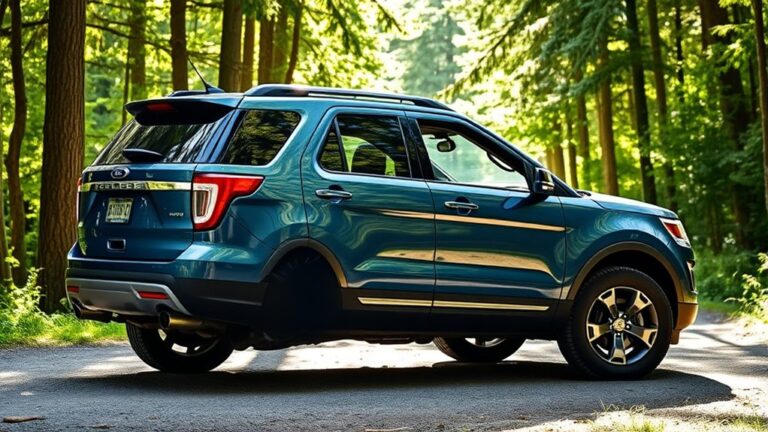
Ford Explorers are good cars that have long been among the best-selling midsize SUVs in the U.S., which says a lot about their appeal. You get three rows, solid cargo room, available AWD, and useful towing power. However, reliability can vary by model year, and upkeep matters.
If you’re weighing family space, tech, and ownership costs, the real question is which Explorer fits your needs—and which ones you should avoid.
Key Takeaways
- Ford Explorers are practical three-row SUVs with usable space for families and cargo.
- They offer strong safety tech, user-friendly infotainment, and available all-wheel drive.
- Performance and towing are solid for light to moderate loads when properly equipped.
- Reliability is mixed by model year, with some versions having electrical, transmission, or suspension issues.
- They are a good choice if you value space and features, but verify maintenance history before buying.
Are Ford Explorers Good Cars for Most Drivers?
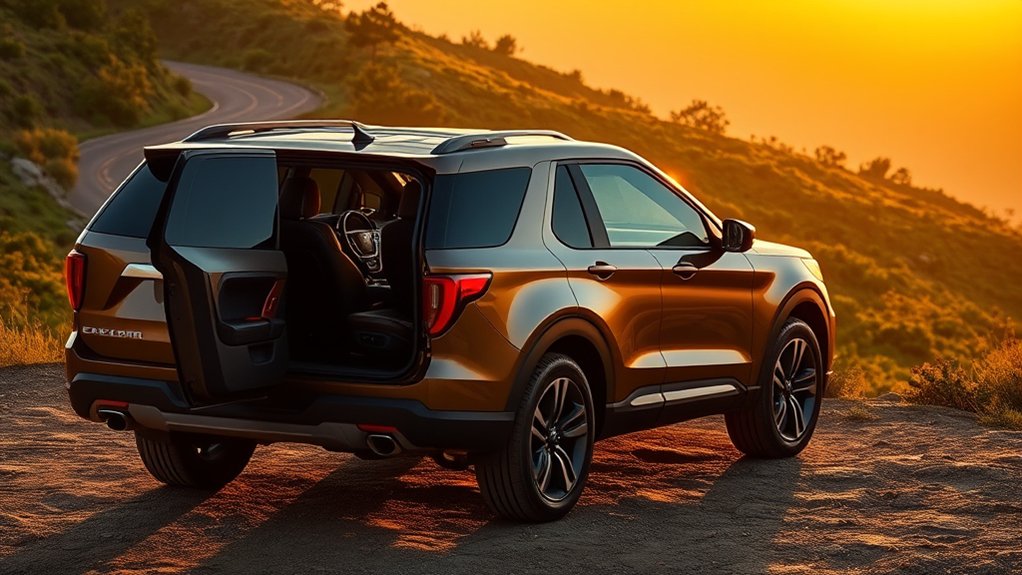
For most drivers, the Ford Explorer is a solid midsize SUV that offers a comfortable ride, strong cargo space, and available all-wheel drive. You get three rows, so it can handle family duties better than many two-row rivals.
In a trims comparison, you’ll see wide differences in features, from basic convenience items to upscale tech and driver aids. That range lets you choose a version that fits your budget and needs. You also get several color options, which helps if you want a simple or more distinctive look.
The cabin layout is straightforward, and you can use the infotainment system without much effort. If you need space, flexibility, and a familiar SUV format, the Explorer makes practical sense for most buyers.
Ford Explorer Reliability and Repair Costs
Reliability is a mixed area for the Ford Explorer, so you should check the model year and trim carefully before you buy. You may find solid long-term ownership in some versions, but others have notable reliability concerns that can affect your budget.
Common issues can include electrical faults, transmission problems, and suspension wear, depending on the generation and maintenance history. Because of that variation, you should review service records and independent reliability ratings before committing.
Repair costs can also be higher than average when major components need attention, especially if you’re buying a higher-mileage SUV. A well-maintained Explorer can be a reasonable choice, but you should expect uneven dependability across the lineup and plan for possible maintenance expenses over time.
Ford Explorer Performance, Towing, and MPG
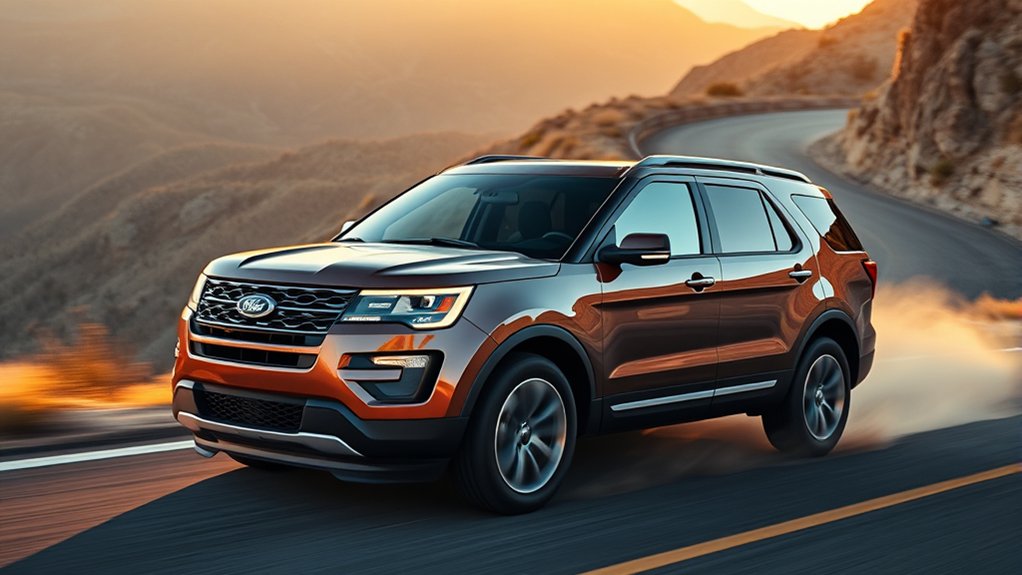
When you look at a Ford Explorer, you’ll find it offers strong towing capability for family trips and light hauling.
You can also expect fuel economy to vary by engine and drivetrain, so efficiency isn’t its strongest area. Overall, its performance balances daily driving, towing, and MPG in a practical way.
Towing Capability
Need towing capability from the Ford Explorer? You can rely on it for light to moderate trailering, depending on trim and equipment. Properly equipped models offer strong towing capability for boats, small campers, and utility trailers.
Your exact rating depends on engine choice, drivetrain, and towing package, so check the vehicle label before you hitch anything. The Explorer also gives you useful payload capacity, which matters when you load passengers, cargo, and tongue weight together.
If you exceed either limit, you reduce safety and control. You’ll also want trailer sway control and a properly rated hitch for better stability. For most daily drivers who tow occasionally, the Explorer’s capability is practical and straightforward.
Fuel Economy
Fuel economy in the Ford Explorer varies a lot by engine, drivetrain, and whether you choose rear- or all-wheel drive. You’ll usually see better fuel efficiency with the base engine and rear-wheel drive, while stronger powertrains and AWD reduce MPG. If you tow often, expect mileage to drop further under load.
City driving typically uses more fuel than highway cruising, so your route matters.
- Base models deliver the best MPG
- AWD lowers efficiency slightly
- V6 and hybrid setups change results
- Towing cuts real-world mileage
- Regular explorer maintenance helps preserve efficiency
You can improve results by keeping tires inflated, avoiding aggressive acceleration, and following the service schedule. For many drivers, the Explorer balances performance and practicality, but its fuel economy isn’t class-leading.
Ford Explorer Space and Family Features
Inside the Ford Explorer, you get three rows of seating and enough passenger space to make it a practical choice for families. You can seat up to seven, and the cabin gives adults usable room in the first two rows.
The third row works best for children or shorter trips, but it still adds flexibility. You also get solid space efficiency, since the layout uses its footprint well without feeling cramped.
Family seating is straightforward, with easy-access doors and wide openings that help with daily loading. Cargo space remains useful even with passengers onboard, and folding the rear seats expands storage for strollers, groceries, or luggage.
If you need a midsize SUV that balances people-moving and everyday utility, the Explorer delivers that mix clearly.
Ford Explorer Trims and Which One to Choose
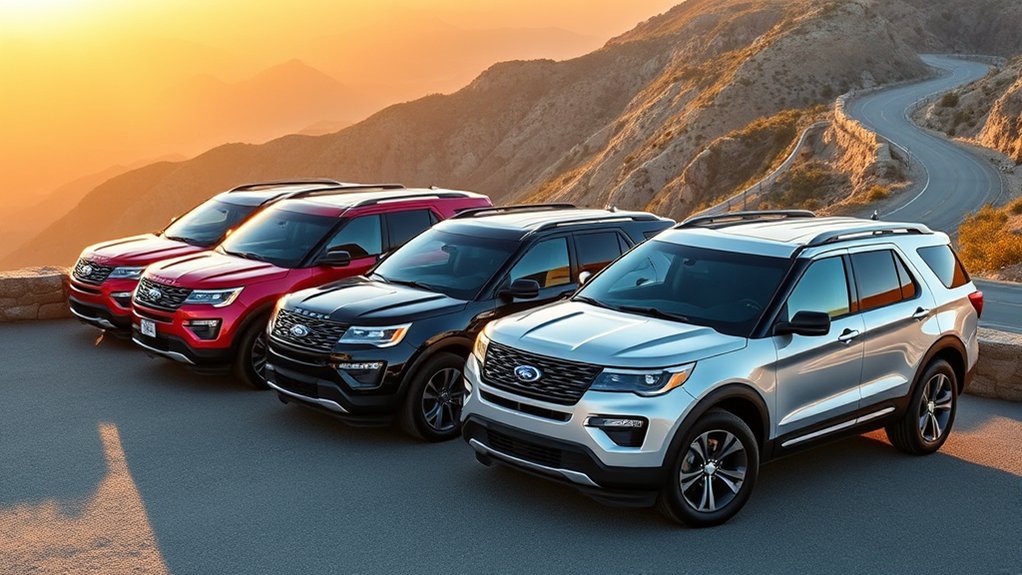
You’ll find the Ford Explorer in several trims, starting with a basic model and moving up to versions with more comfort, technology, and performance features. Base trims usually cover the essentials, while higher trims add options like larger screens, upgraded materials, and more advanced driver aids.
If you want the best value, you’ll likely choose a mid-level trim that balances price and equipment.
Base Vs Higher Trims
When you compare the Ford Explorer’s base trim with its higher trims, the main trade-off is value versus features. In a base vs higher comparison, you get a lower price and essential equipment first, while higher trims add more comfort, tech, and upscale materials.
If you want value vs luxury, the gap is clear: the base model covers daily driving needs, but pricier versions feel more refined. You should weigh what you’ll actually use, not just the badge.
- Base trim keeps costs lower
- Higher trims add larger screens
- Extra driver aids appear above base
- Premium audio comes on select trims
- Interior materials improve with price
Best Trim For Buyers
So, which Ford Explorer trim makes the most sense for most buyers? You’ll usually get the best value in the midlevel trim, where comfort, safety tech, and practicality balance price. It avoids the base model’s stripped feel and skips the premium-trim cost jump. That matters if you care about resale value and lower maintenance costs over time.
| Trim | Best For | Key Tradeoff |
|---|---|---|
| Base | Lowest price | Fewer features |
| XLT | Most buyers | Moderate cost |
| Limited | Added comfort | Higher price |
| ST | Performance | More fuel use |
| Platinum | Luxury buyers | Highest cost |
If you want broad appeal, choose the XLT. It gives you the most balanced ownership experience.
Ford Explorer Safety Ratings and Tech
Safety is one of the Ford Explorer’s strong points, with solid crash-test performance and a long list of standard driver-assist features. You get strong safety ratings from major testing agencies, plus tech innovations that help reduce risk on the road.
Ford packs in practical systems that monitor traffic, lane position, and distance ahead, so you can drive with more awareness.
- Automatic emergency braking
- Blind-spot monitoring
- Lane-keeping assistance
- Rear cross-traffic alert
- Adaptive cruise control
You also get a user-friendly infotainment interface, clear digital displays, and available parking aids that simplify low-speed maneuvers. These features don’t make the Explorer perfect, but they do give you a well-equipped SUV focused on everyday protection and convenience.
Should You Buy a Ford Explorer?
The Ford Explorer is worth considering if you want a three-row SUV with strong safety tech, available all-wheel drive, and a comfortable cabin for daily use. You should buy one if you need family space, useful towing capability, and a high driving position.
It’s also a practical choice if you value driver-assist features and easy access to third-row seating. However, you may want to compare it with rivals if fuel economy matters or if you prefer a smaller footprint for city driving.
Check trim prices carefully, since options can raise costs quickly. If you care about in-car air quality, test the cabin filters and ventilation setup. Skip aftermarket wheel upgrades unless you’re comfortable with ride changes and added expense.
Frequently Asked Questions
How Does the Ford Explorer Handle in Winter Weather?
It handles winter weather well with available AWD, traction control, and ground clearance. You’ll do best with winter tires, and heated steering resistance can improve comfort.
Stability stays solid, though braking still depends on tire grip.
What Are Common Ford Explorer Interior Noise Complaints?
You’ll often hear interior rattles and cabin creaks from the Ford Explorer, especially over rough roads. You might also notice trim buzz, dash squeaks, and loose panels.
It’s impressive how luxury can sound like percussion.
Does the Ford Explorer Hold Its Resale Value Well?
Yes, you can expect the Ford Explorer to hold resale value fairly well, especially with strong demand and solid winter handling. Higher trims and well-maintained models usually retain more value than average.
How Easy Is It to Park a Ford Explorer in Cities?
You’ll find parking a Ford Explorer in cities fairly challenging because of its size, though cameras help. You’ll get decent city maneuverability.
Winter handling, interior noise, resale value, and warranty coverage matter too.
What Warranty Coverage Comes With a New Ford Explorer?
You get Ford’s basic warranty coverage specifics: 3-year/36,000-mile bumper-to-bumper and 5-year/60,000-mile powertrain coverage.
You’ll also get driver assistance inclusions on many trims, but exact features vary by model year and package.
Conclusion
If you want a practical three-row SUV, the Ford Explorer can be a solid choice. You get strong passenger and cargo space, useful tech, and available AWD and towing strength, like a Swiss Army knife for family duty.
But you should check the model year and service history, since reliability and repair costs vary.
If you need room, versatility, and everyday usability, the Ford Explorer can fit your life well and is generally considered a good car.


