Are Ford Escape 4 Wheel Drive
As an Amazon Associate we earn from qualifying purchases.
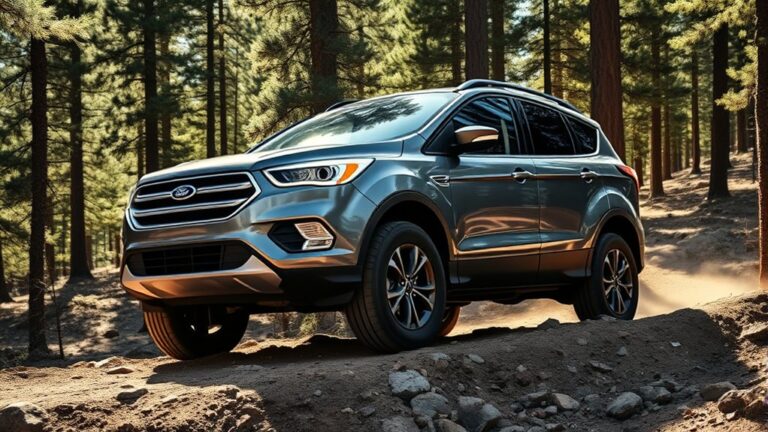
If you’re asking whether a Ford Escape is 4 wheel drive, the short answer is that most models aren’t built with a traditional 4WD system. Instead, you’ll usually find available AWD, which can shift power as traction changes and help in rain, snow, or on slick roads.
The exact setup depends on the model year and trim, and the details can change more than you might expect. This means some versions may offer AWD while others stick to front-wheel drive.
So, while the Ford Escape doesn’t typically have 4 wheel drive, it often comes with an all-wheel-drive option that provides added stability and control in various conditions.
Key Takeaways
- Most Ford Escape models are AWD, not traditional 4WD SUVs.
- Some Escape trims are front-wheel drive, depending on year and configuration.
- AWD automatically sends power to wheels with the most grip for better traction.
- AWD helps in rain, snow, and light off-road conditions, but it is not heavy-duty 4WD.
- Check the window sticker, VIN build sheet, or owner’s manual to confirm the exact drivetrain.
Is the Ford Escape AWD or 4WD?
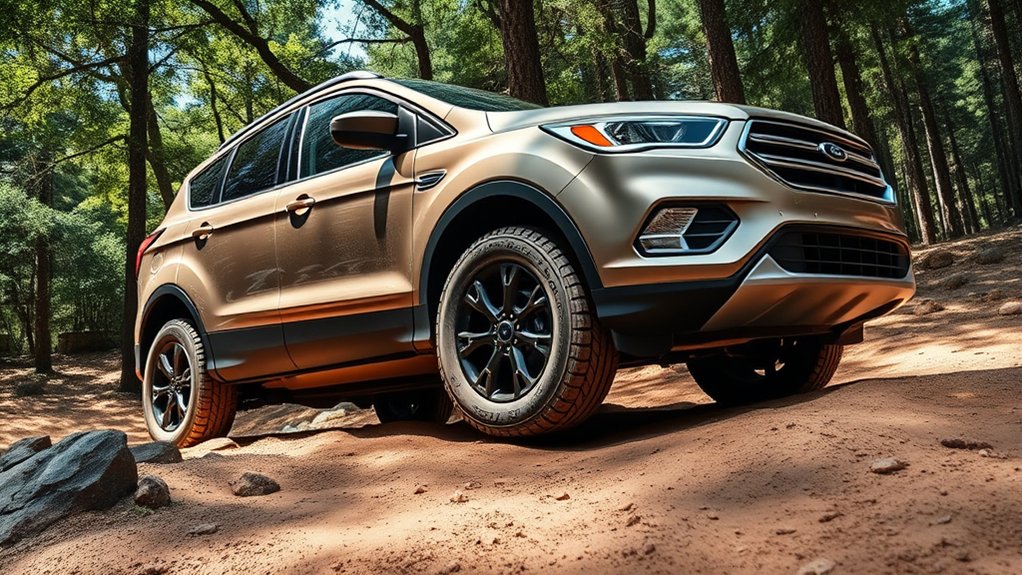
The Ford Escape is typically an AWD vehicle, not a traditional 4WD SUV. You’ll usually find all-wheel drive on many trims, while some versions may use front-wheel drive instead.
That setup supports stable traction in rain, snow, and light off-road conditions without changing the Escape’s core character. If you’re comparing it to body-on-frame trucks or larger SUVs, you’ll notice different driving aesthetics and a smoother road feel.
You also get a cabin focused on interior comfort, with ride quality that suits commuting and family use. When you check a specific model, look at the drivetrain listed on the window sticker or spec sheet, because Ford can vary equipment by trim, year, and package.
Ford Escape AWD vs. 4WD
When you compare Ford Escape AWD and 4WD, you’ll see that AWD works automatically to balance traction as conditions change.
4WD usually gives you more direct control and can handle tougher off-road situations, but it’s not always the better fit for everyday driving. You should choose the system that matches how you drive, where you drive, and how much capability you actually need.
AWD System Basics
At its core, Ford Escape AWD is an automatic traction system that sends power to the wheels with the most grip, while traditional 4WD systems typically give you a more rigid, driver-focused setup for tougher off-road use.
You’ll usually feel AWD working in the background, not as a system you switch on and off. It uses sensors to monitor wheel slip and adjust power distribution as conditions change. That means you get added stability on wet pavement, light snow, or gravel without extra effort.
In the Escape, AWD complements everyday driving rather than replacing utility features like side mirrors or cargo nets. You still benefit from practical packaging, but AWD mainly improves traction management, not vehicle size, ground clearance, or cabin layout.
4WD Capability Differences
Where 4WD can differ most from Ford Escape AWD is in how much control and low-speed capability it offers. With 4WD, you usually get a stronger mechanical connection that can send power more directly when traction drops.
That can help you manage rough surfaces, steep grades, or deeper snow with more predictable response at lower speeds. AWD, by contrast, works more automatically and focuses on everyday traction changes rather than dedicated off-road control.
You still need proper tire maintenance, because worn or uneven tires reduce grip in either system. Wheel alignment also matters, since poor alignment can affect tracking, tire wear, and how consistently the drivetrain shares traction.
In practice, the difference comes down to how much authority you want when conditions get challenging.
Which Model To Choose
Choosing between a Ford Escape AWD and a 4WD setup comes down to how you plan to drive. If you stay on pavement, choose AWD for smoother, automatic traction and better efficiency. If you need low-speed control for rough trails, 4WD can suit you better, though the Escape usually doesn’t offer a traditional system.
| Use case | Best fit | Why |
|---|---|---|
| City driving | AWD | Easy, automatic grip |
| Snowy roads | AWD | Stable everyday traction |
| Off-road use | 4WD-like vehicle | More crawl control |
| Comparing horsepower | Any trim | Engine output matters more |
| Choosing color | Personal choice | Doesn’t affect drive system |
You should compare trims, tires, and towing ratings before deciding.
Which Ford Escape Models Offer AWD?
You’ll find that AWD availability on the Ford Escape changes by model year, so you need to check the specific generation you’re considering. In many years, AWD appears on select trims rather than every version, especially on mid-range and higher trims.
To confirm the right fit, you should compare the model year and trim list before you buy.
AWD By Model Year
Ford Escape AWD availability has varied by model year, trim, and powertrain. You can find AWD on many recent Escape models, but Ford hasn’t offered it across every engine or package every year.
Earlier generations often paired AWD with select gas engines, while some front-wheel-drive configurations prioritized fuel economy. In later model years, Ford expanded AWD across more drive trains, including hybrid and plug-in options in certain markets.
If you’re checking a specific Escape, you should verify the window sticker or VIN build sheet, since AWD can change by year and configuration. That’s the most reliable way to confirm whether your model includes all-wheel traction or only front-wheel drive.
Trims With AWD
AWD availability also depends on trim level, since Ford doesn’t equip every Escape model the same way. You can usually get AWD on many lower and midlevel trims, including popular gas-powered versions and several hybrid or plug-in hybrid options.
Ford often makes AWD optional on front-wheel-drive trims, while some higher trims may include it as standard. That means you should check each trim carefully, because the traction contrast between FWD and AWD becomes clear in wet, snowy, or uneven conditions.
If you care about fuel efficiency, FWD generally uses a little less fuel, while AWD adds confidence and grip. So, when you compare Escape trims, look at the drivetrain first, then decide which balance of efficiency and traction fits your driving needs best.
How Does Ford Escape AWD Work?
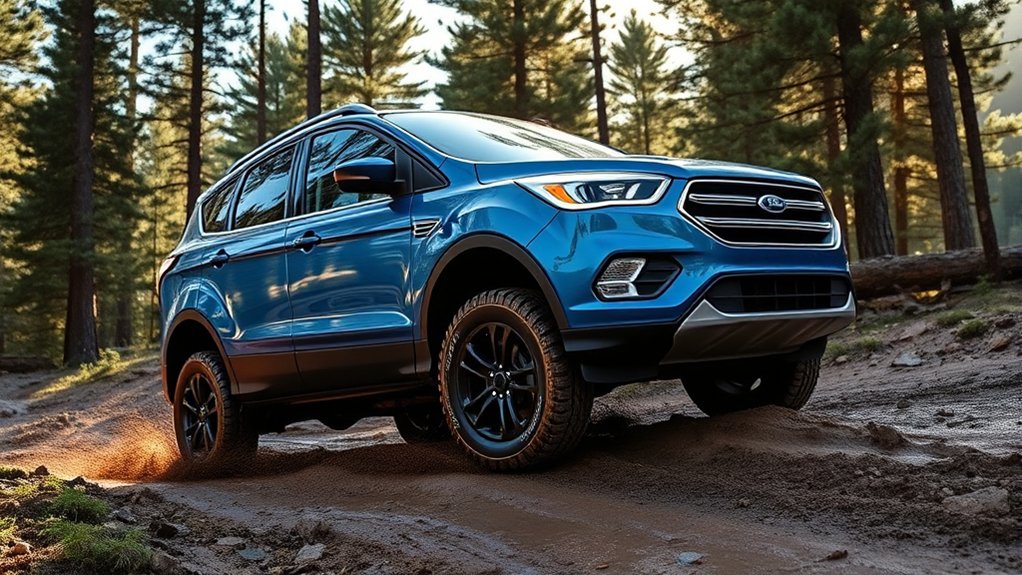
At a glance, the Ford Escape’s AWD system monitors traction and sends power to the wheels that need it most, helping improve grip on wet, snowy, or uneven roads. You don’t need to manage it manually; sensors and computer controls react quickly when wheel slip starts.
Ford Escape AWD monitors traction and redirects power automatically to help improve grip on slippery roads.
In normal driving, it can favor fuel-saving front-wheel drive behavior, then add rear-wheel support as conditions change.
- It watches throttle, wheel speed, and steering inputs.
- It redirects torque when traction drops.
- It works automatically, so you can focus on driving.
- It isn’t an unrelated topic or random discussion; it’s a practical traction aid.
This setup helps you maintain steadier control without feeling intrusive.
Ford Escape Drivetrain Options by Year
That automatic traction support has changed across the Escape’s model years, so the drivetrain setup you get depends on the year and trim. You’ll find a clear drivetrain history: early Escapes offered front-wheel drive or available all-wheel drive, while some later hybrids and newer gas models kept the same basic choice.
In most years, Ford didn’t sell the Escape as a true four-wheel-drive SUV; it used front-wheel drive with optional AWD. If you’re comparing trims, check the powertrain details carefully, because equipment can vary by engine and model year.
You should also factor in fuel economy, since front-wheel drive usually returns better efficiency than AWD. When you shop by year, you can match your driving needs to the drivetrain Ford actually offered.
Does the Ford Escape Handle Snow and Rain Well?
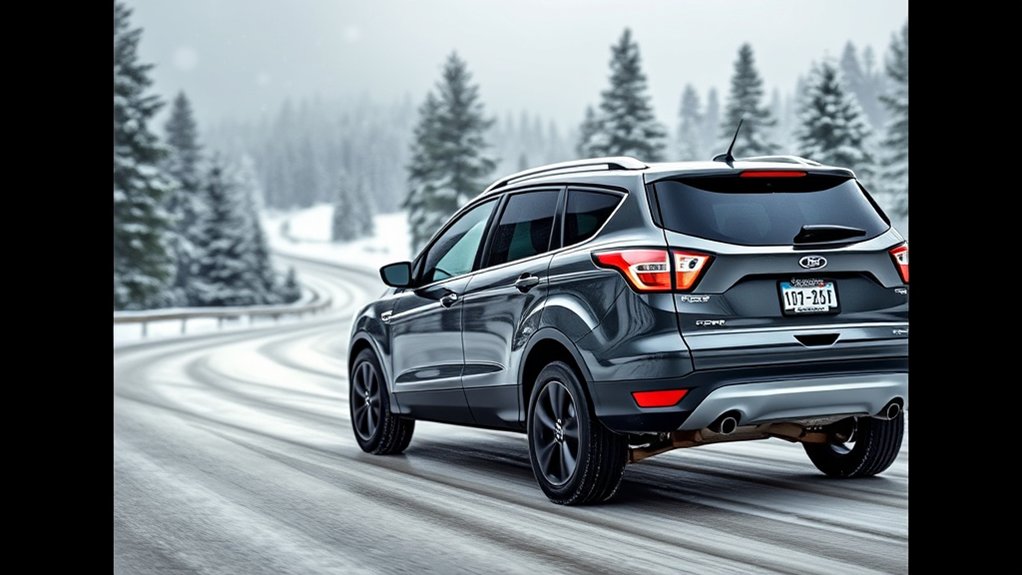
Yes, the Ford Escape can handle snow and rain well, especially when it’s equipped with all-wheel drive and the right tires. You’ll get steady traction in slick conditions, and its stability systems help you stay composed during city driving and highway merges.
- AWD can improve grip on wet pavement
- Winter tires matter more than drivetrain alone
- Ground clearance is adequate for light snow
- A future battery won’t change tire physics
You should still slow down, increase following distance, and avoid abrupt inputs on icy roads. In heavy snowfall, the Escape works best as a confident compact SUV, not a dedicated off-road machine.
For rain, its brakes and traction controls feel predictable, giving you control without drama. If you match the vehicle to the weather, you’ll find it handles everyday winter use competently.
When Is Ford Escape AWD Worth It?
Ford Escape AWD is worth it when you regularly drive in rain, snow, gravel, or steep hills, or when you want extra traction for faster starts and more confident handling in poor weather. You’ll also benefit if your commute includes unpaved roads, slippery boat ramps, or frequent elevation changes.
AWD can improve control, but it won’t replace good tires or smart driving. You should weigh the added purchase price, car maintenance, and slightly higher fuel use against the traction gain. If you mostly drive in dry city conditions, front-wheel drive may be enough.
If you plan long trips through changing weather, AWD can add confidence without changing your interior design or cargo space. Choose it when traction matters more than saving money.
How Can You Tell if Your Escape Has AWD?
You can tell whether your Escape has AWD by checking a few simple places: the window sticker, the owner’s manual, the VIN build sheet, or the badging on the vehicle itself. You can also confirm it through the dealer’s service records, which list the drive train configuration.
If you’re unsure, inspect these sources:
- Window sticker
- Owner’s manual
- VIN build sheet
- Rear or liftgate badging
Each source should identify AWD, 4WD, or front-wheel drive explicitly. If the badging is missing, don’t guess; Ford sometimes used similar trim labels across models.
For vehicle maintenance, knowing the exact system helps you follow the right service schedule and fluids. When the documents disagree, trust the build sheet or VIN data first.
Which Ford Escape Features Improve Traction?
Several Ford Escape features can help improve traction, depending on the model and trim. If you choose all-wheel drive, the drive train can send power to the wheels with the most grip, which helps on rain, snow, or loose pavement.
Traction control also matters because it reduces wheel spin when acceleration gets slippery. Ford’s selectable drive modes can adjust throttle response and shift logic for more stable handling on certain surfaces.
In some trims, Hill Start Assist and AdvanceTrac can further support control on inclines and during cornering. Tire type and size also affect grip, so the right factory setup can make a difference.
You’ll want to balance traction needs with fuel economy, since AWD usually uses more fuel than front-wheel drive.
Frequently Asked Questions
Can Ford Escape AWD Be Switched off Manually?
No, you usually can’t switch off your Ford Escape’s AWD manually; it engages automatically through drivetrain modes. You can optimize fuel efficiency with drive settings, but the system decides traction based on road conditions.
Does AWD Affect Ford Escape Fuel Economy?
Yes, AWD usually lowers your Ford Escape’s fuel economy, like extra weight on a hike. You’ll use more fuel for off-road grip and weather stability, though the impact often stays modest in real driving.
How Much Does AWD Add to Escape Maintenance Costs?
AWD usually adds modest maintenance costs to your Escape, mainly from extra fluid changes and potential drivetrain wear. You’ll also see slightly lower fuel economy, but the increase is usually manageable over time.
Is AWD Available on All Ford Escape Trim Levels?
No, Ford Escape AWD availability isn’t universal across every trim. You’ll find Ford drivetrain options vary by model year and configuration, so check each trim carefully. Some start with front-wheel drive, while AWD remains optional.
Does Ford Escape AWD Help With Towing Capacity?
Yes, AWD can help you tow more confidently by improving traction and driving dynamics, especially on slippery ramps or grades.
But it usually doesn’t raise the rated towing capacity much, and it can bring maintenance tradeoffs.
Conclusion
So, is your Ford Escape 4 wheel drive? Most often, no—it’s equipped with AWD, not a traditional 4WD system. That means you get traction that adapts as conditions change, helping you stay steadier in rain, snow, and slick roads.
If you’re deciding whether it’s right for you, check your trim and build details. In the end, the Escape doesn’t climb like a truck, but it does grip like a smart, practical crossover.
When considering a Ford Escape 4 wheel drive option, remember that its AWD system offers versatile traction suited for everyday driving conditions.


