Are Ford Cars Reliable
As an Amazon Associate we earn from qualifying purchases.
If you’re considering whether Ford cars are reliable, you’ll find the answer is a bit nuanced. Reliability often holds up well, but it shifts with the model, year, and how carefully you maintain it. Some Ford trucks and SUVs earn stronger marks than others, while newer tech can add small headaches.
You’ll want to weigh ratings, recalls, and repair patterns before deciding what really stands up over time. Taking these factors into account can help you make a more informed choice when selecting a Ford vehicle.
Key Takeaways
- Ford reliability varies a lot by model, year, trim, and maintenance history.
- Well-maintained Fords can be very reliable, especially trucks and simpler platforms like the F-150 and Ranger.
- Common issues include transmission hesitation, electrical faults, infotainment glitches, and cooling-system leaks.
- Ford often trails Toyota and sometimes Honda, but some Ford models compare well with rivals.
- Check year-specific recalls, owner reports, and service records before buying any Ford.
Are Ford Cars Reliable?
Ford cars are generally reliable, but their dependability varies by model, year, and maintenance history. If you’re evaluating one, you should focus on the specific vehicle rather than broad assumptions.
Some reliability myths treat all Ford models as either flawless or problematic, but that oversimplifies real-world performance. You’ll get a clearer picture by checking service records, past repairs, and how the car was driven.
Maintenance myths also distort expectations; skipping basic upkeep can hurt any vehicle, while consistent care can improve long-term results. You should inspect recalls, owner reports, and wear patterns before deciding.
In practice, Ford reliability depends less on brand reputation and more on how well a particular car was designed, maintained, and used over time.
How Ford Reliability Ratings Compare
You can compare Ford’s reliability ratings against competitors to see where it stands in the broader market. You’ll also want to check model-specific rankings, since Ford’s performance can vary a lot by vehicle.
Looking at reliability score trends over time helps you judge whether Ford’s ratings are improving or slipping.
Ford Vs Competitors
Compared with rivals in the same price range, Ford’s reliability ratings tend to land in the middle rather than at the top or bottom of the pack. You’ll often see stronger scores from Toyota and Honda, while Chevrolet, Jeep, and Nissan can vary by segment.
That doesn’t mean Ford is unreliable; it means you should judge it by platform, upkeep, and how you drive it. Many reliability misconceptions come from outdated owner stories, while maintenance myths suggest every Ford needs exceptional care.
In reality, regular service, timely repairs, and choosing well-reviewed powertrains matter more than brand loyalty. If you compare ownership costs and reported issues objectively, Ford looks competitive, not class-leading, and not a weak outlier.
Model-Specific Rankings
Looking at Ford reliability by model gives a clearer picture than brand-wide averages. You’ll usually see stronger results from some sedans and crossovers than from complex, high-output trucks or performance trims.
When you compare ratings, focus on repair frequency, warranty coverage, and maintenance costs, since those factors shape real ownership value.
| Model type | Typical reliability view |
|---|---|
| Compact cars | Often steadier and cheaper to maintain |
| Trucks | Can be durable, but repairs may cost more |
| Performance models | Usually less predictable than mainstream trims |
Reliability warranties can offset early issues, but they don’t change long-term upkeep. If you want a balanced purchase, you should compare each Ford model’s record before assuming one rating fits the whole lineup.
Reliability Score Trends
Ford’s reliability scores tend to vary more by model year, trim, and powertrain than by the brand as a whole. When you compare Ford reliability ratings, you’ll notice clear reliability trends rather than one fixed pattern. You should focus on these two word discussion ideas:
- Model updates
- Powertrain choice
- Maintenance history
- Warranty coverage
Newer platforms can improve scores, but first-year models often carry more risk. Turbocharged engines, dual-clutch systems, and advanced electronics can also pull ratings down when they’re less proven. You’ll usually see stronger results in simpler configurations and higher-volume trims.
If you want a more reliable Ford, compare the specific year and engine, not just the badge. That approach gives you a clearer read on long-term ownership risk.
Ford Models With the Best Reliability
When you look at Ford’s most dependable models, you’ll often find vehicles that pair simple engineering with strong long-term durability. You can expect nameplates with consistent maintenance records and fewer costly repairs to stand out as reliability leaders.
Those models give you the clearest picture of which Ford cars tend to hold up best over time.
Most Dependable Ford Models
If you want the Ford models with the strongest reliability records, a few names come up consistently. You’ll usually see the F-150, Escape, Fusion, and Ranger among dependable choices.
- F-150: you get broad parts support and proven mechanical layouts.
- Escape: you can find simple trims that tend to avoid major surprises.
- Fusion: it often delivers steady performance with routine service.
- Ranger: you benefit from a straightforward truck platform.
Still, you should separate reliability myths from maintenance myths; some complaints come from poor upkeep, not weak engineering. If you compare model history, trim complexity, and service records, you’ll make a more accurate judgment about which Ford fits your needs.
Long-Term Reliability Leaders
Looking at Ford’s long-term reliability leaders, a few models stand out for staying dependable well past the early ownership years. You’ll usually see the F-150, Ranger, Crown Victoria, and Escape praised for durable powertrains and simple engineering.
These models often age well because you can service them easily, and parts stay widely available. That doesn’t mean every example is trouble-free, but they tend to challenge reliability myths that Ford can’t deliver longevity.
You still need to weigh maintenance tradeoffs: tougher use, heavier loads, and newer tech can increase wear, while regular fluids, brakes, and suspension checks help extend life. If you want a Ford that can keep running, focus on proven trims, conservative options, and a consistent service history.
Common Ford Problems to Watch For

Ford vehicles can be reliable, but certain model-specific issues show up often enough that you should watch for them. If you buy one, you should know the patterns that drive most complaints and separate reliability myths from maintenance myths.
- Transmission hesitation or rough shifting can signal wear or software issues.
- Infotainment glitches may disrupt controls, phone pairing, or navigation.
- Cooling-system leaks can lead to overheating if you ignore them.
- Electrical faults, including sensors and battery drain, can cause warning lights.
You’ll get better results when you inspect service records, test-drive thoroughly, and fix small issues early. That approach doesn’t eliminate every problem, but it does reduce surprises and helps you judge Ford ownership more accurately.
How Ford Reliability Changes by Model Year
Reliability can shift a lot from one Ford model year to the next, even within the same nameplate. You’ll often see better results in years after a redesign’s first release, when Ford has addressed early defects.
That’s how reliability tends to improve across model year changes: fixes, revised parts, and updated software usually reduce repeat issues. You should compare each year’s complaint data, recalls, and owner reports instead of judging the whole line by one bad or good year.
Some Ford models stay fairly stable, while others swing more sharply between years. A strong reputation in one year doesn’t guarantee the next one will match it. If you’re evaluating a Ford, focus on the exact model year, not just the badge, because reliability isn’t uniform across the lineup.
Ford Maintenance Habits That Matter Most
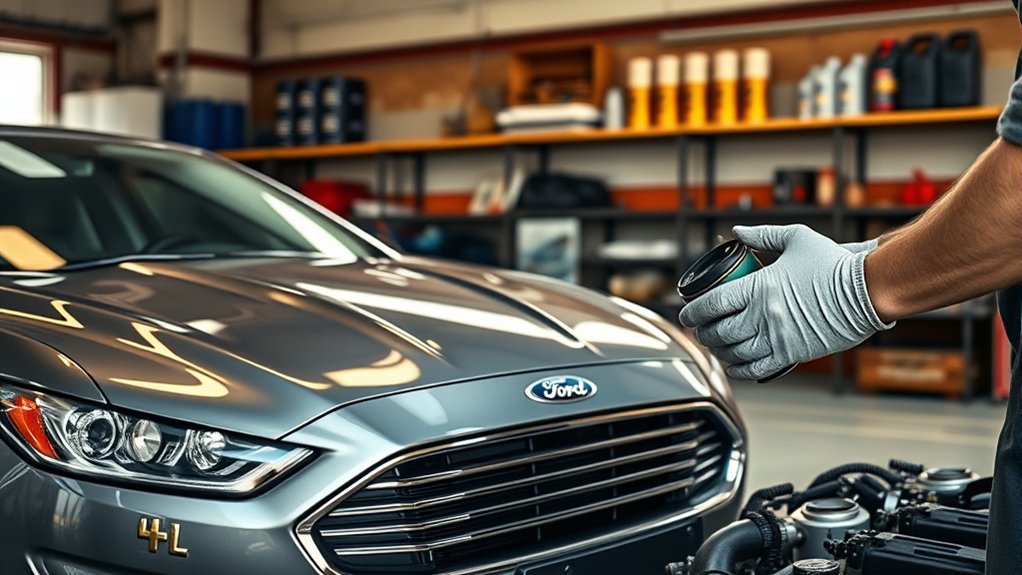
What maintenance habits most affect a Ford’s long-term reliability? You improve results when you treat Ford maintenance as a system, not a reaction. Oil changes, fluid checks, and tire rotations matter because they reduce wear before it compounds.
Treat Ford maintenance as a system, not a reaction; oil, fluids, and rotations prevent wear before it compounds.
Your driving habits also shape reliability; short trips, hard acceleration, and heavy idling raise stress on engines and transmissions.
- Change oil on schedule and use the correct grade.
- Inspect coolant, brake, and transmission fluids regularly.
- Rotate tires and check alignment to limit uneven wear.
- Address warning lights quickly instead of postponing repairs.
When you stay consistent, you lower the chance of avoidable failures. Careful upkeep won’t make every repair disappear, but it does improve dependability and helps your Ford age more predictably.
Are Ford Trucks and SUVs More Reliable?
Beyond maintenance, model type also affects how dependable a Ford tends to be. When you look at Ford trucks, you often see sturdier drivetrains, simpler work-focused layouts, and components built for heavier duty cycles. That can support long-term durability if you keep up with service.
SUV reliability can also be strong, especially in models that share parts with proven truck platforms. Still, you shouldn’t assume every truck or SUV outlasts every car. Weight, towing, and added electronics can raise wear and repair complexity.
Your best results come from choosing a model with a consistent repair history, then following the schedule closely. In practice, Ford’s trucks and SUVs often look dependable when used as intended, but condition and maintenance still matter most.
How Ford Compares With Rivals
Compared with rivals like Toyota, Honda, and Chevrolet, Ford’s reliability is often more model-dependent than brand-wide. You’ll usually see stronger results in some trims than others, so you shouldn’t judge the whole lineup from one review. In reliability politics, Ford often faces sharper scrutiny because marketing claims can outpace long-term data.
Ford’s reliability tends to vary by model, so one review rarely tells the whole story.
- Toyota usually posts steadier dependability scores.
- Honda often matches Ford on durability, with fewer weak spots.
- Chevrolet can be uneven, but some models rival Ford closely.
- Ford’s best vehicles can be solid, yet you need model-by-model research.
You should compare repair histories, warranty coverage, and owner reports before you decide. That approach gives you a clearer view than brand loyalty or sales copy alone.
Who Should Buy a Ford?
Ford makes the most sense for buyers who value towing, hauling, off-road capability, or a wide range of truck and SUV options. You should consider Ford if you need a work-focused vehicle, plan to use advanced driver aids, or want trims that span budget to premium.
If you keep up with maintenance and follow the owner’s schedule, you’ll likely get solid everyday reliability. Ford also fits you if you want hybrid or electric choices and can benefit from electric vehicle incentives.
Business buyers may like Ford fleets because new employee training is straightforward when models share familiar controls and layouts. You may want a different brand if you prioritize low running costs above capability, but Ford suits practical buyers who need versatility and strong utility.
Frequently Asked Questions
Do Ford Cars Hold Their Resale Value Well?
Yes, Ford cars often hold value reasonably well, though resale dynamics vary by model, trim, and market. You’ll see reliability trends and brand demand affect depreciation, so check specific models before buying.
Are Ford Repair Costs Higher Than Average?
Generally, you’ll find Ford repair costs aren’t dramatically higher than average, though specific models can surprise you.
Don’t chase warranty myths or fear unreliable costs alone; you should compare parts, labor, and maintenance histories objectively.
How Long Do Ford Engines Typically Last?
Ford engines typically last 150,000 to 250,000 miles with proper care. Your long term durability depends on maintenance frequency, driving habits, and model quality.
You’ll extend life by staying on top of service and repairs.
Does Ford Offer a Strong Warranty?
Ford’s warranty isn’t legendary, but you’ll get solid warranty coverage that can blunt reliability concerns. You’ll usually see limited basic and powertrain protection, plus roadside help.
You should still compare trim-specific terms carefully.
Are Ford Cars Good for First-Time Buyers?
Yes, you can find Ford cars good for first-time buyers if you prioritize easy driving, broad dealer support, and solid value. Your first impressions often favor familiar controls, and many models offer a good budget fit.
Conclusion
So, are Ford cars reliable? In many cases, yes—but you should judge the specific model and year, not the badge alone. One useful stat: J.D. Power often places Ford near the industry average, with some models scoring well above it and others lagging behind.
If you keep up with oil changes, fluids, tires, and recalls, you’ll usually get better long-term results. Regular maintenance plays a key role in the overall reliability of any vehicle.
For a dependable Ford, choose carefully and maintain it consistently. Ultimately, Ford cars are reliable when selected wisely and properly cared for.


