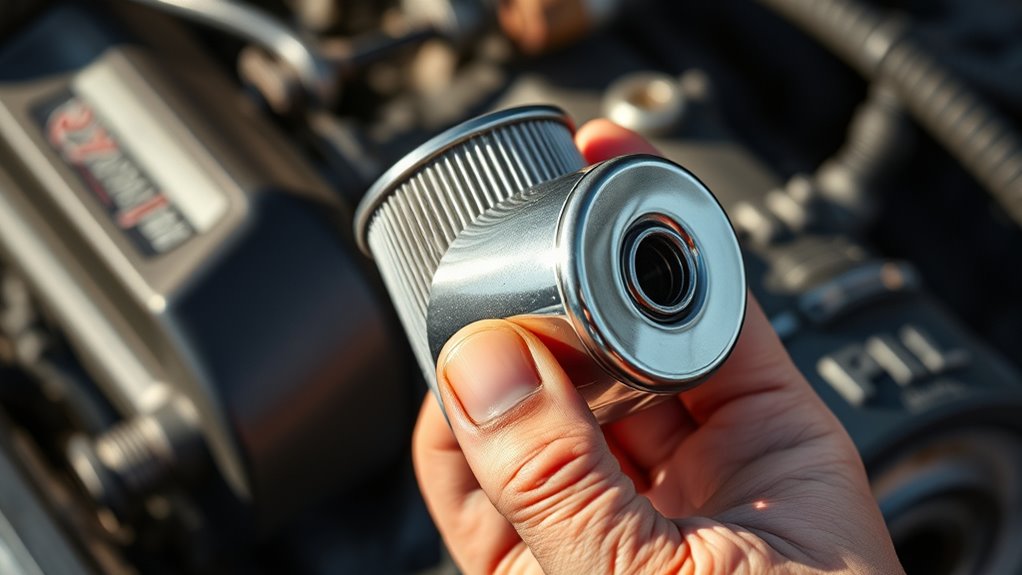

When it comes to changing your oil filter, it’s essential to know which way to turn the oil filter.
You turn your oil filter counterclockwise to remove it because oil filters have standard right-hand threads that tighten clockwise and loosen counterclockwise.
Make sure the engine is cool and use an oil filter wrench for a better grip if it’s tight.
Apply steady pressure to avoid damage, and if it won’t budge, try penetrating oil or gentle tapping.
Keep going to find out the best tools and tips to handle stubborn filters safely.
Key Takeaways
- Turn the oil filter counterclockwise to loosen and remove it from the engine.
- Oil filters have right-hand threads, so clockwise tightens and counterclockwise loosens.
- Always ensure the engine is cool before attempting to remove the filter.
- Use an oil filter wrench if the filter is too tight to turn by hand.
- Apply steady, controlled force to avoid damaging the filter or surrounding parts.
Which Way To Turn Your Oil Filter To Remove It
When you’re ready to remove your oil filter, you’ll typically turn it counterclockwise. This direction loosens the filter’s grip on the engine, allowing you to unscrew it smoothly.
Before you start, make sure the engine is cool to avoid burns. Place a drain pan underneath to catch any oil spills. Use an oil filter wrench if the filter is too tight to turn by hand.
Grip the filter firmly and apply steady pressure while turning it left. Once loose, you can finish unscrewing it by hand. Remember, some filters might be tricky, but turning counterclockwise is the standard approach for removal.
After removal, prepare the new filter for installation following the proper steps.
Why You Turn Oil Filters Counterclockwise To Remove Them
Although it might seem like a simple mechanic’s convention, you turn oil filters counterclockwise to remove them because their threading is designed that way.
Oil filters use standard right-hand threads, meaning you twist them clockwise to tighten and counterclockwise to loosen. This design prevents the filter from loosening as the engine vibrates during operation.
When you turn the filter counterclockwise, you’re fundamentally unscrewing it, breaking the seal between the filter and the engine block. This allows you to remove the filter safely without damaging the threads or the filter housing.
Following this standard guarantees you maintain proper installation and removal techniques, preventing leaks and ensuring your vehicle’s engine stays well-protected with fresh oil filters.
Best Tools For Removing Stubborn Oil Filters
A variety of specialized tools can make removing stubborn oil filters much easier and prevent damage to the filter or engine. You’ll find oil filter wrenches come in several styles: strap, cap, and claw types.
Strap wrenches use a durable band that tightens around the filter, offering a firm grip without crushing it. Cap wrenches fit over the filter’s end, allowing you to turn it with a ratchet or breaker bar.
Claw wrenches have adjustable teeth that grab the filter’s sides, providing solid leverage. For tough spots, a plier-style wrench can also help. Using the right tool reduces your effort and avoids slipping, ensuring you loosen the filter smoothly.
Make sure to pick one that fits your filter size for the best results.
Tips To Avoid Damaging Your Oil Filter When Turning It
To prevent damage while turning your oil filter, you’ll want to apply steady, controlled force rather than sudden jerks.
Sudden movements can strip the filter’s threads or crack its housing, leading to leaks.
Make certain your hands or tools have a firm grip to avoid slipping and causing dents.
If the filter feels resistant, don’t force it excessively; instead, try loosening it gradually by rocking it back and forth.
Also, verify the filter and surrounding area are clean to avoid dirt getting into the engine once removed.
Using the correct size wrench or oil filter tool helps distribute pressure evenly, minimizing damage risk.
Finally, avoid over-tightening when reinstalling, as overtightening can also harm the filter or its seal.
What To Do If Your Oil Filter Won’t Budge
When your oil filter won’t budge, don’t panic or force it blindly. First, make sure you’re turning it counterclockwise, as that’s the standard direction to loosen most oil filters.
If it’s still stuck, try using an oil filter wrench for better grip and leverage. Applying a bit of penetrating oil around the filter’s base can help loosen any rust or grime holding it tight. Let it sit for 10-15 minutes before trying again.
Avoid using excessive force, which can damage the filter or housing. If it remains stubborn, gently tapping the filter’s edge with a rubber mallet can break the seal without causing harm.
Remember to wear gloves and protect your hands during this process to avoid injury.
Frequently Asked Questions
How Often Should I Change My Oil Filter?
You should change your oil filter every time you change your oil, typically every 3,000 to 7,500 miles depending on your vehicle and oil type.
Always check your owner’s manual for the best schedule.
Can I Reuse an Old Oil Filter?
You shouldn’t reuse an old oil filter because it can’t effectively trap contaminants and may cause engine damage.
Always replace it with a new one during oil changes to guarantee your engine stays clean and runs smoothly.
What Type of Oil Filter Is Best for My Car?
You should choose an oil filter that matches your car’s specifications, usually found in the owner’s manual.
Opt for high-quality brands with good reviews to guarantee proper filtration and engine protection. Always check compatibility first.
Is It Safe to Turn the Oil Filter by Hand?
Yes, you can turn the oil filter by hand, but make sure to loosen it carefully to avoid damaging the threads.
Use an oil filter wrench if it’s too tight, then finish removing it by hand.
How Can I Tell if My Oil Filter Is Leaking?
You can tell if your oil filter is leaking by checking for fresh oil around the filter base or on the engine.
If you see oil drips or a strong smell, you’ve got a leak that needs fixing.
Conclusion
When it’s time to say goodbye to your old oil filter, remember to turn it counterclockwise—like loosening a tight knot in your favorite necklace.
If it’s stubborn, don’t force it; reach for the right tools to loosen the grip without damage.
With patience and the right approach, you’ll have that filter off smoothly, ready for a fresh start.
Keep these tips in your toolbox, and you’ll turn every oil change into a breeze.
In conclusion, always remember to turn the oil filter counterclockwise for easy removal.