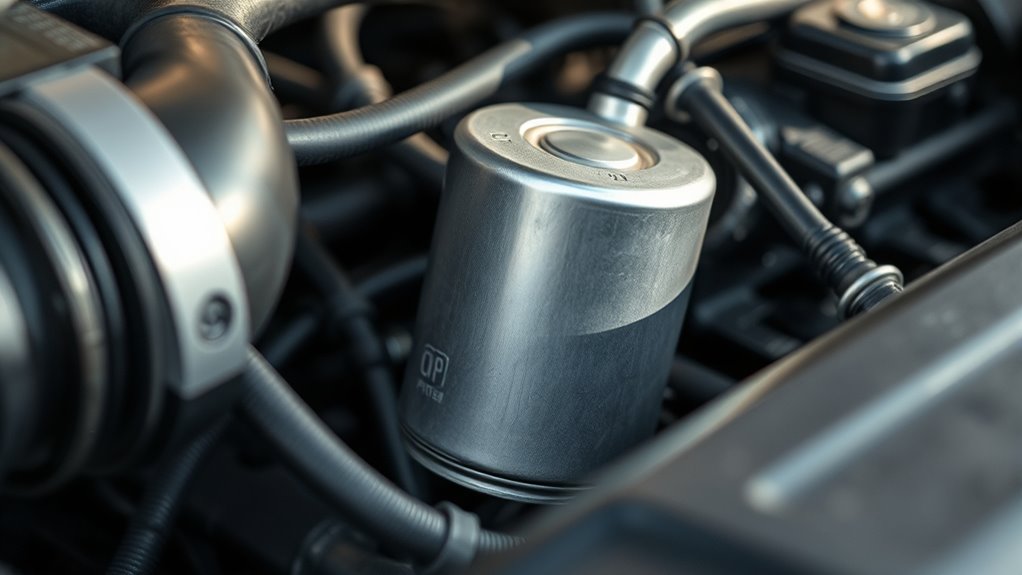

You’ll usually find your oil filter as a small, cylindrical part attached near the engine block, often on the side or underneath your car’s hood.
Its metal casing might be black, white, or blue and sometimes tucked in tight spaces, especially on V-type engines.
Front-wheel drive cars often have easier access near the engine’s front, while rear-wheel drives may place filters closer to the engine block’s rear.
If you want to learn more about identifying and safely changing your oil filter, keep exploring these guidelines.
Key Takeaways
- The oil filter is usually a small, cylindrical metal component attached to the engine block’s side or bottom.
- Inline engines have oil filters mounted on the engine block’s side, while V-type engines place them in tighter spaces between cylinders.
- Front-wheel drive cars mostly position oil filters near the engine’s front or side for easier access.
- Look underneath the vehicle near the oil pan or consult the owner’s manual to locate the exact oil filter position.
- Oil filters often have brand names or part numbers printed on their metal casing for easy identification.
Where to Look for the Oil Filter Under Your Car’s Hood
Wondering where to find the oil filter under your car’s hood? You’ll usually spot it near the engine block, often attached to the side or bottom.
It’s a small, cylindrical component, often painted black, white, or blue. Depending on your car’s make and model, it might be tucked away, so don’t hesitate to use a flashlight.
Look for a part that stands out from hoses and wiring. Oil filters often have a metal casing and can be either spin-on or cartridge types.
You might find it close to the oil pan, as it filters oil before it circulates through the engine. Keep in mind, some vehicles position the filter in harder-to-reach spots, so patience and a careful eye help.
How to Identify an Oil Filter
Although oil filters come in various shapes and sizes, you can identify yours by looking for a small, cylindrical component with a metal casing. It often features a threaded center hole for attachment.
It’s usually located near the engine block and might be painted black, white, or another color depending on the brand. You’ll often see brand names or part numbers printed on the side, helping confirm it’s the oil filter.
If you’re unsure, check for a component that looks like it can be unscrewed by hand or with an oil filter wrench. Remember, it won’t have hoses or wires connected like other parts.
Spotting these features will help you quickly and confidently identify your oil filter when you’re under the hood.
How Your Engine Type Changes Where the Oil Filter Is
Because engine designs vary widely, the location of your oil filter can change considerably depending on the type of engine you have.
For example, if you own an inline engine, you’ll often find the oil filter mounted on the side of the engine block, making it relatively easy to access.
In contrast, V-type engines usually have the filter tucked in tighter spaces between the cylinder banks, which can make reaching it a bit trickier.
Some modern engines even place the filter on the top of the engine to simplify maintenance.
Diesel engines might have larger, more robust filters located in different spots due to their increased oil flow requirements.
Understanding your engine type helps you anticipate where to look, so you won’t waste time hunting around when it’s time for an oil change.
Finding the Oil Filter on Front- and Rear-Wheel Drive Cars
When you’re working on a front-wheel drive car, you’ll typically find the oil filter positioned near the engine’s front or side. This makes it relatively accessible from underneath the vehicle. Its location often allows you to reach it without removing too many components, simplifying oil changes.
In contrast, rear-wheel drive cars usually have the oil filter mounted near the engine block, often on the side facing the rear of the vehicle. This placement can sometimes make access trickier, as you might need to work around the transmission or other parts. Knowing these general positions helps you prepare the right tools and plan your approach.
Whether front- or rear-wheel drive, locating the oil filter quickly saves you time and helps maintain your car efficiently.
Common Oil Filter Locations in Popular Car Brands
Since oil filter placement varies widely, knowing where popular car brands typically position theirs can save you a lot of hassle during maintenance.
For example, Toyota often places the oil filter near the engine block’s front or side, making it accessible from underneath.
Honda usually positions theirs toward the engine’s lower side, sometimes requiring you to remove a splash guard first.
Ford models commonly have the filter on the engine’s side, visible from below, while Chevrolet often places it at the front or bottom of the engine.
BMW tends to hide the filter under a plastic cover on top of the engine, so look for a circular cap.
Understanding these typical locations helps you quickly find the filter without unnecessary searching or lifting.
Tools You Need to Remove the Oil Filter
Knowing where your oil filter sits makes the removal process much smoother, but having the right tools on hand is just as important. Without them, you might struggle to loosen or remove the filter, risking damage or frustration.
Here’s what you’ll want ready before you start:
- Oil filter wrench: Designed to grip the filter tightly for easy removal.
- Socket set: Useful if your filter is tucked away with bolts nearby.
- Drain pan: To catch any oil that spills during removal.
- Gloves and rags: Keep your hands clean and handle spills quickly.
With these tools, you’ll be equipped to remove the oil filter efficiently, avoiding unnecessary hassle or mess. Being prepared saves time and keeps your workspace tidy.
How to Change Your Oil Filter Safely at Home
First, find the oil filter on your engine to know exactly where to work.
Next, gather all the tools you’ll need to make the process smooth and safe.
Finally, follow proper steps to remove the filter without causing spills or injuries.
Locate The Oil Filter
Where can you find the oil filter on your vehicle? It’s usually tucked away near the engine block, but its exact spot varies by make and model.
To locate it, you’ll want to:
Check under the hood for a small, cylindrical part attached to the engine. Look beneath the car; some filters are accessible only from underneath. Consult your vehicle’s manual for the precise location. Identify the oil filter by its distinct shape and often black or white color.
Knowing where your oil filter is makes changing it easier and cleaner. Once you spot it, you’re one step closer to maintaining your car like a pro. Just remember to verify the engine is cool before you start to avoid burns.
Gather Necessary Tools
After you’ve located the oil filter, the next step is to gather the right tools to change it safely and efficiently. You’ll need an oil filter wrench that fits your filter’s size and style. This helps you loosen the filter without slipping.
Have a drain pan ready to catch any oil that spills during removal. Grab a set of gloves to protect your hands from hot oil and dirt. Keep a clean rag or paper towels nearby for wiping surfaces and cleaning up spills.
Finally, make sure you have the correct replacement oil filter and fresh oil specified for your vehicle. Having all these tools within reach before you start will make the job smoother and reduce the risk of mess or injury.
Perform Safe Removal
Before you begin removing the oil filter, make certain the engine has cooled down enough to prevent burns.
Then, position your drain pan under the filter to catch any dripping oil. Use an oil filter wrench to loosen the filter by turning it counterclockwise.
Be careful, as oil might spill out once it’s loose. Once removed, check the old filter’s rubber gasket to verify it’s come off with the filter; leaving it stuck can cause leaks.
Wear gloves to protect your hands from hot oil and grime. Use rags to clean any spilled oil immediately.
Keep your workspace well-lit and ventilated. Dispose of the used filter properly according to local regulations.
This way, you’ll remove the filter safely and keep your area clean.
How to Check if Your Oil Filter Needs Replacement
Although your oil filter works quietly in the background, you can tell when it needs replacing by paying attention to a few key signs. Check for dirty oil, engine noise, or oil pressure drops. If your oil filter is clogged, it strains your engine and reduces performance. Regularly inspecting your filter guarantees your engine runs smoothly and lasts longer.
| Sign | What You Feel/See | Why It Matters |
|---|---|---|
| Dirty Oil | Dark, gritty oil | Filter can’t clean properly |
| Engine Noise | Louder or knocking sound | Poor filtration causes wear |
| Oil Pressure Drop | Dashboard warning light | Circulation slows down |
| Mileage | Over 3,000-5,000 miles | Filter likely clogged |
Stay alert to these signs and replace your oil filter promptly for peace of mind.
How Knowing Your Oil Filter Location Saves You Time and Money
Recognizing when your oil filter needs replacement is just the first step; knowing exactly where it’s located saves you time and money during maintenance.
When you know your oil filter’s spot, you avoid unnecessary delays and costly mechanic visits. You can quickly perform oil changes yourself, ensuring your engine runs smoothly without breaking the bank.
Plus, you’ll prevent damage from neglecting timely replacements. Here’s how this knowledge benefits you:
Speeds up DIY oil changes, saving labor costs.
Helps you buy the correct replacement filter.
Avoids accidental damage during maintenance.
Enables early detection of leaks or issues.
Can’t Find Your Oil Filter? Here’s What to Do
Struggling to locate your oil filter can be frustrating, but don’t worry—you’re not alone. First, check your vehicle’s manual; it often shows the exact location.
If you don’t have it handy, try these steps: look under the hood near the engine block, then beneath the car, and finally around the oil pan area. Using a flashlight helps spot the usually cylindrical filter.
Here’s a simple checklist to guide you:
| Step | Location Tip | Tool Needed |
|---|---|---|
| 1 | Near engine block | Flashlight |
| 2 | Underneath near oil pan | Creeper or mat |
| 3 | Consult vehicle manual | Manual or app |
These tips will save you time and prevent unnecessary strain.
Frequently Asked Questions
What Type of Oil Filter Is Best for My Vehicle?
You’ll want to choose an oil filter that matches your vehicle’s specifications, usually found in your owner’s manual.
Opt for high-quality, reputable brands to guarantee proper filtration and engine protection.
Don’t skimp on quality!
How Often Should I Replace My Oil Filter?
You should replace your oil filter every time you change your oil, typically every 3,000 to 7,500 miles.
Check your vehicle’s manual for specific intervals to keep your engine running smoothly and efficiently.
Can a Clogged Oil Filter Cause Engine Damage?
Yes, a clogged oil filter can cause engine damage.
It restricts oil flow, leading to poor lubrication, increased friction, and overheating.
You should replace it regularly to keep your engine running smoothly and avoid costly repairs.
Are Reusable Oil Filters Effective Compared to Disposable Ones?
Yes, reusable oil filters can be effective if you clean and maintain them properly.
They save money and reduce waste, but you’ll need to be diligent to avoid clogging and guarantee your engine stays protected.
What Happens if I Change the Oil but Not the Filter?
Skipping the oil filter change means 15-20% of dirty contaminants stay in your engine, causing wear.
You’ll risk reduced performance and shorter engine life, so always replace the filter whenever you change your oil.
Conclusion
So, you’ve just spent time hunting for that sneaky oil filter, only to realize it was hiding in plain sight all along.
Funny how the thing that keeps your engine running smoothly can be so elusive, right?
But now that you know where to find it and how to change it, you’re practically an oil-filter detective.
Next time your car’s feeling sluggish, you’ll save time and money instead of playing hide-and-seek under the hood.
In conclusion, knowing where the oil filter is will help you maintain your vehicle more effectively!