
You want an oil filter that fits your vehicle perfectly and traps contaminants efficiently to protect your engine.
High-quality filters use synthetic media, durable gaskets, and anti-drainback valves to maintain oil flow and prevent leaks.
Avoid cheap, incompatible options that can cause engine wear. Brands like Bosch and Mobil 1 offer reliable performance.
Knowing when to replace your filter and how to choose the right type guarantees your engine stays clean and runs smoothly.
Keep exploring to find the best fit for your needs.
Key Takeaways
- The best oil filter matches your vehicle’s specifications for proper fit and optimal engine protection.
- High-quality filters use advanced media to trap contaminants while maintaining oil flow, preventing engine wear.
- Durable construction with strong metal casing and reliable gaskets ensures leak-free performance under pressure.
- Top brands like Bosch, Mobil 1, Fram, K&N, and Purolator offer trusted options for various budgets and needs.
- Replace filters at recommended intervals or when signs of wear appear to maintain engine efficiency and longevity.
Why Picking the Right Oil Filter Protects Your Engine
Although it might seem like a small component, choosing the right oil filter plays an important role in protecting your engine.
You want a filter that matches your vehicle’s specifications to guarantee proper fit and function.
Using an incompatible filter can cause leaks or poor filtration, leading to engine wear.
A high-quality oil filter traps contaminants effectively and maintains oil flow, preventing damage to critical engine parts.
When you pick a reliable filter, you reduce the risk of sludge buildup and corrosion, which can shorten your engine’s lifespan.
So, don’t overlook this small but crucial part.
Selecting the right oil filter helps maintain your engine’s performance and saves you from costly repairs down the road.
How an Oil Filter Works to Keep Your Engine Clean
Your oil filter traps harmful particles as oil circulates through your engine, preventing buildup that can cause damage.
Removing contaminants keeps your engine running smoothly and reduces wear over time.
Filtration Process Explained
An oil filter works by trapping dirt, metal particles, and other contaminants as oil circulates through your engine.
It uses a special filter media that captures harmful debris without restricting oil flow, ensuring your engine stays lubricated and protected.
Here’s how the filtration process impacts your engine:
- Protects essential engine parts by preventing abrasive particles from causing wear.
- Maintains oil cleanliness, enhancing overall engine performance.
- Extends engine life by reducing friction and damage.
- Keeps your vehicle running smoothly, giving you peace of mind on every drive.
Contaminant Removal Importance
Since contaminants constantly enter your engine oil during operation, the oil filter plays an important role in removing these harmful particles before they cause damage.
As you drive, dirt, metal shavings, and combustion byproducts mix with your oil. The filter traps these impurities, preventing them from circulating and grinding down engine components.
Without this significant step, abrasive debris would accelerate wear and tear, reducing your engine’s efficiency and reliability. By ensuring only clean oil reaches essential parts, the filter helps maintain smooth performance.
You rely on your oil filter to catch even tiny contaminants, which could otherwise clog passages or cause corrosion. Keeping your oil clean means your engine runs cleaner, smoother, and with fewer risks of costly repairs.
Engine Longevity Benefits
Engine longevity hinges on keeping internal components free from harmful particles that accelerate wear. When you choose the right oil filter, you’re protecting your engine from dirt, metal shavings, and sludge that can cause damage over time.
A quality oil filter traps these contaminants, ensuring your engine oil stays clean and effective. This directly benefits your engine by:
- Reducing friction and wear on moving parts
- Preventing clogging and oil flow restrictions
- Enhancing overall engine efficiency and performance
- Extending the time between costly repairs
Essential Features That Ensure Oil Filter Quality and Performance
When you choose an oil filter, you want one that combines durability, efficient filtration, and a secure fit to protect your vehicle’s engine.
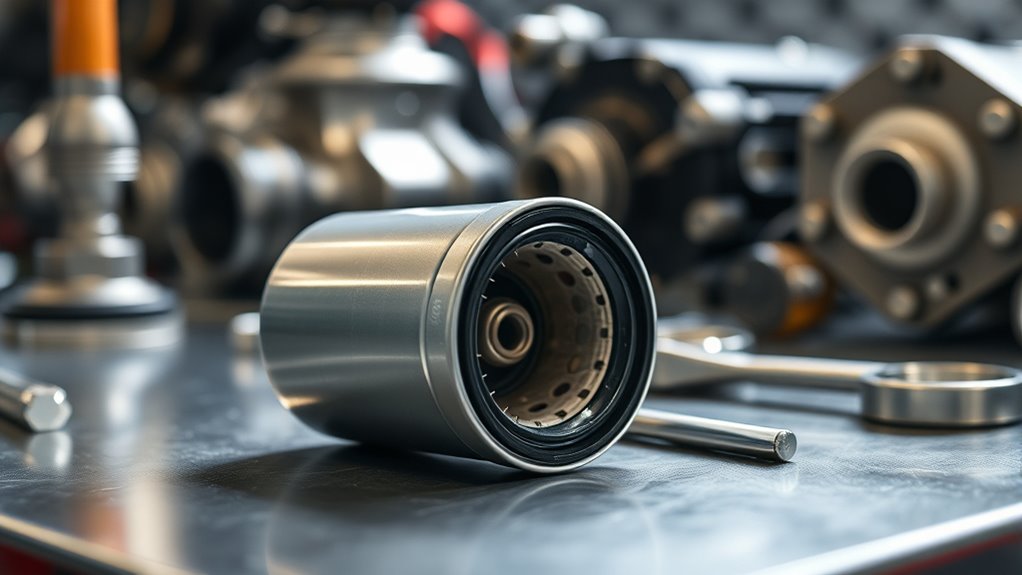
Look for filters with high-quality filter media, like synthetic fibers, which trap contaminants without restricting oil flow. A robust metal casing prevents leaks and withstands pressure changes during engine operation.
The gasket should be made from durable materials like nitrile or silicone to guarantee a tight seal and prevent oil leaks. Also, check for anti-drainback valves that stop oil from draining out when the engine is off, maintaining immediate lubrication at startup.
Finally, choose a filter designed to fit your specific engine model, guaranteeing proper installation and best performance. These features help keep your engine running smoothly and extend its lifespan.
Common Mistakes to Avoid When Choosing an Oil Filter
Although selecting an oil filter might seem straightforward, you can easily make mistakes that compromise your engine’s protection. Choosing the wrong filter can lead to poor filtration, leaks, or even engine damage. To avoid costly errors, watch out for these common pitfalls:
1. Ignoring vehicle specifications
Using a filter not designed for your engine risks compatibility issues.
2. Opting for the cheapest option
Low-cost filters often sacrifice quality, putting your engine at risk.
3. Overlooking filter construction
Poor materials and weak seals can cause leaks and filter failure.
4. Not checking the filter’s efficiency rating
Filters with low efficiency won’t trap harmful contaminants effectively.
Steering clear of these mistakes guarantees your engine stays clean and runs smoothly.
How to Match an Oil Filter to Your Vehicle’s Needs
You’ll want to start by checking your vehicle’s specifications to find the right oil filter size and rating.
Make sure the filter is compatible with the type of oil you use, whether synthetic or conventional.
Also, consider the filter material, as different designs affect performance and durability.
Vehicle Specifications Check
Since every vehicle has unique engine requirements, checking your vehicle’s specifications is essential before choosing an oil filter. You want to guarantee the filter fits perfectly and performs well under your engine’s conditions. Here’s how to nail it:
1. Consult Your Owner’s Manual
It has the exact filter model and specs recommended for your engine.
2. Know Your Engine Type
Diesel and gasoline engines often need different filters.
3. Check Filter Size and Threading
A mismatched size or thread can cause leaks or poor filtration.
4. Consider Driving Conditions
Frequent stop-and-go or extreme temperatures may demand a higher-grade filter.
Oil Type Compatibility
When matching an oil filter to your vehicle’s needs, understanding the type of oil you use plays a significant role.
Different oils, conventional, synthetic blend, or full synthetic, have varying viscosities and additives that impact filtration requirements.
Your oil filter must handle these differences efficiently to maintain engine protection.
For example, synthetic oils often require filters with finer media to capture smaller contaminants and withstand higher temperatures.
Using a filter incompatible with your oil type can reduce filtration efficiency and potentially harm your engine.
Always check your vehicle’s manual for recommended oil types and corresponding filter specifications.
Selecting an oil filter designed for your oil guarantees ideal flow, filtration, and durability.
This helps your engine run smoothly and last longer.
Don’t overlook this important compatibility step when replacing your oil filter.
Filter Material Differences
Filter materials play an essential role in how effectively your oil filter traps contaminants and protects your engine. Choosing the right material guarantees your engine stays clean and runs smoothly. Here’s what you need to know:
- Cellulose: Affordable and effective for basic protection, but clogs faster in harsh conditions.
- Synthetic: Offers superior filtration and durability, perfect for high-performance engines.
- Blended: Combines cellulose and synthetic fibers for balanced performance and cost.
- Microglass: Provides the finest filtration, ideal if you want the best protection against tiny particles.
Matching your oil filter material to your driving habits and vehicle demands keeps your engine healthier and extends its life. Don’t underestimate how material choice impacts your engine’s performance!
Top Oil Filter Brands Compared
Although choosing the right oil filter can feel overwhelming, comparing top brands helps you make an informed decision.
You’ll find trusted names like Bosch, Fram, and Mobil 1 leading the pack. Bosch offers durable filters with strong filtration media, perfect if you want reliability without overspending.
Fram filters are budget-friendly and widely available, making them a solid choice for everyday driving. Mobil 1 focuses on synthetic filters that provide excellent particle removal and extended life, ideal if you push your oil change intervals.
Other notable brands include K&N and Purolator, each with unique features tailored to specific driving needs. By weighing these options, you can pick a filter that matches your vehicle’s demands and your driving habits, ensuring maximum engine protection.
When to Replace Your Oil Filter
You should replace your oil filter according to your vehicle’s recommended intervals to keep your engine running smoothly.
Watch for signs like decreased performance or unusual engine noises, which could mean the filter is worn out.
Staying on top of these cues helps you avoid costly repairs down the road.
Recommended Replacement Intervals
Because your engine relies on clean oil to run smoothly, replacing your oil filter at the right time is essential.
Skipping or delaying this simple maintenance step can harm your engine’s performance and longevity.
To keep your vehicle running at its best, follow these recommended replacement intervals:
- Change your oil filter every time you change your oil, typically every 3,000 to 7,500 miles.
- Follow your vehicle manufacturer’s guidelines for specific intervals.
- Consider more frequent changes if you drive in severe conditions like heavy traffic or dusty roads.
- Replace the filter during long trips or before towing to prevent engine strain.
Sticking to these intervals protects your engine and saves you from costly repairs down the road.
Signs of Filter Wear
A clogged or worn oil filter can cause noticeable changes in your vehicle’s performance, signaling it’s time for a replacement.
You might notice decreased engine power, rough idling, or unusual engine noises, all hinting that your filter isn’t doing its job.
Another clear sign is dirty or gritty oil, which means contaminants are slipping past the filter.
Additionally, if your oil pressure warning light flickers or stays on, it’s a red flag that oil flow is restricted.
Regularly checking your oil condition and watching for these symptoms helps you catch filter wear early.
Don’t wait for engine damage; replace your oil filter as soon as you spot these signs to keep your engine running smoothly and efficiently.
Step-by-Step Guide to Changing Your Oil Filter
Changing your oil filter involves a few essential steps that anyone can follow with the right tools and a bit of patience. You’ll feel confident and accomplished once you’ve done it yourself. Here’s how to get started:
- Prepare your workspace: Park on a level surface, engage the parking brake, and gather your tools, new filter, and oil.
- Drain old oil: Remove the drain plug carefully, letting the old oil flow into a pan. Don’t rush this part.
- Remove old filter: Use an oil filter wrench to loosen and remove the old filter. Expect some oil spillage.
- Install new filter: Lubricate the new filter’s gasket with fresh oil, then hand-tighten it securely. Don’t overtighten.
Following these steps guarantees your engine runs smoothly and extends your vehicle’s life.
How to Find an Oil Filter That’s Worth Your Money
How do you know which oil filter truly delivers value for your money? Start by checking if it meets or exceeds industry standards like those from the API or ILSAC. You want a filter that effectively traps contaminants without restricting oil flow.
Next, consider the filter’s construction quality. Look for durable materials and a solid seal to prevent leaks. Don’t overlook brand reputation; trusted manufacturers often invest in better technology and quality control.
Also, read user reviews to see real-world performance and reliability. Finally, balance cost with features. The cheapest filter might save money upfront but could cost more in engine wear.
Comparing Popular Oil Filter Types and Their Benefits
Once you know what to look for in an oil filter, understanding the different types available can help you make a smarter choice. Each type offers unique benefits that can impact your engine’s performance and longevity.
Here’s a quick comparison to guide you:
- Spin-On Filters – Easy to install and replace, perfect for everyday use.
- Cartridge Filters – Environmentally friendly and cost-effective, but need more care during replacement.
- Magnetic Filters – Capture metal particles, offering extra protection against engine wear.
- High-Performance Filters – Designed for racing or heavy-duty use, they provide superior filtration but come at a higher price.
Choosing the right type means balancing convenience, protection, and cost. Pick what fits your driving style best.
Frequently Asked Questions
Can Using the Wrong Oil Filter Void My Vehicle’s Warranty?
Yes, using the wrong oil filter can void your vehicle’s warranty if it causes damage.
Always check your manufacturer’s recommendations to guarantee you’re using the correct filter and avoid potential warranty issues.
How Does Oil Filter Disposal Impact the Environment?
Improper oil filter disposal harms the environment by leaking toxic oil into soil and water.
You should recycle used filters properly to prevent contamination and protect ecosystems, keeping pollution and health risks to a minimum.
Are Reusable Oil Filters Cost-Effective in the Long Run?
Yes, reusable oil filters can save you money over time since you only buy one and clean it regularly.
However, they require maintenance and upfront costs.
Do Oil Filters Affect Fuel Efficiency?
Think of your engine as a garden; a clean oil filter is the gardener, ensuring fuel flows smoothly.
Yes, it affects fuel efficiency. Clogged filters make your engine work harder, draining fuel faster.
Keep it fresh!
Can Oil Filters Cause Engine Noise or Vibrations?
Yes, a clogged or poor-quality oil filter can cause engine noise or vibrations by restricting oil flow, leading to insufficient lubrication.
You should replace oil filters regularly to keep your engine running smoothly and quietly.
Conclusion
So, you want the best oil filter?
Just grab the cheapest one and hope for the best—because who needs a clean engine, right?
But if you actually care about your ride lasting beyond your next coffee break, pick wisely.
Remember, your engine’s not a magic trick; it needs proper care.
Choose quality, change it on time, and enjoy smooth rides—not surprise breakdowns.
Easy, huh? Your car will thank you (or mock you).
In conclusion, choosing the best oil filter is essential for maintaining your engine’s health.