
If you don’t change your oil filter, it will get clogged with dirt and debris, restricting oil flow through your engine.
This causes higher engine temperatures, reduced lubrication, and increased wear on critical parts.
You might notice sluggish performance, overheating, or unusual noises as contaminants circulate.
Ignoring it risks costly repairs or even engine failure.
Keep your engine running smoothly by learning how to spot the signs and maintain your oil filter properly.
Regularly changing your oil filter is essential in ensuring your engine operates efficiently.
Over time, an old filter can become a source of problems rather than a solution.
Make it a habit to check and replace your oil filter as part of your routine maintenance for a healthier engine.
Key Takeaways
- Not changing the oil filter causes clogging, restricting oil flow and increasing engine workload and wear.
- Contaminants circulate in the engine, leading to dirt buildup and potential engine damage.
- Reduced lubrication from a clogged filter raises engine temperature and accelerates component wear.
- Engine performance declines, showing sluggish acceleration, overheating, and unusual noises.
- Ignoring oil filter changes increases the risk of costly repairs and potential engine failure.
What Happens If You Don’t Change Your Oil Filter
If you don’t change your oil filter regularly, your engine’s performance will suffer. The filter’s job is to trap dirt, metal particles, and other debris before they circulate in your engine oil.
When it gets clogged, oil can’t flow freely, causing your engine to work harder and run hotter. This leads to increased wear on engine parts and reduced lubrication efficiency.
Over time, contaminants build up, accelerating engine damage and potentially causing costly repairs. You might notice reduced fuel efficiency and sluggish acceleration as your engine struggles.
Signs Your Oil Filter Needs Changing
You’ll notice your engine isn’t running as smoothly or powerfully as usual when your oil filter gets clogged.
Dirty oil can also sneak past a worn filter, increasing the risk of contamination and damage.
Paying attention to these signs helps you avoid costly repairs down the road.
Reduced Engine Performance
When your oil filter clogs, your engine struggles to perform at its best. You’ll notice your car feels sluggish, and acceleration isn’t as smooth as it used to be.
Your engine might hesitate or respond slowly when you press the gas pedal. This happens because a clogged oil filter restricts oil flow, reducing lubrication to critical engine parts.
Without proper lubrication, these components face increased friction and wear, which hampers overall engine efficiency. Over time, this can lead to overheating and even engine damage.
Oil Contamination Risks
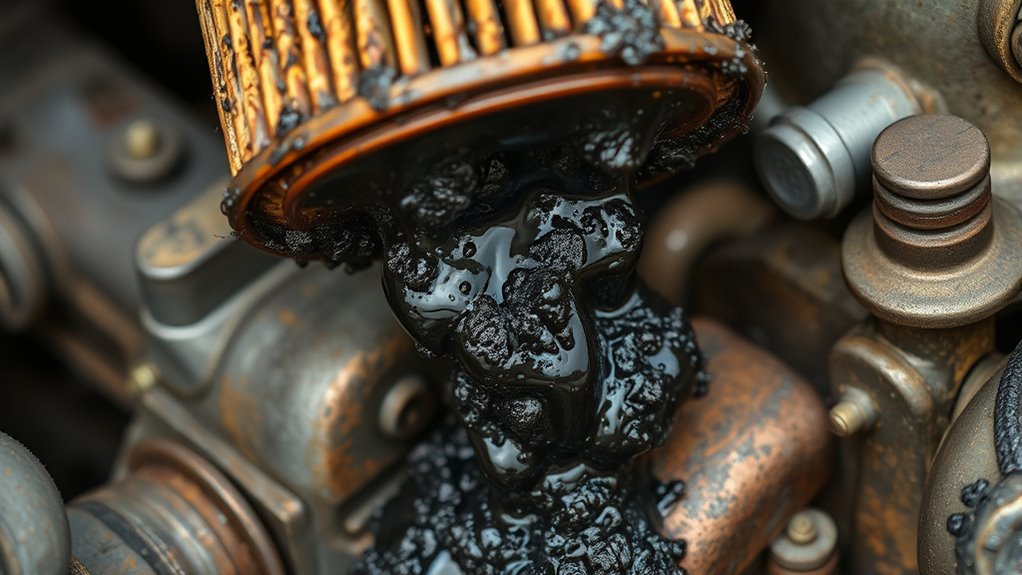
Although it’s easy to overlook, a dirty oil filter lets contaminants build up in your engine oil, putting your vehicle at serious risk. When the filter clogs, dirt, metal particles, and sludge circulate freely, causing wear and tear on engine parts. This contamination reduces oil effectiveness and can lead to overheating or engine failure.
You should watch for these signs to know when your oil filter needs changing:
| Sign | Cause | Effect |
|---|---|---|
| Dark, gritty oil | Trapped debris released | Engine abrasion |
| Engine overheating | Reduced oil flow | Increased wear |
| Unusual engine noise | Contaminants circulating | Premature engine damage |
Keep your oil filter fresh to protect your engine and maintain smooth, efficient performance.
How a Clogged Oil Filter Harms Engine Performance
When your oil filter gets clogged, oil flow slows down, starving your engine of proper lubrication.
You’ll notice increased engine wear as parts rub together more harshly without enough oil.
Plus, your engine risks overheating because the oil can’t carry heat away efficiently.
Reduced Oil Flow
If you skip changing your oil filter, it gradually becomes clogged with dirt and debris, which restricts oil flow throughout your engine.
When oil can’t move freely, it struggles to reach critical engine parts, causing inefficient lubrication.
This forces your engine to work harder, reducing overall performance.
You might notice sluggish acceleration or rough idling because the engine isn’t getting the smooth oil circulation it needs.
Additionally, restricted oil flow can cause oil pressure to drop, triggering warning lights on your dashboard.
Ignoring this issue can also make your oil pump strain, potentially leading to costly repairs.
Regularly replacing your oil filter guarantees oil flows smoothly, keeping your engine running efficiently and preventing performance problems caused by dirty, clogged filters.
Increased Engine Wear
Restricted oil flow from a clogged filter doesn’t just reduce performance; it accelerates engine wear. When oil can’t circulate properly, essential engine parts lose lubrication, causing metal-to-metal contact and faster deterioration. Over time, this leads to costly repairs and reduced engine lifespan.
You might notice increased engine noise or rough idling, signs that wear is already setting in.
| Effect | Result |
|---|---|
| Poor Lubrication | Increased friction and damage |
| Contaminant Buildup | Abrasive particles wear parts |
| Reduced Oil Pressure | Inefficient engine operation |
Overheating Risks
Because a clogged oil filter limits oil flow, your engine’s cooling system can’t work effectively, leading to higher operating temperatures.
When oil can’t circulate properly, it fails to carry away heat from essential engine parts. This causes your engine to run hotter than it’s designed to handle.
Overheating stresses components like pistons and cylinders, increasing the risk of warping or seizing. You might notice warning lights, reduced power, or strange noises as your engine struggles to cope.
Ignoring a clogged filter doesn’t just harm performance; it can lead to costly repairs or even engine failure.
To keep your engine cool and running smoothly, change your oil filter regularly. It’s a simple step that prevents overheating and protects your vehicle’s longevity.
Why the Oil Filter Is Essential for Your Engine
An oil filter plays an essential role in keeping your engine running smoothly by trapping dirt, metal particles, and other contaminants from the oil. Without a clean filter, these impurities can circulate through your engine, causing wear and damage. Here’s why the oil filter is crucial:
| Benefit | Explanation |
|---|---|
| Protects Engine Parts | Prevents abrasive particles from causing damage. |
| Maintains Oil Flow | Guarantees oil circulates freely without blockage. |
| Enhances Performance | Keeps engine components lubricated effectively. |
| Extends Engine Life | Reduces wear and tear over time. |
How Often Should You Change Your Oil Filter?
Changing your oil filter every 3,000 to 7,500 miles is key to keeping your engine in top shape.
The exact interval depends on your vehicle’s manufacturer recommendations and driving conditions.
If you drive in harsh environments, like dusty roads or frequent stop-and-go traffic, you might need to replace it closer to the 3,000-mile mark.
For normal driving, changing it around every 5,000 to 7,500 miles usually works.
Skipping or delaying this maintenance lets contaminants build up, reducing oil flow and risking engine damage.
Always check your owner’s manual for specific guidance, and don’t forget to change the oil along with the filter.
Staying on top of this simple task helps your engine run smoothly and extends its lifespan.
Choosing the Right Oil Filter for Your Car
Selecting the right oil filter plays an essential role in protecting your engine from contaminants and maintaining peak performance.
You need to take into account your car’s make, model, and driving conditions when choosing one. Not all filters work the same; some offer better filtration, longer life, or higher flow rates.
Using an incompatible filter can cause poor oil circulation or damage.
Here’s a quick comparison:
| Filter Type | Filtration Efficiency | Recommended Use |
|---|---|---|
| Conventional | Moderate | Everyday driving |
| Synthetic | High | High-performance cars |
| High Capacity | Very High | Heavy-duty vehicles |
Check your owner’s manual or consult a professional to make sure you pick a filter that matches your engine’s needs.
How to Change Your Oil Filter Yourself
You can save time and money by replacing your oil filter yourself with just a few simple tools and steps.
First, warm up your engine for a few minutes, then turn it off and let it cool slightly.
Locate the oil filter and place a drain pan underneath.
Use an oil filter wrench to loosen and remove the old filter, being careful as oil may spill.
Before installing the new filter, apply a thin layer of fresh oil to its rubber gasket to guarantee a good seal.
Screw the new filter on by hand until it’s snug, then tighten it an additional three-quarters of a turn.
Finally, refill your engine oil to the recommended level, start the engine, and check for leaks.
You’re done!
Frequently Asked Questions
Can a Dirty Oil Filter Affect My Car’s Fuel Efficiency?
Yes, a dirty oil filter can reduce your car’s fuel efficiency. It clogs, making your engine work harder and use more fuel.
Changing it regularly helps your engine run smoothly and saves you money on gas.
Are Synthetic Oil Filters Better Than Regular Ones?
Yes, synthetic oil filters are better because they trap smaller particles and last longer than regular filters.
You’ll get improved engine protection and performance, especially if you use synthetic oil in your vehicle.
What Tools Do I Need to Remove a Stuck Oil Filter?
You’ll need an oil filter wrench, a ratchet with socket set, and possibly a strap wrench.
Gloves and a drain pan help, too. If it’s stuck, some penetrating oil and patience will get it loose.
Does Changing the Oil Filter Void My Car Warranty?
No, changing your oil filter doesn’t void your car warranty.
You maintain your warranty by using proper parts, following the manufacturer’s schedule, and keeping records.
Change regularly, change correctly, and keep your warranty intact.
Can I Use the Same Oil Filter for Different Car Models?
You can’t use the same oil filter for different car models because filters vary in size, thread, and filtration specs.
Always check your vehicle’s manual or consult a pro to pick the right one for your car.
Conclusion
If you don’t change your oil filter, you risk clogging it with debris, which starves your engine of clean oil and leads to poor performance or even damage.
Think of it like neglecting a trusty pocket watch—you might miss the subtle ticking signs until it’s too late.
Stay ahead by changing your oil filter regularly, choosing the right one, and keeping your engine running smoothly.
Your car—and your peace of mind—will thank you.