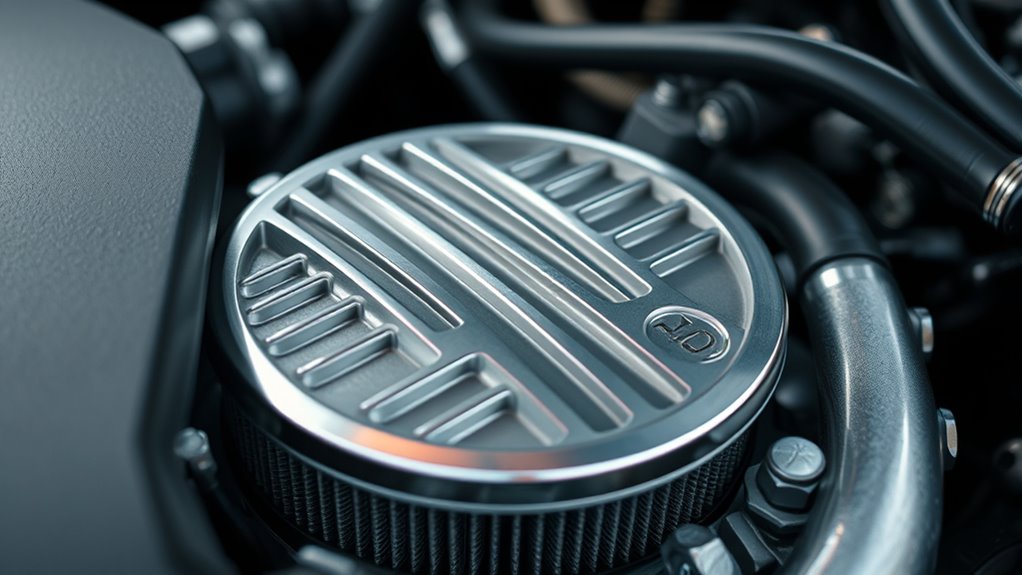

The engine oil filter housing holds your oil filter firmly in place, ensuring that oil flows through the filter to catch dirt and debris before it reaches your engine.
It also seals tightly to prevent leaks, helping maintain proper oil pressure and engine health.
If the housing cracks or leaks, your engine could suffer from dirty oil or low pressure.
Understanding how this part impacts your engine’s performance is crucial, as it plays a significant role in overall engine functionality.
Watch for signs of wear or leaks to avoid potential engine damage.
Regular maintenance and inspections can help ensure your engine oil filter housing is in good condition, promoting a longer lifespan for your engine.
Key Takeaways
- The engine oil filter housing secures the oil filter and connects it to the engine.
- It directs oil flow into the filter for contaminant removal.
- The housing creates a sealed environment to prevent oil leaks and maintain pressure.
- It ensures that only filtered oil circulates through the engine parts.
- The housing helps protect the engine from wear caused by dirt and metal particles.
What Is the Engine Oil Filter Housing and Why Does It Matter?
The engine oil filter housing holds the oil filter securely in place, ensuring your engine oil stays clean and your engine runs smoothly.
You rely on it to prevent contaminants like dirt and metal particles from circulating through your engine, which can cause wear and damage.
This housing not only keeps the filter stable but also seals it tightly, preventing oil leaks that could lead to engine problems.
Without a properly functioning oil filter housing, your filter might shift or fail, compromising oil cleanliness and engine health.
By maintaining this component, you help extend your engine’s life and maintain peak performance.
It’s a small part with a big job, directly affecting your vehicle’s reliability and efficiency every time you drive.
How Does the Engine Oil Filter Housing Fit Into Your Engine’s Oil System?
Understanding how the engine oil filter housing fits into your engine’s oil system helps you see why it plays such an important role.
The housing acts as the secure connection point where the oil filter attaches to your engine. As oil circulates, it flows through this housing, directing it into the filter.
Once filtered, the cleaned oil returns through the housing to continue lubricating crucial engine parts. Without this housing, the oil filter wouldn’t stay in place or function properly, disrupting oil flow.
It also provides a sealed environment to prevent leaks and maintain pressure. In short, the housing integrates the filter seamlessly into your engine’s oil circulation, ensuring oil moves efficiently and reliably through the system.
How the Engine Oil Filter Housing Filters and Protects Your Engine Oil
Because it securely holds the oil filter in place, the engine oil filter housing plays an essential role in keeping your engine oil clean and protected.
It creates a sealed environment where oil flows through the filter media, trapping dirt, metal particles, and other contaminants before the oil circulates back into your engine.
This filtration prevents abrasive debris from causing wear on engine components.
Additionally, the housing directs oil flow efficiently, ensuring consistent pressure and proper filtration.
By maintaining a tight seal, it stops unfiltered oil from bypassing the filter, which could damage your engine.
In short, the housing supports the oil filter’s function and safeguards your engine by ensuring only clean oil lubricates crucial parts.
This helps your engine run smoothly and last longer.
Why Is a Secure Engine Oil Filter Housing Important?
When your engine oil filter housing isn’t secure, oil can leak or bypass the filter, exposing your engine to harmful contaminants. This jeopardizes your engine’s performance and longevity. You need a tight seal to keep oil flowing properly and your engine protected.
Without it, you risk:
Oil dripping onto hot engine parts, causing smoke or even fire hazards.
Contaminants entering the oil flow, leading to accelerated engine wear.
Loss of oil pressure, which can trigger warning lights or engine failure.
What Materials Are Engine Oil Filter Housings Made Of?
You’ll find engine oil filter housings made from materials like aluminum, steel, and plastic.
Each material offers its own set of benefits and drawbacks, affecting durability, weight, and cost.
Let’s explore how these materials impact your engine’s performance and maintenance.
Common Housing Materials
Engine oil filter housings come in various materials, each chosen for its specific properties that enhance performance and durability.
When you look under the hood, you’ll commonly find housings made from:
- Aluminum: Lightweight and good at dissipating heat, aluminum helps keep the engine cool while resisting corrosion.
- Steel: Strong and durable, steel housings withstand high pressure and impacts, making them reliable in tough conditions.
- Plastic (Composite): Modern engines often use reinforced plastic for its resistance to corrosion and reduced weight, improving fuel efficiency.
These materials are carefully selected to meet the demands of different engines and driving environments. Understanding what your oil filter housing is made of gives you insight into how it contributes to your engine’s longevity and overall performance.
Material Advantages and Drawbacks
Although each material used for oil filter housings offers unique benefits, they also come with certain drawbacks you should consider.
Aluminum housings are lightweight and resist corrosion, making them ideal for performance vehicles. However, they can be more expensive and prone to cracking under extreme stress.
Steel housings provide excellent strength and durability at a lower cost. Yet, they’re heavier and susceptible to rust over time.
Plastic housings are lightweight and cost-effective, plus they resist corrosion well. However, they may not handle high temperatures or pressure as effectively, risking deformation or leaks.
Understanding these trade-offs helps you choose the right housing for your engine’s needs, balancing durability, weight, and budget to guarantee peak performance and longevity.
What Are the Signs of a Failing Engine Oil Filter Housing?
How can you tell if your oil filter housing is failing? You’ll notice a few clear signs that shouldn’t be ignored.
First, watch out for oil leaks around the housing area. These often appear as wet spots or puddles under your car.
Second, pay attention to your oil pressure warning light. If it flickers or stays on, it could indicate a problem.
Third, you might experience unusual engine noises, like knocking or ticking, caused by inconsistent oil flow.
To sum up, signs include:
- Visible oil leaks near the filter housing
- Persistent oil pressure warning light
- Strange engine noises indicating poor lubrication
If you spot any of these signs, it’s essential to inspect or replace the oil filter housing promptly to avoid further engine issues.
How Damage to the Engine Oil Filter Housing Affects Oil Flow and Engine Health
When the oil filter housing gets damaged, it disrupts the oil flow crucial for keeping your engine lubricated and running smoothly. A cracked or warped housing can cause oil leaks or pressure drops, meaning oil may not reach essential engine components as it should.
Without steady oil flow, friction increases, leading to overheating and accelerated wear on parts like bearings and camshafts. Over time, this can cause serious engine damage or even failure.
Additionally, contaminants might bypass the filter if the housing can’t seal properly, reducing oil cleanliness and further harming engine health. By understanding how damage affects oil flow, you can appreciate why addressing housing issues promptly is imperative to protect your engine’s performance and longevity.
How Mechanics Replace or Service Your Engine Oil Filter Housing
When your mechanic services the engine oil filter housing, they first inspect the unit for any damage or wear.
Then, they carefully remove the old filter to prevent contaminants from entering the engine.
Finally, they install and seal a new filter to guarantee proper oil flow and engine protection.
Inspecting the Housing Unit
Mechanics start inspecting the engine oil filter housing by carefully removing it to check for cracks, leaks, or clogging. When you watch them, you’ll notice they:
Examine the housing’s surface for tiny fractures that could cause oil leaks. Look inside for sludge buildup or debris blocking oil flow. Inspect the sealing area to confirm the gasket seats properly, preventing leaks.
This thorough inspection guarantees the housing maintains proper oil pressure and flow. If they spot damage or excessive wear, they replace or repair the housing to avoid engine issues. You can see why this step is essential before installing a new filter. By catching problems early, mechanics help your engine stay healthy and running smoothly.
Removing the Old Filter
Start by loosening the bolts that secure the oil filter housing to the engine block.
Once the bolts are removed, carefully pull the housing away to expose the old oil filter inside.
Be prepared for some oil to spill, so keep a drain pan underneath.
Gently remove the old filter element by pulling it straight out; if it’s stuck, wiggle it slightly to free it without damaging the housing.
Inspect the inside of the housing for any debris or old gasket material and clean it thoroughly with a lint-free cloth.
Removing the old filter properly guarantees no contaminants enter your engine during the replacement process.
Take your time; rushing can cause damage or oil leaks later on.
Installing and Sealing New Filter
Although installing a new oil filter might seem straightforward, guaranteeing a proper seal is essential to prevent leaks and protect your engine.
First, you want to lightly coat the new filter’s rubber gasket with clean engine oil. This helps create a tight, leak-free seal when you screw it in.
Next, carefully thread the filter onto the housing by hand, avoiding cross-threading.
Finally, tighten the filter firmly but don’t overtighten; it typically requires about three-quarters of a turn after the gasket touches the housing.
Picture this process:
- Gently spreading oil on the gasket for smooth sealing
- Hand-screwing the filter, feeling it catch the threads
- Applying steady pressure to secure the filter without forcing it
Following these steps guarantees your engine stays protected and leak-free.
Tips for Maintaining Your Engine Oil Filter Housing for Longevity
Keeping your engine oil filter housing in top shape requires a few simple but consistent maintenance steps.
First, regularly check for any signs of dirt or grime buildup around the housing. Clean the area gently with a rag and some engine-safe cleaner to prevent debris from entering the system when you change the filter.
Make certain to inspect the housing for cracks or damage during routine oil changes. If you spot any wear, address it promptly to avoid costly repairs.
Always use the correct oil filter and housing gasket specified by your vehicle’s manufacturer to guarantee a proper fit and seal.
Finally, avoid overtightening the housing bolts when reinstalling, as this can cause warping or damage. Following these tips helps you extend the life of your engine oil filter housing effectively.
Common Problems and How to Prevent Engine Oil Filter Housing Leaks
When your engine oil filter housing leaks, it can lead to reduced oil pressure and potential engine damage if not addressed quickly. You can prevent leaks by understanding common issues and taking proactive steps.
First, worn or damaged gaskets often cause leaks; regularly inspect and replace them as needed. Second, cracks in the housing can develop from heat and pressure; avoid overtightening the filter cap to reduce stress.
Third, improper installation of the oil filter can create gaps or misalignment, so always follow manufacturer guidelines carefully. To visualize these points:
- A cracked housing with oil seeping out
- A deteriorated gasket losing its seal
- An incorrectly seated oil filter causing gaps
Frequently Asked Questions
Can I Upgrade My Engine Oil Filter Housing for Better Performance?
Yes, you can upgrade your engine oil filter housing for better performance.
Choose a high-quality, durable model that improves oil flow and cooling.
Make sure it fits your engine and follows manufacturer recommendations to avoid issues.
Does Engine Oil Filter Housing Design Vary by Vehicle Make?
Yes, engine oil filter housing design varies by vehicle make because manufacturers tailor it to fit specific engine layouts and performance needs.
You’ll find differences in size, shape, and materials depending on your car’s design.
How Does Temperature Affect the Engine Oil Filter Housing?
When it comes to temperature, the engine oil filter housing can really feel the heat.
You’ll find that extreme cold or hot conditions may cause expansion, contraction, or even cracks.
Are There Aftermarket Engine Oil Filter Housings Available?
Yes, you can find aftermarket engine oil filter housings.
They often offer improved durability, performance, or cost savings compared to OEM parts.
Just make sure you choose one compatible with your vehicle’s make and model.
Can a Damaged Oil Filter Housing Cause Engine Overheating?
Just like a cracked dam risks a flood, a damaged oil filter housing can cause engine overheating by leaking oil or disrupting flow.
You’ll want to fix it fast to keep your engine running cool and safe.
Conclusion
Think of your engine oil filter housing as the sturdy gatekeeper of a castle, standing firm to keep the lifeblood of your engine flowing pure and strong.
If this gate weakens or leaks, the whole kingdom—your engine—faces chaos.
By treating it with care and attention, you guarantee the gate stays secure, protecting the heart of your machine.
Keep it tight, and your engine will run like a well-guarded fortress for miles to come.
In conclusion, the engine oil filter housing is essential for maintaining oil purity and ensuring the longevity of your engine.