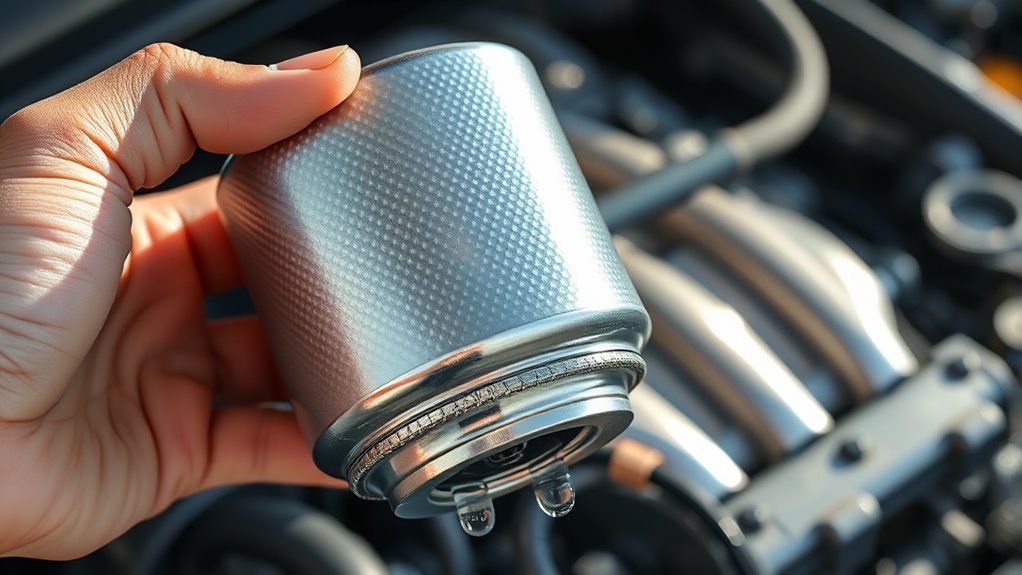

Your oil filter keeps your engine running smoothly by trapping dirt, metal particles, and other contaminants in the engine oil.
This cleaning process protects your engine’s essential parts from wear and damage, improving performance and extending its life.
You should change the oil filter regularly to avoid clogging and costly repairs.
If you want to understand how it works, recognize signs it needs replacing, and pick the right one, there’s plenty more to explore.
Key Takeaways
- An oil filter traps contaminants and impurities from engine oil to keep it clean. It prevents dirt, metal particles, and debris from circulating through the engine.
- The filter uses pleated synthetic or cellulose media to maximize filtration surface area. It continuously cleans oil during engine operation for optimal lubrication.
- Maintaining a clean oil filter supports engine performance, longevity, and fuel efficiency.
What Is an Oil Filter and Why Does It Matter?
Although you might overlook it, an oil filter plays an essential role in keeping your engine running smoothly.
It’s a small but vital component designed to trap contaminants and impurities in your engine oil.
Without it, dirt, metal particles, and other debris would circulate freely, causing wear and damage to engine parts.
You rely on the oil filter to maintain clean oil, which lubricates and cools your engine efficiently.
This protection directly impacts your engine’s performance, longevity, and fuel efficiency.
Neglecting the oil filter can lead to costly repairs and reduced engine life.
How Does an Oil Filter Clean Engine Oil?
You might wonder how an oil filter actually cleans your engine oil.
It works by trapping dirt, metal particles, and other contaminants as the oil passes through a special filtering material.
This process guarantees only clean oil circulates, keeping your engine running smoothly.
Filtration Mechanism Explained
An oil filter cleans engine oil by trapping contaminants as the oil flows through its filter media. You’ll find that this media is typically made from synthetic fibers, cellulose, or a blend, designed to catch dirt, metal particles, and other debris without restricting oil flow.
As oil passes through, these tiny fibers create a dense network that physically blocks contaminants, preventing them from circulating and damaging engine parts. The filter also uses a pleated design to maximize surface area, so it can hold more particles while maintaining efficient flow.
While you’re driving, the oil pump continuously pushes oil through this media, ensuring your engine stays lubricated with clean oil. This helps maintain performance and prolong engine life.
Contaminant Removal Process
The oil filter doesn’t just trap contaminants; it actively removes them from the engine oil as it circulates. When oil flows through the filter, it passes through a dense media designed to catch dirt, metal shavings, and other debris.
This media works like a sieve, allowing clean oil through while blocking particles that can damage your engine. As you drive, the filter continuously cleans the oil, preventing harmful buildup.
Some filters also use magnets or special coatings to attract and hold microscopic metal fragments. By consistently removing contaminants, the filter helps maintain ideal oil quality, ensuring your engine runs smoothly and lasts longer.
What Are the Different Types of Oil Filters?
Although oil filters all serve the same basic function to clean contaminants from engine oil, they come in several different types designed for various engines and driving conditions.
Choosing the right one can improve your engine’s performance and longevity. Here are the main types you’ll encounter:
| Type | Description |
|---|---|
| Spin-On | Easy to replace; disposable cartridge inside |
| Cartridge | Replaceable filter element inside reusable housing |
| Magnetic | Uses magnets to trap metal particles |
| High-Efficiency | Filters smaller particles for high-performance engines |
Each type has its advantages depending on your vehicle and driving style. Understanding these will help you pick the best oil filter that keeps your engine clean and running smoothly.
Signs Your Oil Filter Needs Replacement
Picking the right oil filter is just part of keeping your engine in good shape. You also need to know when it’s time to replace it.
One clear sign is a drop in engine performance, such as rough idling or decreased acceleration. This can indicate clogged filters restricting oil flow.
You might also notice dirty or gritty oil during a check, signaling the filter is losing effectiveness.
Unusual engine noises, like ticking or knocking, can mean the oil isn’t circulating properly because of a blocked filter.
Additionally, if your oil pressure warning light comes on, don’t ignore it. It could be due to a failing oil filter.
Catching these signs early helps prevent engine damage and keeps your car running smoothly.
When to Change Your Oil Filter
How often should you change your oil filter to keep your engine running smoothly? Most experts recommend changing it every time you change your oil, typically every 3,000 to 7,500 miles, depending on your vehicle and driving habits. Regular replacement guarantees contaminants don’t clog your filter and reduce engine performance.
| Vehicle Type | Mileage Interval | Driving Conditions |
|---|---|---|
| Standard Cars | 5,000 – 7,500 | Normal city/highway |
| Trucks/SUVs | 3,000 – 5,000 | Heavy towing/off-road |
| Older Vehicles | 3,000 | Severe stop-and-go traffic |
Check your owner’s manual for exact intervals. Don’t wait too long; changing your oil filter on schedule protects your engine and extends its life.
What Happens If You Skip Changing Your Oil Filter?
If you skip changing your oil filter, your engine can suffer serious damage over time. The filter traps contaminants, and when it clogs, it can’t do its job properly. Here’s what happens:
1. Reduced oil flow
A clogged filter restricts oil circulation, causing increased engine wear.
2. Contaminant buildup
Dirt and debris circulate freely, damaging engine parts.
3. Overheating
Poor oil flow means less cooling, leading to overheating risks.
4. Engine failure
Prolonged neglect can cause severe damage, resulting in costly repairs or complete engine failure.
Changing your oil filter regularly guarantees your engine stays clean, runs smoothly, and lasts longer. Don’t skip this crucial maintenance step to protect your vehicle’s performance.
How to Choose the Right Oil Filter for Your Vehicle
Choosing the right oil filter for your vehicle guarantees peak engine protection and performance.
Start by checking your owner’s manual to find the recommended filter type and specifications.
Don’t just grab any filter off the shelf. Filters vary in size, filtration efficiency, and compatibility with different oil types.
You’ll want a filter that matches your engine’s needs, whether it’s synthetic or conventional oil.
Look for trusted brands that meet industry standards like the API or OEM certifications.
Also, consider the filter’s micron rating; a lower rating means better particle filtration.
Finally, verify the filter’s design suits your driving conditions. Some offer enhanced durability for heavy-duty or high-performance engines.
Choosing wisely helps keep your engine clean and running smoothly.
How to Install an Oil Filter the Right Way
Once you’ve selected the right oil filter, the next step is installing it correctly to guarantee your engine stays protected. Here’s how to do it the right way:
- Prepare the filter: Lightly coat the new filter’s rubber gasket with fresh oil to ensure a tight seal.
- Remove the old filter: Use an oil filter wrench to loosen and remove the old filter, being careful of hot oil.
- Install the new filter: Screw the new filter on by hand until the gasket contacts the mounting surface. Then tighten it about three-quarters of a turn more.
- Check for leaks: After installation, start your engine and inspect around the filter for leaks. Tighten if necessary.
Following these steps helps maintain ideal oil flow and protects your engine from contaminants.
Frequently Asked Questions
Can a Reusable Oil Filter Save Money Over Time?
Yes, a reusable oil filter can save you money over time since you won’t keep buying replacements.
You’ll just clean it regularly, which costs less, helping you reduce waste and maintain your engine efficiently.
How Does Oil Filter Quality Affect Engine Performance?
If you want your engine to cough and wheeze like a drama queen, go for a cheap oil filter.
But if you care about smooth performance, a quality filter keeps your engine clean and running like a champ.
Are Synthetic Oil Filters Better Than Standard Ones?
Yes, synthetic oil filters are generally better because they trap smaller particles and last longer, keeping your engine cleaner.
You’ll notice improved performance and extended oil change intervals compared to standard filters.
Can Oil Filters Cause Oil Pressure Issues?
Yes, oil filters can cause oil pressure issues if they get clogged or aren’t the right type.
You should replace them regularly and choose quality filters to keep your engine running smoothly and maintain proper oil pressure.
Is It Safe to Use an Oil Filter From a Different Brand?
You can use an oil filter from a different brand safely if it meets your vehicle’s specifications.
In fact, 85% of mechanics recommend brand compatibility to avoid pressure or fitment issues. Always double-check ratings.
Conclusion
Your oil filter is like a silent guardian, tirelessly keeping your engine’s lifeblood pure and strong.
Skipping its care is like letting dirt clog your veins—eventually, everything slows down or breaks.
By choosing the right filter and changing it on time, you’re giving your engine a fresh breath, letting it run smooth and free.
Treat your oil filter well, and it’ll return the favor with every mile you drive.
In conclusion, your oil filter plays a crucial role in maintaining engine performance and longevity.