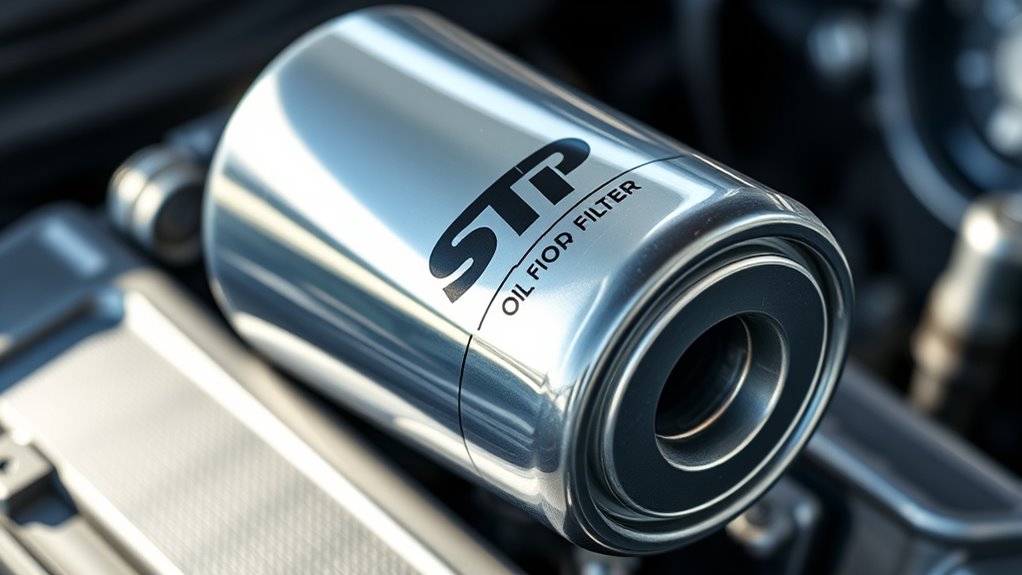

If you’re looking for a budget-friendly oil filter that offers reliable basic protection, STP is a solid choice.
It captures dirt and contaminants well enough for everyday driving and routine oil changes.
While it may not match the advanced filtration or durability of premium brands, it balances filtration efficiency with steady oil flow to safeguard your engine.
If you want to understand how it stacks up against others and suits your needs, keep exploring the details.
Key Takeaways
- STP oil filters offer reliable basic filtration suitable for everyday driving and routine oil changes.
- They use a blend of synthetic and cellulose media to effectively trap dirt and contaminants.
- STP filters feature durable steel casings that resist corrosion and damage.
- They are budget-friendly but lack the advanced synthetic media of premium brands.
- STP filters meet industry standards but are not ideal for high-performance or severe driving conditions.
What Makes a Good Oil Filter?
Choosing a good oil filter means understanding what keeps your engine clean and running smoothly.
You want a filter that traps dirt, metal particles, and other contaminants effectively to prevent engine wear. Look for one with high filtration efficiency and a strong filtering media that won’t collapse under pressure.
A reliable bypass valve is essential too; it guarantees oil flow continues even if the filter clogs. The anti-drain back valve keeps oil from draining out when the engine is off, so you get immediate lubrication at startup.
Also, the filter’s build quality matters. A durable casing resists rust and damage. When you pick an oil filter, focus on these traits to protect your engine and maximize its lifespan.
Is STP a Good Oil Filter?
Wondering if STP oil filters meet the standards your engine deserves?
STP has built a reputation for affordable, reliable automotive products, and their oil filters are no exception.
When you choose an STP oil filter, you get decent filtration capabilities that protect your engine from harmful contaminants.
While they might not match premium brands in advanced filtering media or extended service intervals, STP filters provide solid performance for everyday driving and routine oil changes.
If you’re looking for a budget-friendly option that still offers dependable engine protection, STP filters can be a smart choice.
Just remember to replace them regularly and consider your vehicle’s specific needs, as some engines may benefit from higher-end filters depending on driving conditions.
STP Oil Filter Features That Matter
When choosing an oil filter, you want to focus on filtration efficiency and how well the filter traps contaminants.
You also need to take into account the durability and material quality to guarantee it holds up under pressure.
Let’s explore how STP stacks up in these key areas.
Filtration Efficiency Levels
Filtration efficiency plays a crucial role in determining how well an STP oil filter protects your engine from harmful contaminants.
When you choose an STP oil filter, you’re opting for a product designed to capture tiny particles that can cause engine wear.
STP filters typically feature media that traps dirt, metal shavings, and sludge before they circulate through your engine oil.
This means your engine stays cleaner, and its performance remains ideal.
You’ll find that STP filters balance filtration with oil flow, ensuring your engine receives a steady supply of clean oil without restriction.
By maintaining high filtration efficiency, STP helps extend your engine’s life and maintain smooth operation.
Durability And Material Quality
Since your engine relies on the oil filter to operate smoothly, the durability and material quality of an STP oil filter become critical factors.
STP filters use robust steel casings that resist crushing and corrosion, protecting internal components even under high pressure. Inside, they feature high-quality synthetic and cellulose blend media designed to trap contaminants without restricting oil flow.
This combination guarantees the filter lasts through your oil change intervals without breaking down or clogging prematurely. You’ll appreciate that STP’s construction minimizes the risk of leaks or filter failure, which could cause costly engine damage.
When you choose an STP oil filter, you’re investing in reliable materials that stand up to harsh conditions, helping maintain your engine’s health and longevity.
Comparing STP Oil Filters to Other Brands
Although STP oil filters offer reliable performance, you might wonder how they stack up against other popular brands.
Compared to premium brands like Fram or Mobil 1, STP filters usually come at a lower price point, making them a budget-friendly choice.
While they provide adequate filtration, some higher-end filters use advanced synthetic media that trap smaller particles more efficiently.
You’ll find that STP filters meet basic industry standards, but they might not deliver the extended life or superior contaminant removal found in top-tier options.
If you’re balancing cost with performance, STP offers decent value.
However, if you want maximum engine protection and longer change intervals, exploring other brands with enhanced filtration technology might be worth your while.
Who Should Choose STP Oil Filters?
If you’re looking for an affordable oil filter that gets the job done without breaking the bank, STP is a solid choice.
You should consider STP oil filters if you want reliable basic filtration for everyday driving and aren’t pushing your engine to extreme limits.
They’re well-suited for budget-conscious drivers who prioritize routine maintenance over premium features.
If you drive a standard vehicle and stick to regular oil change intervals, STP filters provide decent protection without extra cost.
However, if you have a high-performance car or drive in severe conditions, you might want to explore options with advanced filtration technology.
But for most daily drivers who want a dependable, cost-effective filter, STP fits the bill perfectly.
Installing and Maintaining STP Oil Filters
Choosing STP oil filters is just the start; knowing how to install and maintain them properly guarantees your engine stays protected.
To get the most out of your STP filter, follow these steps:
- Prepare your workspace: Confirm your engine is cool and gather necessary tools like a wrench and oil drain pan.
- Remove the old filter: Loosen the old filter carefully to avoid spills, then clean the mounting surface.
- Install the STP filter: Lubricate the rubber gasket with a bit of oil, then screw the filter on by hand until snug; avoid over-tightening.
- Maintain regularly: Change your oil and filter per your vehicle’s schedule to keep the filter functioning efficiently.
Following these steps helps maintain engine performance and extends your filter’s lifespan.
Frequently Asked Questions
Where Are STP Oil Filters Manufactured?
STP oil filters are primarily manufactured in the United States, though some production may occur overseas.
You’ll find they maintain quality standards regardless of location, ensuring your engine gets reliable filtration wherever the filter’s made.
Are STP Oil Filters Compatible With Diesel Engines?
Yes, you can use STP oil filters with diesel engines since they’re designed to handle various engine types.
Just make sure you pick the right model that fits your diesel engine’s specifications for peak performance.
What Is the Warranty Period for STP Oil Filters?
They say, “A stitch in time saves nine.”
STP oil filters typically come with a limited warranty of 12 months or 12,000 miles.
You’ll want to check your specific product details to confirm coverage.
Can STP Oil Filters Be Recycled?
Yes, you can recycle STP oil filters, but you’ll need to drain and dispose of oil properly first.
Many recycling centers accept them, so check local guidelines to confirm you recycle your used filters responsibly.
Do STP Oil Filters Affect Engine Oil Change Intervals?
STP oil filters don’t usually affect your engine oil change intervals.
You should stick to the manufacturer’s recommended schedule to keep your engine running smoothly, regardless of which brand’s filter you use.
Conclusion
If you want an oil filter that gets the job done without draining your wallet, STP is a solid choice.
It’s got enough features to keep your engine happy and runs competitively against bigger brands.
While it might not be the absolute best on the planet, it’s definitely reliable enough for everyday drivers like you.
So, go ahead—give STP a try and keep your engine purring like a contented lion!
In conclusion, STP is a good oil filter!