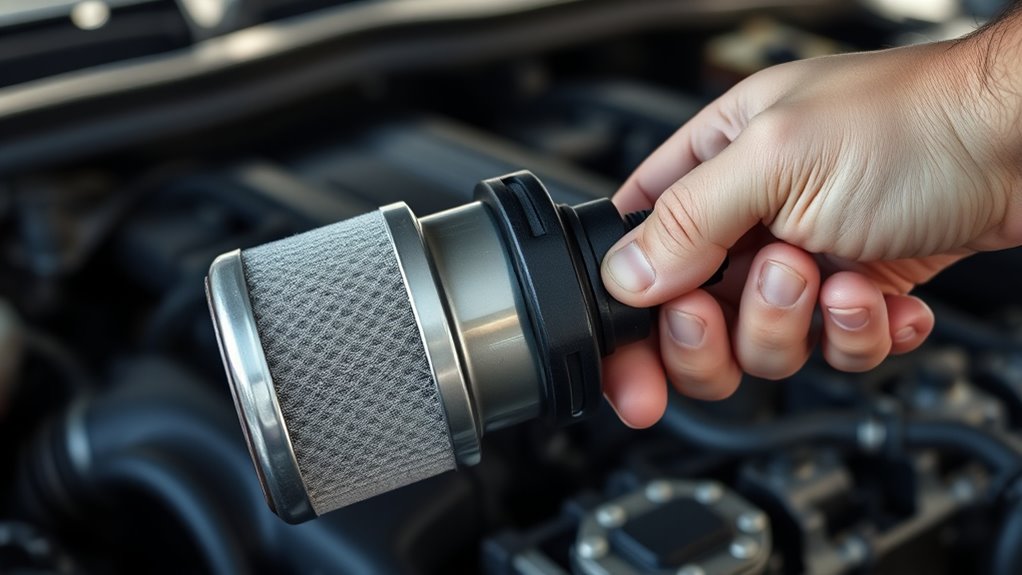

To use an oil filter wrench, first park your car on a level surface and ensure the engine is cool.
Choose a wrench that snugly fits your filter type—spin-on or cartridge.
Secure the wrench around the filter and turn it counterclockwise with steady pressure to loosen.
Prepare for oil spills by having rags or a container handy.
Once loose, finish unscrewing by hand.
If this sounds straightforward, you can also explore tips for stuck filters and proper installation for a smooth oil change.
Key Takeaways
- Select the correct oil filter wrench type based on your filter: band or cap-style for spin-on, socket-style for cartridge filters.
- Position the wrench firmly and snugly around the oil filter to ensure a secure grip without slipping.
- Turn the wrench counterclockwise with steady pressure to loosen the oil filter; switch to hand turning once loose.
- Prepare for oil spills by placing a drain pan or rags under the filter before loosening it.
- Avoid over-tightening the wrench when reinstalling; hand-tighten the new filter 3/4 to 1 full turn after contact.
Prepare Your Vehicle for an Oil Filter Change
Before you begin changing your oil filter, make certain your vehicle is parked on a level surface and the engine is cool. This helps prevent burns and guarantees accurate oil drainage.
Next, engage the parking brake to keep your car stable throughout the process.
Gather all necessary tools, including gloves, a drain pan, and rags to catch any spills.
Locate the oil drain plug and filter by consulting your owner’s manual if needed.
Position the drain pan under the oil drain plug, then carefully loosen the plug to drain the old oil completely.
Once drained, replace the drain plug securely to avoid leaks.
With your vehicle prepped this way, you’re ready to move on to removing the oil filter safely and efficiently.
Choose the Right Oil Filter Wrench for Your Car
Since oil filters come in various sizes and designs, choosing the right oil filter wrench is crucial for an easy removal process.
First, identify your oil filter type: spin-on or cartridge. Spin-on filters usually require a band or cap-style wrench, while cartridge filters often need a socket-style wrench.
Next, check your car’s manual or measure the filter’s diameter to guarantee the wrench fits snugly. Avoid wrenches that are too loose or too tight, as they can damage the filter or make removal harder.
Also, consider the wrench’s grip and handle length. A longer handle provides better leverage in tight spaces. Picking the right tool upfront saves time and prevents frustration during your oil change.
How to Remove an Oil Filter With a Wrench
Grab your oil filter wrench and position it firmly around the filter to guarantee a secure grip.
Make sure the wrench fits snugly to avoid slipping.
Once in place, turn the wrench counterclockwise to loosen the filter.
Apply steady pressure and avoid sudden jerks, as this could damage the filter or surrounding parts.
As the filter begins to loosen, continue turning it by hand until you can remove it completely.
Be prepared for some oil to spill out, so have a container or rags ready to catch drips.
After removal, inspect the filter mounting surface for any debris or remnants of the old gasket.
This assures a proper seal when installing the new filter.
Dispose of the old filter properly according to local regulations.
Tips for Loosening Stuck Oil Filters With a Wrench
If your oil filter feels stuck despite your best efforts, don’t get discouraged. You can use a few effective techniques to loosen it safely.
First, make certain your wrench has a firm grip. Sometimes adjusting the size or switching to a different type, like a strap or cap wrench, helps.
Applying penetrating oil around the filter’s base can break down grime. Let it sit for 10-15 minutes before trying again.
You can also tap gently around the filter with a rubber mallet to loosen the seal. When using the wrench, apply steady, controlled force to avoid slipping or damaging the filter.
If it still won’t budge, warming the engine slightly can expand metal parts and ease removal. Always wear gloves to protect your hands during this process.
How to Install a New Oil Filter
Before you install the new oil filter, make certain to lightly coat its rubber gasket with fresh oil. This helps create a better seal and makes future removal easier.
Then, follow these steps to install it correctly:
- Align the new filter with the mounting surface, ensuring it’s straight.
- Screw the filter onto the engine by hand, turning clockwise until it contacts the base.
- Tighten the filter an additional 3/4 to 1 full turn by hand; avoid using a wrench to prevent overtightening.
- Double-check for any leaks after adding new oil and starting the engine.
Proper installation guarantees your engine stays protected and your oil filter functions efficiently.
Frequently Asked Questions
Can I Reuse an Oil Filter Wrench for Multiple Vehicles?
Yes, you can reuse an oil filter wrench for multiple vehicles as long as it fits the filter size.
Just clean it after each use to prevent grime buildup and guarantee it grips properly every time you work on a vehicle.
What Materials Are Oil Filter Wrenches Typically Made From?
Back when knights roamed, oil filter wrenches were made sturdy from steel or chrome-plated metal.
You’ll usually find them crafted from these tough materials to handle twisting filters without slipping or breaking during your vehicle maintenance.
How Do I Clean and Maintain My Oil Filter Wrench?
You should wipe your oil filter wrench clean after each use to remove grime.
Occasionally, apply a light coat of lubricant to moving parts to prevent rust and guarantee smooth operation.
Store it in a dry place.
Are There Any Safety Precautions When Using an Oil Filter Wrench?
Picture gripping a stubborn jar lid. Always wear gloves to protect your hands and guarantee a firm hold.
Don’t rush; sudden slips can hurt you or damage parts. Keep your workspace clear to avoid accidents.
Can an Oil Filter Wrench Damage My Oil Filter or Car?
Yes, an oil filter wrench can damage your filter or car if you use too much force or the wrong size.
Be careful to choose the right wrench and apply steady, gentle pressure to avoid harm.
Conclusion
Congrats, you’re now practically an oil filter whisperer!
With your trusty wrench in hand, you can tackle even the most stubborn filters like a pro—because who doesn’t love wrestling greasy parts on a Sunday?
Just remember, if your filter doesn’t budge, it’s not your wrench’s fault; it’s just playing hard to get.
So, tighten that new filter with confidence and enjoy the smug satisfaction of saving a few bucks while pretending you’re a full-fledged mechanic!
In conclusion, with your oil filter wrench, you’re equipped to handle any oil filter challenge that comes your way.