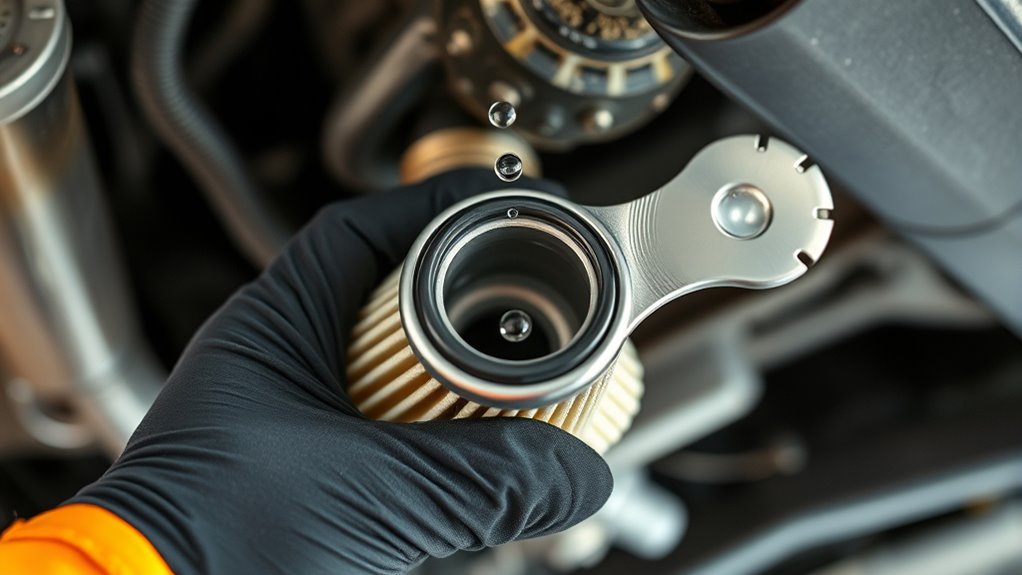

To remove your oil filter, first secure your vehicle on a flat surface and gather gloves, an oil filter wrench, and a drain pan.
Locate the filter on your engine and place the pan underneath to catch drips.
Turn the filter counterclockwise by hand or with a wrench, tilting it gently to avoid spills.
Once loose, remove it upright.
Proper disposal and careful installation of a new filter follow.
Keep going to master each step with ease and confidence.
Key Takeaways
- Locate the oil filter on the engine block using a flashlight or owner’s manual if needed.
- Place a drain pan underneath to catch oil that may spill during removal.
- Grip the oil filter firmly and turn counterclockwise to loosen it by hand or use an oil filter wrench if too tight.
- Tilt the filter gently while loosening to prevent oil from splashing or spilling.
- Remove the filter upright and allow excess oil to drain into the pan before disposal.
Gather Tools and Prepare Your Vehicle Safely
Before you begin removing the oil filter, make certain you have all the necessary tools ready and your vehicle is securely positioned.
You’ll need an oil filter wrench, a drain pan, gloves, and possibly a ratchet set depending on your car model.
Always work on a flat surface and engage the parking brake to prevent any movement.
Using ramps or jack stands is safer than just a jack alone, so lift your vehicle carefully and double-check its stability before crawling underneath.
Wear gloves to protect your hands from hot oil and sharp components.
Having a clean workspace helps prevent contamination and keeps tools within reach.
Taking these steps guarantees you work efficiently and safely while preparing to remove your oil filter.
Find and Access Your Oil Filter
With your tools ready and your vehicle safely lifted, you can now locate the oil filter.
Typically, the oil filter is a cylindrical component attached to the engine block.
Depending on your vehicle, it might be on the side, front, or even underneath the engine.
Use a flashlight if needed to get a clear view.
In some cars, the filter may be tucked behind other components, so don’t hesitate to consult your owner’s manual for the exact location.
Make sure you have enough space to work around it comfortably.
Clear away any debris or obstacles that might hinder access.
Once you spot the filter, note its orientation and position to help when you remove and replace it later.
How to Loosen and Remove the Oil Filter Without Spills
Grip the oil filter firmly and turn it counterclockwise to loosen it. Use an oil filter wrench if it’s too tight.
Place a drain pan beneath to catch any spills. As the filter loosens, oil may drip; tilt it gently to avoid splashing.
Once loose, remove it by hand, keeping it upright to minimize leaks. Wipe the mounting surface clean before installing a new filter.
| Feeling | Why It Matters |
|---|---|
| Confidence | You’re in control, no mess |
| Relief | Avoiding spills saves cleanup |
| Satisfaction | Job done neatly and right |
Dispose of the Old Oil Filter Properly
Since used oil filters contain hazardous materials, you’ll need to dispose of them properly to protect the environment.
First, drain the filter by puncturing a hole and letting any remaining oil drip into a container for recycling.
Never throw the oil filter in the regular trash, as it can contaminate soil and water.
Instead, place the drained filter in a sealed plastic bag or a designated container to prevent leaks.
Take it to a local recycling center, auto parts store, or service station that accepts used oil filters.
Many communities have hazardous waste collection programs; check their guidelines.
Proper disposal helps keep harmful substances out of landfills and supports oil recycling efforts, so you’re doing your part to keep the environment safe.
Install the New Oil Filter and Check for Leaks
Start by applying a thin layer of clean oil to the rubber gasket on the new oil filter. This guarantees a proper seal and makes it easier to remove during the next oil change.
Next, screw the new filter onto the engine by hand. Turn it clockwise until the gasket contacts the mounting surface, then tighten it an additional three-quarters to one full turn. Avoid using a wrench to prevent over-tightening.
Once installed, refill your engine with the recommended amount and type of oil. Start the engine and let it run for a few minutes, then turn it off and inspect the oil filter area for leaks.
If you spot any, tighten the filter slightly more. Finally, check the oil level and top off if necessary, ensuring your engine is protected and leak-free.
Frequently Asked Questions
How Often Should I Change My Oil Filter?
You should change your oil filter every time you change your oil,
typically every 3,000 to 7,500 miles, depending on your car and oil type.
Check your owner’s manual for the best interval.
What Type of Oil Filter Is Best for My Vehicle?
You’ll want to choose an oil filter that matches your vehicle’s make and model.
Check your owner’s manual for specifications, then pick a high-quality, brand-name filter to guarantee proper fit and ideal engine protection.
Can a Damaged Oil Filter Cause Engine Problems?
Yes, a damaged oil filter can cause engine problems by restricting oil flow or letting contaminants circulate.
You’ll risk engine wear, overheating, or even serious damage. So always replace a faulty filter promptly to protect your engine.
How Do I Know if My Oil Filter Is Leaking?
You’ll know your oil filter is leaking if you see oil spots under your car, notice a burning smell, or your oil pressure warning light turns on.
Check around the filter for wet, oily residue to confirm.
Is It Necessary to Change the Oil Filter With Every Oil Change?
Yes, you should change your oil filter with every oil change.
It helps keep your engine clean by trapping contaminants, ensuring your new oil stays fresh and your engine runs smoothly without damage.
Conclusion
Now that you know how to remove your oil filter safely and cleanly, you’re ready to keep your engine running smoothly.
Did you know that regularly changing your oil filter can improve engine efficiency by up to 15%?
That’s a big boost just from simple maintenance!
So, take your time, follow the steps carefully, and enjoy the confidence that comes with doing it yourself—your car will thank you for it!
In conclusion, remember to prioritize learning how to remove your oil filter to maintain optimal engine performance.