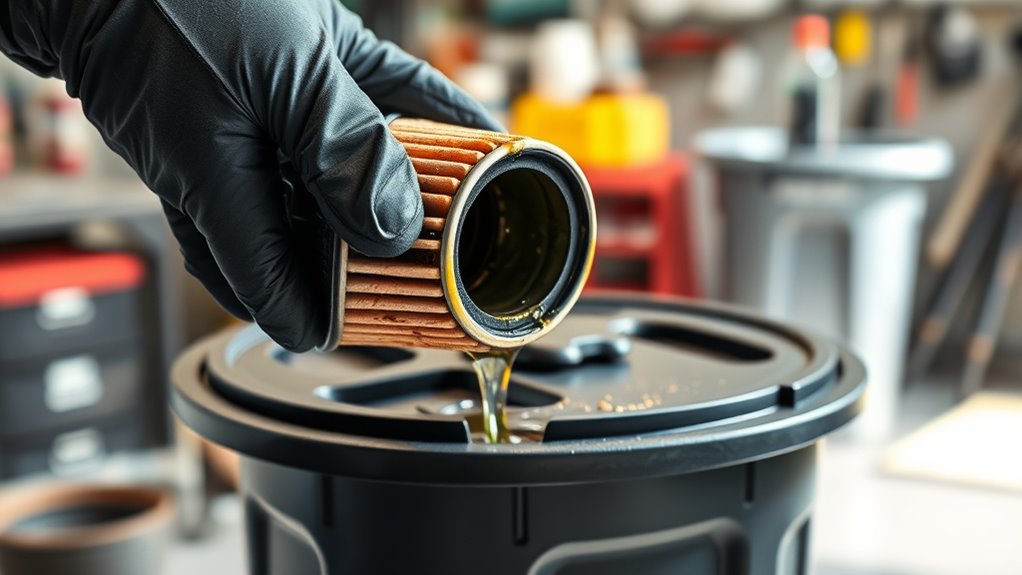

You shouldn’t throw used oil filters in the trash because they hold hazardous oil that can harm the environment.
Instead, drain the filter upside down for at least 12 hours.
Poke a hole in the dome to speed draining, and store it in a sealed container.
Then, take it to a local recycling center, auto parts store, or hazardous waste event.
Following your community’s rules helps protect the environment and your health.
Keep going to discover safer disposal options and useful tips.
Key Takeaways
- Drain the used oil filter upside down for at least 12 hours to remove residual oil before disposal.
- Wear gloves and avoid crushing filters to prevent spills and skin contact with hazardous oil.
- Store drained filters in sealed containers or sturdy plastic bags, labeled clearly as used oil filters.
- Take used oil filters to designated recycling centers, auto parts stores, or hazardous waste collection events.
- Avoid disposing of oil filters in regular trash bins to prevent environmental contamination and comply with local regulations.
How to Handle Used Oil Filters Safely at Home
Start by draining your used oil filter thoroughly to prevent spills and contamination.
Place it upside down in a drain pan and let it drain for at least 12 hours.
This step reduces leftover oil, making handling safer.
Next, wear gloves to protect your skin from any residual oil and avoid direct contact.
Use a sturdy plastic bag or a sealed container to store the drained filter, preventing leaks during transport or storage.
Keep the oil filter away from heat sources or open flames since oil residue is flammable.
Finally, label the container or bag clearly to remind yourself and others that it contains used oil filters.
Following these steps helps you handle used oil filters safely at home and prepares you for proper disposal.
Can You Throw Oil Filters in the Trash?
Can you simply toss used oil filters in the trash? The short answer is no.
Oil filters contain residual oil, which is hazardous to the environment and can contaminate soil and water if disposed of improperly.
Most local regulations prohibit throwing oil filters in regular trash bins because of this risk.
Instead, you need to handle them as hazardous waste. Many communities offer designated drop-off sites or recycling centers that accept used oil filters.
Some auto parts stores and service stations also collect them for proper disposal.
So, before you throw yours away, check local guidelines.
Disposing of oil filters correctly helps protect the environment and guarantees you comply with the law.
Don’t risk a fine or environmental harm by tossing them in the trash.
How to Drain and Prepare Oil Filters for Disposal
Before disposing of your oil filter, you’ll need to drain it properly to remove any leftover oil.
Make sure you’re wearing gloves and working in a well-ventilated area to stay safe during the process.
Once drained, you can prepare the filter for recycling by following local guidelines.
Proper Oil Drain Techniques
Properly draining your oil filter is essential to prevent spills and guarantee safe disposal. First, let the engine cool down, then carefully remove the filter.
Hold it upside down over a drain pan to let the oil drip out completely. You can also puncture a small hole in the filter’s dome end to speed up drainage. Allow at least 12 hours for thorough draining.
Once drained, place the filter on an absorbent pad or in a sealed container to catch any residual oil.
| Step | Action |
|---|---|
| 1 | Cool engine before removal |
| 2 | Remove filter carefully |
| 3 | Drain oil upside down |
| 4 | Store on absorbent pad |
This technique minimizes mess and prepares the filter for recycling or disposal.
Safety Precautions During Draining
Taking three key safety precautions during oil filter draining will protect you and your environment.
First, always wear gloves and safety glasses to prevent contact with used oil, which can irritate your skin and eyes.
Second, work in a well-ventilated area to avoid inhaling fumes.
Position a drain pan underneath the filter to catch all the oil, preventing spills that harm surfaces and soil.
Next, avoid rushing; you should let the filter drain completely to minimize leftover oil.
Finally, keep a clean workspace by wiping up any drips immediately and disposing of rags properly.
Following these steps guarantees your safety and helps keep your surroundings clean while you drain your oil filter correctly.
Preparing Filters For Recycling
Once you’ve drained the oil filter thoroughly, you need to prepare it for recycling by removing any remaining oil and guaranteeing it’s ready for disposal.
Start by puncturing the filter to allow all residual oil to drain out. Place it over a drip pan and let it sit for at least 12 hours. Then, seal the filter in a plastic bag or container to prevent leaks during transport.
| Step | Action |
|---|---|
| 1. Drain completely | Puncture filter, drain 12 hrs |
| 2. Contain oil | Use drip pan or absorbent pad |
| 3. Seal filter | Place in sealed bag/container |
| 4. Transport safely | Take to recycling center |
Following these steps helps protect the environment and guarantees your oil filter is properly recycled.
Where to Recycle Used Oil Filters Near You
Wondering where you can recycle your used oil filters?
Start by checking local auto parts stores and service centers. They often accept used filters for recycling.
Many municipalities also hold hazardous waste collection events where you can safely drop off oil filters.
To find nearby options, visit your city or county’s waste management website, which usually lists approved recycling locations.
Additionally, some recycling centers specifically handle automotive waste, including oil filters.
Don’t forget to call ahead and confirm they accept used filters, as policies can vary.
By using these resources, you’ll guarantee your old oil filters are handled responsibly.
This helps keep harmful materials out of landfills and protects the environment in your community.
What Local Rules Should You Know About Oil Filter Disposal?
Because oil filters contain hazardous materials, you need to follow specific local rules when disposing of them. These rules often vary by city or state, so checking with your local waste management authority is essential.
You might have to drain the filter completely or place it in a special container. Ignoring these rules can lead to fines or environmental harm.
| Rule Type | Your Responsibility | Why It Matters |
|---|---|---|
| Drainage | Fully drain oil before disposal | Prevents leaks and contamination |
| Collection | Use designated drop-off sites | Guarantees proper handling |
| Documentation | Keep disposal receipts | Proof of compliance |
Following these steps keeps you safe and supports community health.
Why Proper Oil Filter Disposal Matters for the Environment
Although oil filters may seem small, disposing of them properly plays a big role in protecting the environment.
When you toss an oil filter carelessly, leftover oil can leak into soil and waterways, harming plants, animals, and even drinking water sources.
Used oil contains toxic substances that don’t break down easily, so improper disposal can cause long-term pollution.
By handling oil filters correctly, you prevent hazardous chemicals from contaminating ecosystems and reduce the risk of fires at waste facilities.
Proper disposal also supports recycling efforts, conserving resources and cutting down on the need for new materials.
Taking a few extra steps to dispose of oil filters responsibly helps you protect the environment and keep your community safe and healthy.
Alternative Eco-Friendly Oil Filter Disposal Methods
You can explore recycling programs that accept used oil filters to keep harmful waste out of landfills.
If you prefer a hands-on approach, DIY filter cleaning lets you remove residual oil before recycling.
Both options help you manage oil filters in an eco-friendly way.
Recycling Programs Availability
When you need to dispose of an oil filter responsibly, recycling programs offer a convenient and eco-friendly option. Many auto shops, service centers, and recycling facilities accept used oil filters.
Before dropping off your filter, check if it needs to be drained to remove residual oil. Some programs require this step to prevent contamination. You can find local recycling programs through your municipality’s website or by calling nearby automotive stores.
Participating in these programs helps recover valuable metals and keeps hazardous waste out of landfills. By using established recycling options, you reduce environmental harm and support resource conservation.
DIY Filter Cleaning
Recycling programs provide a reliable way to handle used oil filters.
However, some prefer hands-on methods to minimize waste further. You can clean your oil filter yourself by first draining it thoroughly.
Poke a hole in the dome end and let all the oil drip out for at least 12 hours. Next, use a degreaser or biodegradable solvent to wash away remaining oil and grime.
Rinse the filter well with water and let it dry completely. This DIY cleaning reduces hazardous waste and prepares the filter for recycling or repurposing.
Remember, never throw a used oil filter in the trash without draining and cleaning it first. Residual oil harms the environment.
What Happens to Oil Filters After Recycling?
Although oil filters may seem like simple components, their recycling process transforms them into valuable resources.
Once you drop off your used oil filter at a recycling center, it undergoes a thorough cleaning to remove leftover oil and contaminants.
Then, specialized equipment crushes the metal casing, separating steel and aluminum for reuse in manufacturing.
The remaining filter media, often made from cellulose or synthetic fibers, gets processed differently. Sometimes it is repurposed for industrial absorbents or disposed of responsibly if contaminated.
By recycling oil filters, you help conserve raw materials and reduce environmental harm from hazardous waste.
Tips to Reduce Oil Filter Waste When Changing Oil
To minimize oil filter waste during oil changes, you can adopt several practical strategies that conserve resources and protect the environment.
First, choose high-quality, reusable oil filters when possible; they reduce the number you throw away. Always drain the used filter thoroughly to remove excess oil before disposal or recycling.
When changing oil, avoid unnecessary replacements. Follow your vehicle’s maintenance schedule to extend filter life.
Collect used filters in a sealed container to prevent leaks and facilitate proper recycling. Consider using oil filters designed for easier dismantling, which simplifies recycling and reduces waste.
How to Avoid Common Mistakes When Disposing of Oil Filters
When disposing of oil filters, you need to be careful to avoid common mistakes that can harm the environment or violate local regulations.
First, don’t throw used oil filters in the regular trash. They contain hazardous oil residues. Always drain the filter thoroughly for at least 12 hours to remove as much oil as possible.
Avoid squeezing or crushing the filter before draining, as this can cause spills. Make sure you use designated recycling or disposal facilities; don’t just dump filters anywhere.
Check your local laws since disposal rules vary by location. Finally, never mix oil filters with other types of waste, as this complicates recycling and disposal.
Frequently Asked Questions
Can Oil Filters Be Reused After Cleaning?
You can’t safely reuse oil filters after cleaning because they trap contaminants and degrade over time.
It’s best to replace them to protect your engine and maintain proper oil filtration for peak performance and longevity.
What Tools Do I Need to Remove an Oil Filter?
You’ll need an oil filter wrench, a ratchet or socket set, gloves to protect your hands, and a drain pan to catch any leftover oil.
These tools make removing the filter easier and cleaner.
How Often Should I Change My Oil Filter?
You should change your oil filter every time you change your oil, typically every 3,000 to 7,500 miles depending on your vehicle and oil type.
Check your owner’s manual for the best interval.
Are There Biodegradable Oil Filters Available?
You’re in luck—some oil filters come in eco-friendly versions that gently break down over time.
These biodegradable options help you keep your car’s health and the planet’s spirit in good shape, effortlessly blending care with convenience.
Can I Ship Used Oil Filters for Recycling?
Yes, you can ship used oil filters for recycling.
Just drain them thoroughly, package securely to prevent leaks, and check with your recycling center for specific shipping guidelines.
They’ll handle the filters responsibly once received.
Conclusion
You might think tossing your used oil filter in the trash is no big deal, but it’s practically an environmental crime scene waiting to happen!
By draining, prepping, and recycling properly, you’re basically saving the planet one filter at a time.
Following local rules and choosing eco-friendly methods isn’t just smart—it’s heroic.
So don’t be that person who ignores the impact; your small effort can create a massive ripple in protecting our world!
In conclusion, disposing of oil filters responsibly is crucial for our environment.