
If your engine feels rough or the oil looks dirty, it’s time to clean your oil filter.
Start by placing a drain pan underneath, then use a wrench to carefully remove the filter.
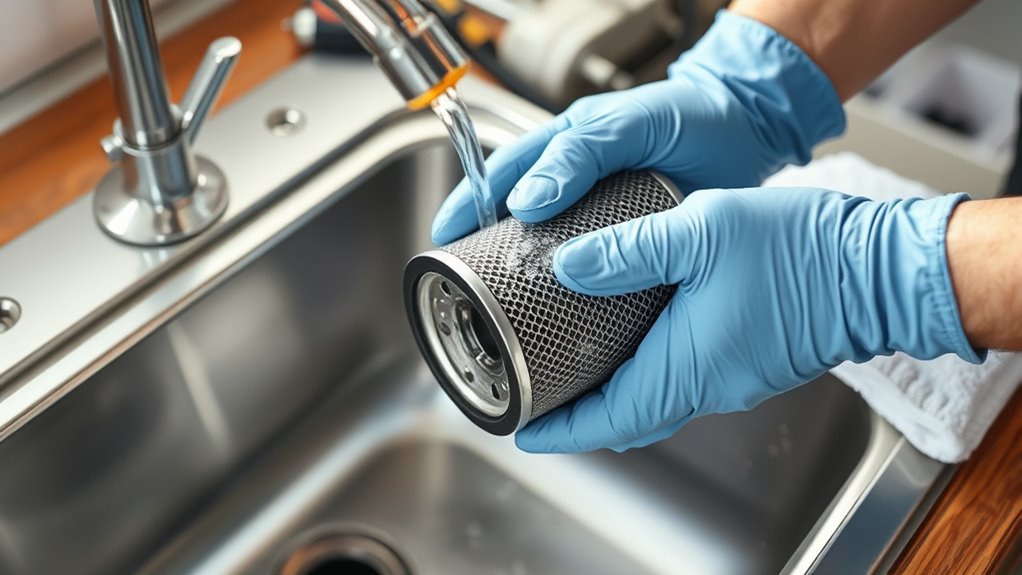
Soak it in a cleaning solvent to loosen grime, rinse with warm water, and let it dry completely before reinstalling.
Avoid harsh chemicals and over-tightening when putting it back.
Keep going to discover tips that help your engine’s oil filter last longer and perform better.
Key Takeaways
- Remove the oil filter using a wrench, placing a drain pan underneath to catch residual oil.
- Soak the filter in a cleaning solvent to dissolve grime and contaminants.
- Rinse the filter with warm water and allow it to dry completely before reinstalling.
- Inspect the filter for damage and avoid using harsh chemicals that could harm the filter material.
- Reinstall the filter carefully, lubricate the gasket with fresh oil, and check for leaks after starting the engine.
Signs Your Oil Filter Needs Cleaning
How do you know when your oil filter needs cleaning? You’ll notice your engine running rougher or losing power, which signals restricted oil flow.
If your oil pressure warning light flickers or stays on, it’s a clear sign the filter may be clogged. Dark, dirty oil on the dipstick also indicates contaminants aren’t being properly filtered.
You might smell burning oil or hear unusual engine noises caused by insufficient lubrication. Increased engine temperature can point to an oil filter struggling to keep oil clean.
Finally, if it’s been a while since your last oil change or filter cleaning, it’s wise to check the filter. Staying alert to these signs helps you maintain engine health and prevents costly repairs down the road.
Tools and Materials for Cleaning Your Oil Filter
Before you start cleaning your oil filter, gather the right tools and materials to make the process efficient and safe. Having everything ready prevents interruptions and guarantees you handle the filter properly. Here’s what you’ll need:
- Wrench or Oil Filter Removal Tool – To safely detach the filter without damaging it.
- Drain Pan – To catch residual oil and avoid spills.
- Cleaning Solvent or Degreaser – For removing oil and grime from the filter’s surface.
- Protective Gloves and Safety Glasses – To protect your skin and eyes from oil and chemicals.
With these essentials in hand, you’ll be fully prepared to clean your oil filter effectively and maintain your vehicle’s performance.
Step-by-Step Oil Filter Cleaning Guide
Once you have all your tools ready, start by placing the drain pan beneath the oil filter to catch any leftover oil.
Next, use the wrench to loosen and remove the filter carefully. Drain remaining oil and inspect the filter for damage.
Soak the filter in a cleaning solvent to dissolve grime. After soaking, rinse the filter with warm water and let it dry thoroughly before reinstalling.
| Step | Action |
|---|---|
| 1 | Place drain pan under filter |
| 2 | Loosen and remove filter |
| 3 | Drain leftover oil |
| 4 | Soak filter in solvent |
| 5 | Rinse and dry filter |
Following these steps guarantees your oil filter is clean and ready to perform efficiently.
Common Cleaning Mistakes to Avoid
Although cleaning your oil filter might seem straightforward, many people make avoidable mistakes that reduce its effectiveness.
To get the best results, watch out for these common errors:
- Using harsh chemicals that can damage the filter material.
- Neglecting to remove all debris, which can clog the filter later.
- Rushing the drying process and reinstalling the filter while it’s still wet.
- Over-tightening the filter during reinstallation, which can cause damage or leaks.
Avoiding these mistakes will help your oil filter function properly and protect your engine.
Take your time, use gentle cleaners, and handle the filter carefully to guarantee a thorough clean without compromising its integrity.
Oil Filter Maintenance Tips for a Longer-Lasting Engine
Steering clear of common cleaning mistakes sets the stage for better oil filter care, but maintaining your filter regularly extends your engine’s life even more.
First, replace your oil filter according to your vehicle’s schedule—usually every 3,000 to 7,500 miles—to prevent clogging. Always use the correct filter model for your engine to guarantee proper fit and function.
When changing filters, lubricate the rubber gasket with fresh oil to create a tight seal. After installation, double-check for leaks by running the engine briefly.
Also, avoid over-tightening the filter; hand-tight plus a quarter turn is usually enough. Finally, keep your engine oil clean and topped up, as dirty oil clogs the filter faster.
Consistent maintenance keeps your engine running smoothly and efficiently.
Frequently Asked Questions
Can I Clean Any Type of Oil Filter, or Only Reusable Ones?
You can only clean reusable oil filters safely.
Disposable filters aren’t designed for cleaning and can be damaged or ineffective afterward.
Always check your filter type before cleaning to avoid harming your engine or filter performance.
How Often Should I Replace an Oil Filter Instead of Cleaning It?
Think of your oil filter like a coffee filter. After about 3,000 to 5,000 miles, it’s time to replace it, not just clean it.
Waiting too long clogs it, just like old coffee grounds ruin a brew.
Is It Safe to Clean an Oil Filter Without Professional Help?
It’s generally not safe to clean an oil filter yourself because improper cleaning can damage it.
You should replace the filter or seek professional help to guarantee your engine stays protected and runs smoothly.
What Are the Environmental Impacts of Disposing Used Oil Filters?
Throwing used oil filters away carelessly is like pouring poison into a river. They leak toxic oil and heavy metals, contaminating soil and water.
You should recycle them properly to protect the environment and keep nature clean.
Can a Clogged Oil Filter Cause Engine Damage?
Yes, a clogged oil filter can cause engine damage.
It restricts oil flow, leading to poor lubrication and increased friction.
You should replace or clean your oil filter regularly to keep your engine running smoothly.
Conclusion
You might’ve heard that cleaning your oil filter can extend its life and improve engine performance—but is that really true?
While cleaning can remove some debris, it won’t restore a heavily clogged filter to like-new condition.
For the best results, you should replace your oil filter regularly and keep up with maintenance.
By doing this, you’ll protect your engine and keep it running smoothly, avoiding costly repairs down the road.
In conclusion, cleaning your oil filter can help, but it’s important to prioritize regular replacement and maintenance for optimal engine performance.