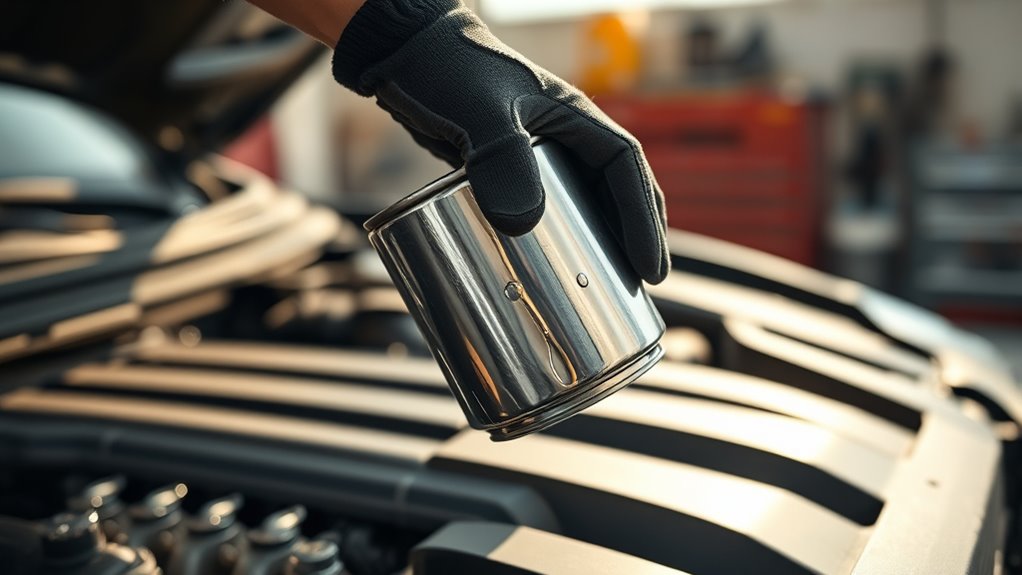

You should change your oil filter every time you change your engine oil, usually between 3,000 to 7,500 miles, or up to 10,000 miles with synthetic oil.
If you drive in dusty conditions, stop-and-go traffic, or extreme temperatures, change it more often to protect your engine.
A clogged filter reduces oil cleanliness and can cause engine wear.
Keep an eye out for warning signs to avoid trouble, and you’ll want to know how to choose the right filter and make the process easier.
Key Takeaways
- Change the oil filter every time you change the engine oil, typically every 3,000 to 7,500 miles.
- Synthetic oil use may extend the oil filter change interval up to 10,000 miles.
- Replace the oil filter more frequently in extreme temperatures, dusty environments, or stop-and-go traffic.
- Watch for signs like dirty oil, oil pressure warnings, or rough engine noise indicating filter replacement need.
- Consult the vehicle’s owner manual for manufacturer-specific oil filter change recommendations.
How Often Should You Change Your Oil Filter?
When should you change your oil filter? Most experts recommend replacing it every time you change your engine oil.
Typically, that means every 3,000 to 7,500 miles, depending on your vehicle and driving conditions. If you use synthetic oil, you might stretch that interval to 10,000 miles, but you should still swap the filter regularly.
Ignoring this can reduce your oil’s effectiveness, but we’ll get into why later. You can check your owner’s manual for specific guidance, as manufacturers sometimes suggest different schedules.
Also, if you often drive in extreme temperatures or dusty environments, you might need to change the filter more frequently. Keeping up with regular oil and filter changes helps maintain your engine’s performance and longevity.
Why Changing Your Oil Filter Matters for Engine Health
Because your engine oil circulates constantly, it picks up dirt, metal particles, and other contaminants that can harm your engine.
Your oil filter plays a significant role by trapping these impurities, preventing them from causing wear and tear.
If you don’t change your oil filter regularly, it can become clogged, reducing its ability to clean the oil effectively.
This leads to dirty oil circulating through your engine, increasing friction and overheating parts.
Over time, this can cause serious engine damage and reduce performance.
By replacing your oil filter on schedule, you guarantee cleaner oil flows smoothly, protecting engine components and extending your engine’s life.
Staying on top of oil filter changes is a simple step that keeps your engine running strong and reliable.
How Driving Conditions Affect Your Oil Filter Schedule
Keeping your oil filter changed on schedule depends a lot on how and where you drive. If you mostly drive in stop-and-go traffic, your engine faces more stress, causing oil to degrade faster and clog the filter sooner.
Similarly, frequent short trips where the engine doesn’t fully warm up can leave moisture and contaminants trapped in the oil, demanding more frequent filter changes. Driving in dusty or harsh environments also means your filter has to work harder to trap dirt and debris.
On the other hand, steady highway driving under moderate conditions lets your filter last longer. Adjust your oil filter replacement schedule based on these factors to keep your engine protected and running smoothly.
Don’t ignore these conditions; they directly impact your filter’s effectiveness.
How to Choose the Right Oil Filter for Your Vehicle
Selecting the right oil filter plays an essential role in maintaining your engine’s health and performance.
Start by checking your vehicle’s owner manual for the recommended filter specifications. You want a filter that matches your engine’s size and type to guarantee proper fit and filtration.
Consider the filter’s quality; opt for well-known brands or OEM filters, as they meet strict standards and offer reliable protection.
Think about the filter media: synthetic media traps smaller particles better and lasts longer than cellulose.
Also, pay attention to the filter’s micron rating, which indicates the size of particles it can capture.
Finally, confirm the filter’s design suits your driving habits and conditions. Choosing the right filter helps keep your engine clean and running smoothly between oil changes.
Signs It’s Time to Replace Your Oil Filter
Choosing the right oil filter sets the foundation, but recognizing when it needs replacement is just as important to protect your engine. Ignoring signs of a clogged or worn-out filter can lead to decreased performance and costly damage.
Here are key indicators it’s time to replace your oil filter:
- Engine oil looks dirty or gritty despite recent changes
- Oil pressure warning light illuminates on your dashboard
- Engine starts to run rough or noisier than usual
- Noticeable drop in fuel efficiency or power
- Oil change interval exceeds the manufacturer’s recommendation
Pay attention to these signs and replace your oil filter promptly to keep your engine running smoothly and extend its lifespan. Don’t wait for problems to escalate!
Is It Okay to Change Your Oil Filter Without Changing the Oil?
How often can you change your oil filter without changing the oil itself?
Generally, it’s not recommended because the oil filter traps contaminants from the oil. Changing the filter alone won’t improve oil quality and can even introduce dirt if the new filter isn’t installed carefully.
However, if you’re topping off clean oil between full changes, replacing the filter might help maintain flow. Here’s a quick look:
| Scenario | Oil Change Needed? | Filter Change Alone? |
|---|---|---|
| Regular maintenance | Yes | No |
| Topping off oil | No | Sometimes |
| Severe contamination | Yes | No |
Bottom line: Pair oil and filter changes for best engine health.
Tips for Easier Oil Filter Changes
To make oil filter changes smoother, start by using the right tools designed for the job.
Set up your workspace efficiently to keep everything within reach and avoid spills.
Always follow safety precautions to protect yourself and your vehicle during the process.
Use Proper Tools
A reliable set of tools can make oil filter changes faster and less frustrating. When you have the right equipment, you’ll save time and avoid common hassles. Here’s what you should have on hand:
- Oil filter wrench: fits snugly around the filter for easy removal
- Drain pan: catches old oil without spills
- Funnel: helps pour new oil cleanly
- Ratchet and socket set: loosens drain plugs efficiently
- Gloves and rags: keep your hands clean and manage drips
Using these tools, you’ll handle oil filter changes smoothly and prevent damage to the filter or engine parts. Don’t skip investing in quality tools; they simplify the process and reduce frustration every time you maintain your vehicle.
Prepare Workspace Efficiently
Having the right tools on hand makes the job easier, but organizing your workspace efficiently prepares you for even smoother oil filter changes. Clear your area, arrange tools by use, and keep a container handy for old parts. Good lighting and a sturdy surface prevent mistakes and spills.
| Step | Task Description | Tip |
|---|---|---|
| 1 | Clear workspace | Remove clutter for safety |
| 2 | Lay out tools | Arrange by order of use |
| 3 | Prepare container | Catch oil and old filter |
| 4 | Set lighting | Use bright, focused light |
| 5 | Position vehicle | Confirm stability and access |
This setup saves time and prevents frustration during the oil filter change.
Follow Safety Precautions
When changing your oil filter, always wear gloves and safety glasses to protect your skin and eyes from hot oil and debris. Staying safe guarantees the job goes smoothly without injury.
Here are key safety tips to follow:
Work on a cool engine to avoid burns.
Use a sturdy jack and jack stands if you need to lift your vehicle.
Keep a fire extinguisher nearby in case of oil spills igniting.
Dispose of used oil and filters properly to prevent environmental harm.
Clean up any oil spills immediately to avoid slips.
Frequently Asked Questions
Can I Use a Reusable Oil Filter Instead of a Disposable One?
Yes, you can use a reusable oil filter instead of a disposable one.
Just make sure to clean it regularly according to the manufacturer’s instructions. This will ensure it stays effective and keeps your engine running smoothly.
How Do Synthetic Oils Affect Oil Filter Lifespan?
Synthetic oils can extend your oil filter’s lifespan by up to 50% because they produce fewer contaminants.
You’ll still want to change filters regularly, but synthetic oils keep them cleaner and working more efficiently longer.
What Tools Are Necessary for Removing a Stuck Oil Filter?
You’ll need an oil filter wrench, like a strap or cap type, plus a ratchet and socket set.
Gloves and a drain pan help too. If it’s really stuck, a rubber grip or penetrating oil can loosen it.
Can a Clogged Oil Filter Cause Engine Overheating?
Yes, a clogged oil filter can cause engine overheating by restricting oil flow.
But don’t worry, regular maintenance prevents this.
Keeping your filter clean guarantees proper lubrication, helping your engine stay cool and run smoothly without costly repairs.
Are Magnetic Oil Filters More Effective Than Standard Ones?
Yes, magnetic oil filters can be more effective because they attract and capture tiny metal particles that standard filters might miss.
You’ll still need to change them regularly, but they offer extra protection against engine wear.
Conclusion
You can’t afford to ignore your oil filter like it’s some tiny, unimportant part—your engine’s life depends on it!
Changing it regularly isn’t just a good idea; it’s basically saving your car from a fiery meltdown.
Driving in tough conditions? That filter’s working overtime, so don’t slack off.
Keep it fresh, keep your engine happy, and avoid disaster.
Trust me, skipping this step is like inviting chaos under your hood!
In conclusion, remember to change your oil filter regularly to ensure your engine runs smoothly and efficiently.