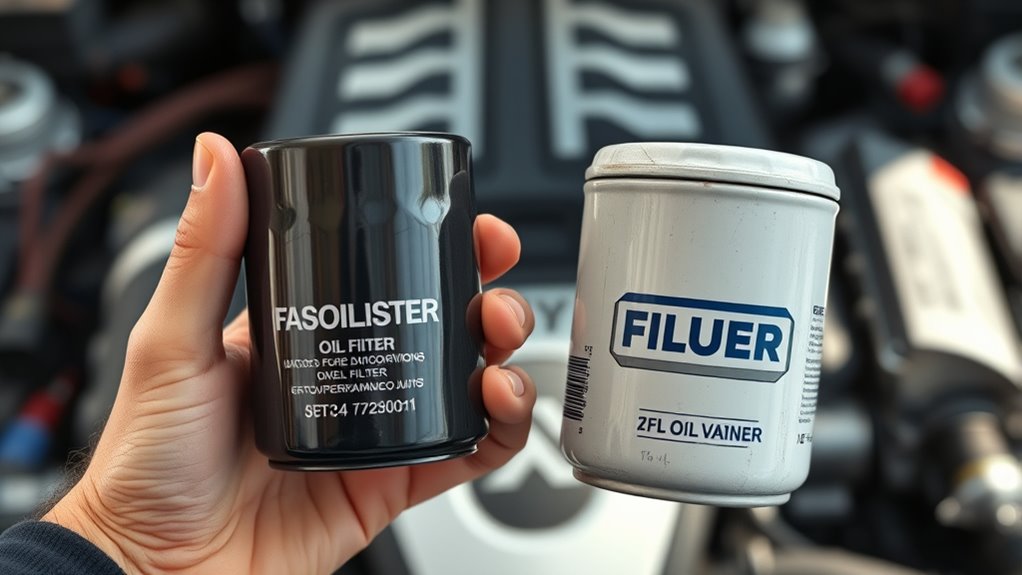

Yes, oil filter brand matters because it directly impacts your engine’s protection and performance.
Trusted brands use quality materials and advanced filtration to trap harmful particles and prevent engine wear.
Cheaper filters might clog, leak, or allow contaminants to circulate, risking costly damage.
Choosing a reliable brand guarantees better durability and consistent filtration tailored to your vehicle’s needs.
Keep going to understand how oil filters work and why brand quality truly counts.
Key Takeaways
- Oil filter brand impacts filtration quality, affecting engine protection and longevity.
- Trusted brands use superior materials and technology to trap harmful contaminants effectively.
- Cheap filters risk clogging, poor sealing, and reduced oil flow, causing engine damage.
- Leading brands meet or exceed industry standards, ensuring consistent and reliable performance.
- Choosing the right brand and replacing filters regularly maintains engine efficiency and prevents costly repairs.
Does the Oil Filter Brand Really Matter?
Why should you care about the brand of your oil filter? Because not all filters are created equal.
Choosing a reputable brand guarantees you get a product that meets strict quality standards, providing reliable filtration and fit.
Cheaper or unknown brands often cut corners, risking poor filtration, leaks, or premature failure.
When you pick a trusted brand, you reduce the chance of contaminants bypassing the filter and damaging your engine.
It also means the filter’s materials and construction are tested to withstand heat and pressure over time.
So, by investing in a quality brand, you protect your engine’s performance and longevity.
Ultimately, your vehicle’s health depends on the parts you trust, and the oil filter brand plays an essential role in that equation.
How Do Oil Filters Protect Your Engine?
Although you might not see it working, your oil filter plays an essential role in keeping your engine clean by trapping harmful particles and contaminants before they can cause damage.
It guarantees that only clean oil circulates through your engine, reducing wear and extending its life. Here’s how oil filters protect your engine:
| Function | Benefit |
|---|---|
| Removes debris | Prevents abrasive engine wear |
| Traps metal particles | Avoids scoring on engine parts |
| Filters sludge | Maintains oil flow |
| Blocks contaminants | Protects engine seals |
| Guarantees oil purity | Enhances engine performance |
How Are Top Oil Filter Brands Different?
Understanding how oil filters protect your engine sets the stage for recognizing why the brand you choose makes a difference.
Top oil filter brands differentiate themselves through the quality of materials, filtration technology, and manufacturing precision.
When you pick a premium brand, you get filters with advanced media that trap smaller particles more effectively, ensuring cleaner oil circulates longer.
These brands often use reinforced housings designed to withstand high pressure and extreme conditions, reducing the risk of leaks or failures.
Additionally, leading brands usually meet or exceed industry standards and undergo rigorous testing, giving you peace of mind.
What Are the Risks of Using Cheap Oil Filters?
If you choose a cheap oil filter, you risk compromising your engine’s health and performance.
Low-quality filters often use inferior materials that can break down or clog quickly, reducing oil flow.
This can lead to increased engine wear or overheating. Cheap filters may also have poor sealing, allowing unfiltered oil and contaminants to circulate, which damages engine components over time.
Additionally, these filters might not meet manufacturer specifications, resulting in inconsistent filtration and shorter filter life.
Using a subpar oil filter can cause sludge buildup and reduce engine efficiency, potentially leading to costly repairs.
Ultimately, saving money upfront isn’t worth the risk of engine damage. You want a reliable oil filter that protects your engine effectively and guarantees long-term performance.
How to Choose and When to Replace Your Oil Filter
Choosing the right oil filter and knowing when to replace it play a big role in keeping your engine running smoothly.
You should pick a filter that matches your vehicle’s specifications, focusing on quality brands known for durability and efficient filtration.
Check your owner’s manual for recommended filter types and change intervals.
Typically, you’ll want to replace the oil filter every time you change your oil—usually every 3,000 to 7,500 miles, depending on your driving habits and oil type.
Don’t wait too long; a clogged filter reduces oil flow and can cause engine damage.
If you notice reduced performance or dirty oil between changes, it’s wise to replace the filter sooner.
Staying proactive with your oil filter keeps your engine protected and running efficiently.
Frequently Asked Questions
Can I Use the Same Oil Filter Brand for All My Vehicles?
You can use the same oil filter brand for all your vehicles if the filters meet each vehicle’s specifications.
Always check compatibility to guarantee proper fit and performance, as different engines often require different filter types.
Do Oil Filter Brands Affect Oil Change Intervals?
Imagine using a cheap umbrella in a storm; it won’t last.
Similarly, some oil filter brands can affect your oil change intervals. High-quality filters trap impurities better, helping you extend those intervals safely without risking engine damage.
Are Oil Filter Brands Compatible With Synthetic Oils?
Yes, most oil filter brands are compatible with synthetic oils.
You just need to pick high-quality filters designed for synthetic oil use to guarantee proper filtration and engine protection during your oil changes.
How Do Oil Filter Warranties Compare Among Brands?
Warranty wizards vary widely. You’ll find some brands boasting bold, bulletproof guarantees, while others offer shorter, simpler safeguards.
Always scrutinize specifics so you’re confident your filter’s coverage matches your car’s care needs perfectly.
Can Aftermarket Oil Filters Void My Vehicle’s Warranty?
No, aftermarket oil filters usually won’t void your vehicle’s warranty unless they cause damage.
Always keep receipts and verify the filter meets your car manufacturer’s specifications to avoid any warranty issues or disputes.
Conclusion
Choosing the right oil filter is like picking the right shield for your engine’s heart.
It might seem small, but a quality filter protects essential parts from harmful debris and keeps your engine running smoothly.
Cheap filters can risk damage and costly repairs. So, don’t cut corners—choose a trusted brand and replace your filter regularly.
Your engine deserves reliable protection to keep you moving without a hitch.
In conclusion, oil filter brand matters.