
When you get an oil change, it doesn’t always include replacing the oil filter.
Some service centers automatically swap the filter, while others offer it as an optional add-on.
Whether your filter gets changed depends on the type of oil change and the shop’s policy.
Regular filter replacement is key to keeping your engine running smoothly and avoiding damage.
If you want to understand why it matters and how to pick the right filter, keep exploring further.
Key Takeaways
- Oil change services may or may not automatically include oil filter replacement depending on the shop’s policy.
- Some service centers offer oil filter replacement as an optional add-on during an oil change.
- Confirm with your mechanic or service provider if the oil filter replacement is included in the oil change package.
- Regular oil filter replacement is recommended with every oil change for optimal engine performance and longevity.
- Knowing whether the oil filter is replaced helps maintain engine health by ensuring clean oil circulation and preventing damage.
Does an Oil Change Include the Oil Filter?
When you get an oil change, does it always include replacing the oil filter? Not necessarily.
Some service centers automatically replace the oil filter as part of the oil change package, while others may offer it as an optional extra.
It depends on the shop’s policy and the type of oil change you choose.
If you’re doing the oil change yourself, you have to decide whether to replace the oil filter based on your vehicle’s maintenance schedule.
It’s a good idea to confirm with your mechanic or check the service details before the appointment.
That way, you’ll know if the filter swap is included or if you need to request it separately to keep your engine running smoothly.
Why Replacing the Oil Filter Is Crucial
Because your oil filter traps dirt, debris, and contaminants, replacing it regularly keeps your engine oil clean and protects important engine parts from damage.
If you skip changing the filter, those trapped particles can clog it, reducing oil flow and causing your engine to work harder. This leads to increased wear and tear, overheating, and possibly costly repairs.
A fresh oil filter guarantees smooth oil circulation, maintaining proper lubrication and preventing sludge buildup.
When you replace the filter during an oil change, you’re helping your engine run efficiently and extending its lifespan.
In short, keeping your oil filter new is essential for engine health, so don’t overlook this simple yet important step in your vehicle maintenance routine.
When Should You Replace Your Oil Filter?
How often you replace your oil filter depends on several factors, including your vehicle’s make, driving conditions, and the type of oil you use.
Generally, it’s best to change the oil filter every time you get an oil change to maintain peak engine performance. For most vehicles, this means replacing the filter every 3,000 to 7,500 miles, but always check your owner’s manual for specific recommendations.
If you frequently drive in harsh conditions, like extreme temperatures, dusty roads, or stop-and-go traffic, you might need to replace the filter more often. Using synthetic oil can sometimes extend the interval, but the filter still needs regular attention.
Staying consistent with oil filter changes prevents debris buildup and keeps your engine running smoothly.
Signs Your Oil Filter Needs Changing
If your engine starts showing unusual noises or your oil pressure drops, your oil filter might be clogged and needs changing.
You may also notice your engine running hotter than usual, which indicates restricted oil flow. Another sign is dark, dirty oil when you check the dipstick, suggesting the filter isn’t effectively cleaning contaminants.
Reduced fuel efficiency and poor engine performance can also point to a failing oil filter. Additionally, if your check engine light or oil warning light comes on, don’t ignore it.
These symptoms mean your filter is struggling to perform its job, risking engine damage. Changing your oil filter regularly guarantees clean oil circulates, keeping your engine safe and running smoothly.
Keep an eye on these signs to avoid costly repairs.
Is It Okay to Skip Changing Your Oil Filter?
Although you might be tempted to skip changing your oil filter to save time or money, doing so can seriously harm your engine’s health.
Your oil filter traps dirt, metal particles, and other contaminants that accumulate as your engine runs. If you don’t replace it, these impurities can circulate, causing increased engine wear and reduced performance.
Skipping the oil filter change also clogs the filter, restricting oil flow, which may lead to engine overheating or damage. Even if your oil looks clean, the filter may be saturated and ineffective.
To maintain your engine’s longevity and efficiency, you should always replace the oil filter whenever you change your oil. Skipping this step might seem like a shortcut, but it risks costly repairs down the line.
How Much Does Oil Filter Replacement Cost?
Replacing your oil filter typically costs between $15 and $50, depending on your vehicle and where you get the service done.
You might pay less if you replace it yourself, but a professional service often includes the cost in the oil change package. Knowing this cost helps you avoid surprises and keeps your car running smoothly.
Skipping the oil filter replacement can lead to engine damage, so budgeting for it is smart.
Feel confident knowing you’re protecting your engine from harmful debris. Save money in the long run by preventing costly repairs.
Enjoy peace of mind during every oil change, knowing your car is well cared for. Understanding the cost lets you make informed choices about your vehicle’s maintenance.
How Service Centers Replace Your Oil Filter
When you get your oil changed, service centers usually replace the oil filter to keep your engine running smoothly.
They remove the old filter, clean the area, and install a new one to trap contaminants effectively.
Understanding this process helps you see why changing the filter is just as important as changing the oil itself.
Oil Filter Replacement Process
Since your oil filter plays a crucial role in keeping engine oil clean, service centers handle its replacement carefully during an oil change.
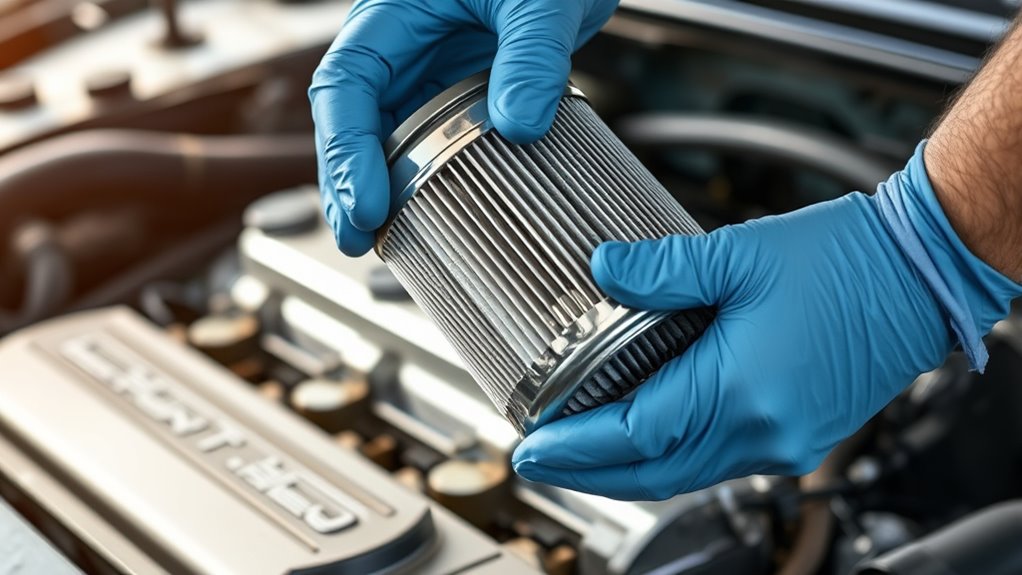
First, they drain the old oil and then remove the worn filter, making sure no debris falls into the engine.
Next, they lubricate the new filter’s seal with fresh oil to guarantee a tight fit and prevent leaks.
Finally, they install the new filter and refill the engine with clean oil, ready to protect your engine efficiently.
When they replace your oil filter, you can feel:
- Confidence that your engine stays protected
- Relief knowing contaminants won’t circulate
- Assurance that your vehicle’s performance won’t drop
This process guarantees your car runs smoothly until the next oil change.
Importance Of Filter Change
Although it may seem like a small step, changing your oil filter is critical to maintaining your engine’s health and performance.
The filter traps dirt, metal particles, and other contaminants that accumulate in the oil over time.
If you skip replacing it, these impurities can circulate and cause wear or damage to engine components.
When service centers replace your oil filter, they remove the old, clogged filter and install a new one designed to fit your vehicle’s specifications.
This guarantees the oil stays clean and flows smoothly, protecting your engine.
By having the filter changed regularly during oil changes, you help maintain peak engine efficiency, reduce the risk of breakdowns, and extend your vehicle’s lifespan.
It’s a simple step with a big payoff.
Common Service Center Practices
A typical service center follows a set routine to replace your oil filter efficiently and correctly. When you bring your car in, they’ll first drain the old oil, then remove the old filter carefully to avoid spills.
After that, they install a new filter, making certain it’s sealed properly to prevent leaks. Finally, they refill your engine with fresh oil and check for any issues.
Here’s why this process matters to you: you get peace of mind knowing your engine stays clean and protected. The risk of engine damage decreases, saving you costly repairs.
Your car runs smoother, improving overall performance and fuel efficiency. Trusting this routine guarantees your vehicle stays in top shape longer.
How to Pick the Right Oil Filter for Your Car
To pick the right oil filter for your car, you need to understand the different filter types available.
Make certain the filter matches your vehicle’s specifications to guarantee proper fit and function.
Also, consider brand compatibility to maintain your car’s performance and warranty.
Understand Filter Types
When selecting an oil filter, you’ll want to evaluate how it matches both your vehicle’s requirements and your driving habits. Different filter types offer varying levels of protection and performance, so understanding these differences helps you make a smart choice.
You’ll encounter three main types:
Conventional filters: Affordable and widely available, but may not be ideal for extended oil change intervals.
Synthetic filters: Designed for high-performance engines and longer oil change intervals, providing superior filtration.
High-mileage filters: Targeted for older cars, these filters help reduce leaks and keep your engine cleaner.
Choosing the right filter type not only protects your engine but also gives you peace of mind knowing you’ve made a reliable choice tailored to your driving style.
Match Filter Specifications
Although choosing the right oil filter type is important, matching the filter’s specifications to your vehicle’s exact requirements guarantees peak engine protection and performance.
Start by checking your owner’s manual or manufacturer’s guide for the recommended filter size, threading, and pressure ratings. Using a filter that fits perfectly assures it seals correctly, preventing leaks and maintaining proper oil flow.
Pay attention to the micron rating, which indicates the filter’s ability to trap contaminants; a lower micron rating means better filtration but may restrict flow if too fine.
Also, verify the filter’s bypass valve pressure to make sure it opens at the correct oil pressure for your engine. Matching these specs helps keep your engine running smoothly and extends its life.
Consider Brand Compatibility
Since oil filters vary widely across brands, choosing one compatible with your vehicle’s make guarantees peak performance and durability. You don’t want to risk using a filter that doesn’t fit perfectly or meet your car’s specific needs. It could lead to poor filtration or even engine damage.
To pick the right brand, consider your car manufacturer’s recommendations and look for filters tested for your engine type. Trustworthy brands assure quality materials and reliable seals that protect your engine.
When selecting a compatible oil filter, think about protecting your engine from harmful contaminants, avoiding costly repairs from filter failures, and maintaining smooth engine operation and fuel efficiency.
Choosing the right brand isn’t just about compatibility; it’s about peace of mind on every drive.
Tips to Maximize Your Oil Change Service
To get the most from your oil change service, you should pay close attention to a few key factors.
First, always confirm whether the oil filter is included in the service to avoid unexpected costs.
Next, choose the right oil type and brand recommended for your vehicle to guarantee peak performance.
Don’t skip inspecting other fluids and components; technicians can alert you to potential issues early.
Keep a record of your oil changes to stay on schedule and maintain warranty coverage.
Finally, consider performing oil changes at regular intervals rather than waiting for warning lights.
Frequently Asked Questions
Can I Change My Oil Filter Myself at Home?
Yes, you can change your oil filter yourself at home.
Just make sure you have the right tools, a new filter, and follow your vehicle’s manual carefully.
Take safety precautions and dispose of old oil properly.
What Tools Are Needed to Replace an Oil Filter?
Think of the oil filter wrench as your key to accessing freshness.
You’ll need that, a drain pan to catch old oil, a ratchet set for loosening, gloves to keep clean, and fresh oil to complete the job.
How Long Does an Oil Filter Replacement Take?
Replacing your oil filter usually takes about 15 to 30 minutes.
You’ll drain the old oil, remove the old filter, install the new one, then add fresh oil.
With practice, you’ll get faster.
Are Synthetic Oils Better for Oil Filter Longevity?
Yes, synthetic oils help your oil filter last longer by reducing sludge buildup and maintaining better flow.
You’ll notice improved engine protection and fewer contaminants clogging the filter, keeping your car running smoothly for extended periods.
Can a Clogged Oil Filter Cause Engine Damage?
A clogged oil filter can cause engine damage faster than a rocket launch!
You’ll risk oil starvation, overheating, and increased wear.
Conclusion
Changing your oil without swapping the oil filter is like watering a garden but ignoring the soil—it just won’t thrive.
To keep your engine running smoothly, always replace the oil filter during an oil change.
It traps contaminants and protects essential parts, ensuring your car performs at its best.
Don’t skip it, even if you’re tempted to save a little now.
A fresh filter keeps your engine healthy and your ride smooth.
In conclusion, always remember, an oil change includes oil filter replacement for optimal engine performance.