Top 10 best schumacher car battery charger Revealed
As an Amazon Associate we earn from qualifying purchases.
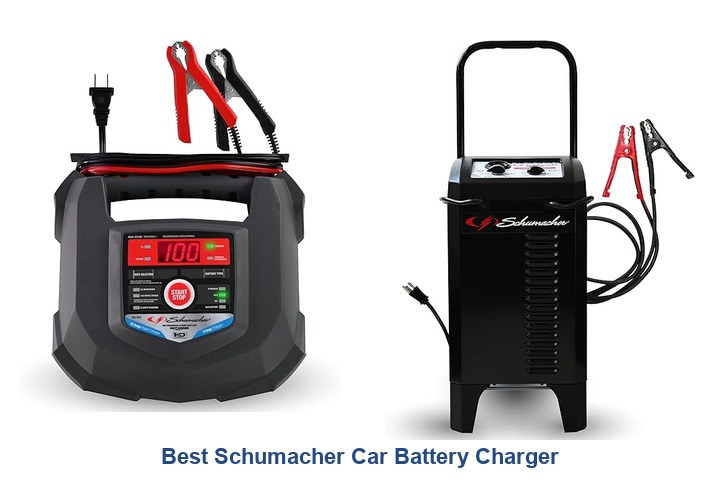
Best schumacher car battery charger options represent more than a convenient way to restore power. Modern units sit at the intersection of battery chemistry and intelligent electronics, using microprocessor-controlled charging to manage voltage, current, and temperature. That matters because vehicle batteries face different demands during cold-weather starts, long storage periods, and repeated short trips.
A Schumacher battery charger may also incorporate trickle modes, reverse-polarity protection, and status indicators, yet performance depends on how these systems interact with battery type and vehicle needs. The broader automatic car battery charger category raises questions about portability, cable durability, and garage or roadside use.
Choosing the best schumacher car battery charger requires a closer look at those details. Continue reading to see which features truly deserve attention before you compare the leading options.
best schumacher car battery charger: Top Picks
| Image | Product | Buy |
|---|---|---|
Top Picks- 1 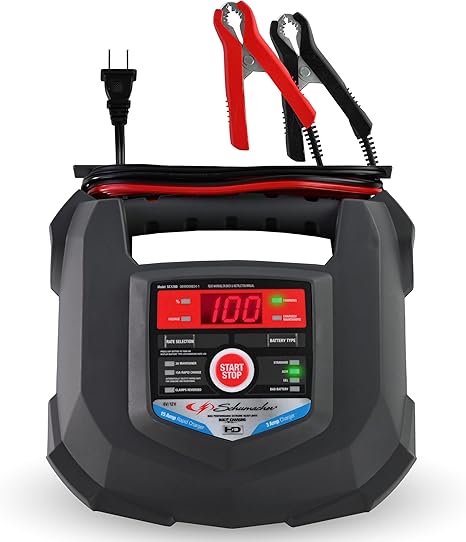 | Schumacher Electric Car Battery Charger 12V/6V – Trickle Charger, Maintainer Best for: Dual-voltage maintenance | Check Price On Amazon |
Top Picks- 2  | Schumacher Electric Wheeled 10A Car Battery Charger & Maintainer – Best for: Garage workshop users | Check Price On Amazon |
Top Picks- 3  | Schumacher Electric 6A Car Battery Charger & Maintainer, 6V/12V – Best for: Versatile battery owners | Check Price On Amazon |
Top Picks- 4  | Schumacher Electric 6A Car Battery Charger & Maintainer, 12V – Best for: 12V vehicle owners | Check Price On Amazon |
Top Picks- 5  | Schumacher Electric 1.5A Car Battery Charger & Maintainer, 6V/12V – Best for: Low-demand maintenance | Check Price On Amazon |
1. Schumacher Electric Car Battery Charger 12V/6V – Trickle Charger, Maintainer
Best for: Best for mixed battery types.
A 15A output gives this Schumacher charger more charging power than a basic maintainer, while automatic 6V/12V detection matches the unit to standard, AGM, gel, and deep-cycle batteries. That combination lets one charger handle everyday cars, marine equipment, and stored vehicles without manually selecting the battery voltage.
Microprocessor control adjusts the charging process automatically, reducing guesswork when switching between compatible battery types. Its 120V input suits standard household outlets, while the 10-hour listed charge time provides a defined baseline for planned charging. Two ports and alligator-clip cable connections support straightforward hookup for garage or driveway maintenance.
Pros
- 15A current rating supports faster charging than low-output maintainers
- Automatic 6V/12V detection helps match the charging voltage
- Compatibility with AGM, gel, standard, and deep-cycle batteries broadens use
- Two ports and alligator clips simplify connection options
Cons
- The listed 10-hour charge time is slower than high-output boost-oriented Schumacher models
Choose it if one charger must cover 6V and 12V batteries across cars, boats, and stored equipment. It suits drivers who want automatic operation with enough 15A output for routine charging and maintenance.
2. Schumacher Electric Wheeled 10A Car Battery Charger & Maintainer –
Best for: Best for emergency engine starting.
A 250-amp engine-start rating makes this wheeled Schumacher charger the heavy-duty choice for reviving dead batteries in cars, trucks, SUVs, and RVs. Its wheeled format supports moving the unit around a garage or service area, while the charger also provides lower-power modes for ordinary battery recovery.
The 135-minute timer gives manual control over charging duration, useful when a fixed charging period matters more than fully automatic operation. Its 25A and 50A boost settings address deeply discharged batteries, while the 10A current rating supports standard charging. Clamps provide the direct battery connection, and one port keeps the setup simple.
Pros
- 250A engine-start output supports large-vehicle starting assistance
- 25A and 50A boost levels shorten recovery time for depleted batteries
- 135-minute timer enables controlled manual charging periods
- Wheels make the heavy-duty unit easier to reposition
Cons
- One port and clamp-only cable connection provide less hookup flexibility than models with ring connectors
Pick this model for a garage that handles trucks, SUVs, RVs, and other vehicles needing strong starting assistance. The 250A start mode and timed charging are especially useful when emergency recovery matters more than compact storage.
3. Schumacher Electric 6A Car Battery Charger & Maintainer, 6V/12V –
Best for: Best for broad battery testing.
Five functions—starting, charging, maintaining, testing, and restoring—give this Schumacher unit more battery-care roles than a basic charger. Its 100-amp engine-start capability and 12A-to-30A boost range let owners address dead batteries, while 6V/12V compatibility covers vehicles from motorcycles and ATVs to trucks and boats.
Microprocessor-controlled charging operates from 2A to 6A, allowing lower-current maintenance after a stronger recovery session. The 10-hour listed charge time provides a planning reference for regular charging, and 120V input works with household power. Crocodile-clip connections attach directly to compatible batteries, while support for standard, AGM, gel, and deep-cycle types expands coverage.
Pros
- Five-in-one operation adds testing and restoration to charging and maintenance
- 100A engine-start output assists with dead vehicle batteries
- 12A-to-30A boost range supports faster battery recovery
- 2A-to-6A microprocessor charging supports controlled maintenance
Cons
- One port and crocodile clips do not provide a separate ring-connector option
This is a practical choice for owners maintaining several vehicle types and wanting testing or restoration in the same unit. Select it when motorcycles, boats, trucks, and 6V or 12V batteries all share one charger.
4. Schumacher Electric 6A Car Battery Charger & Maintainer, 12V –
Best for: Best for 12V household vehicles.
A 50-amp engine-start function gives this 12V Schumacher charger enough starting assistance for cars, trucks, SUVs, motorcycles, ATVs, and boats. The 3-in-1 format keeps the job focused on starting, charging, and maintaining 12V batteries, making it a straightforward fit for mixed gas and diesel vehicle ownership.
Its 10-amp boost mode supplies a stronger recovery setting than the normal charging range, while microprocessor-controlled 2A-to-6A charging supports ongoing battery care. The 10-hour listed charge time helps plan routine sessions from a 120V outlet. Battery-clamp connections provide a direct hookup, and compatibility includes standard and AGM 12V batteries.
Pros
- 50A engine-start output supports emergency starting for multiple vehicle types
- 10A boost mode provides faster recovery than the maintenance range
- 2A-to-6A smart charging supports ongoing 12V battery care
- 3-in-1 operation combines starting, charging, and maintenance
Cons
- 12V-only compatibility excludes owners needing a 6V charging setting
Choose this model for a household garage centered on 12V cars, trucks, motorcycles, ATVs, or marine batteries. It balances a 50A start function with lower-current charging for regular maintenance.
5. Schumacher Electric 1.5A Car Battery Charger & Maintainer, 6V/12V –
Best for: Best for long-term battery storage.
A gentle 1.5A output makes this Schumacher maintainer suited to preserving batteries during storage rather than quickly starting a dead vehicle. Automatic 6V/12V detection lets one compact charger support standard, AGM, and deep-cycle batteries across cars, motorcycles, ATVs, trucks, SUVs, and boats.
The 15-hour listed charge time reflects its low-current approach, which fits planned charging sessions for stored vehicles. Advanced desulfation mode adds a battery-reconditioning function, while multi-stage charging algorithms manage the charging sequence. Battery clamps and ring connectors provide two connection methods, and two ports add flexibility for setup.
Pros
- 1.5A output suits gradual charging and maintenance during storage
- Automatic 6V/12V detection supports two battery voltages
- Desulfation mode adds a reconditioning function
- Clamps and ring connectors accommodate different hookup preferences
Cons
- The 1.5A current rating and 15-hour charge time are not suited to fast recovery
Buy it for a stored car, motorcycle, boat, or other vehicle where maintaining battery condition is the priority. Its low 1.5A output, desulfation mode, and dual connector types favor seasonal storage over emergency starting.
6. Schumacher Electric 6A Car Battery Charger & Maintainer, 6V/12V –

Best for: Best for all-in-one battery diagnostics.
Six functions combine jump starting, charging, maintaining, desulfating, battery testing, and alternator testing in the Schumacher SC1308. A 100-amp engine-start rating supports cars, trucks, boats, and other large batteries, while 6V/12V compatibility makes the unit useful across varied vehicle equipment.
The 30A boost mode handles stronger recovery needs than the 6A charging setting, and the 2A maintain mode supports lower-current upkeep after charging. Its 10-hour listed charge time gives routine sessions a clear reference point, while 120V input fits household outlets. Alligator clamps connect directly to compatible standard, AGM, gel, and deep-cycle batteries.
Pros
- Six-in-one operation includes alternator and battery testing
- 100A engine-start output assists with large vehicle batteries
- 30A boost mode accelerates recovery from heavier discharge
- 2A maintain mode supports lower-current battery upkeep
Cons
- The one-port design requires switching connections when using its multiple diagnostic and charging functions
Select the SC1308 if battery testing and alternator checks matter alongside charging and starting. It fits owners of cars, trucks, boats, motorcycles, and ATVs who want one 6V/12V unit for diagnostics and maintenance.
7. Schumacher Electric 3A Car Battery Charger & Maintainer, 12V –

Best for: Best for 12V LiFePO4 compatibility.
Support for 12V standard, AGM, gel, and lithium LiFePO4 batteries distinguishes this 3A Schumacher charger from models limited to conventional lead-acid types. Its 3A charging output serves cars, trucks, motorcycles, ATVs, boats, and farm equipment, while the same unit charges, maintains, and reconditions batteries.
Advanced desulfation mode adds a reconditioning step for compatible battery care, and smart trickle charging maintains 12V batteries without overcharging according to the product description. Two ports provide connection flexibility, while alligator-clip cabling enables direct hookup. The 120V input suits household power, and reverse-polarity protection adds a connection safeguard.
Pros
- 3A output supports charging and maintaining 12V batteries
- LiFePO4 compatibility covers a lithium battery type
- Desulfation mode provides battery-reconditioning capability
- Two ports and reverse-polarity protection improve hookup convenience
Cons
- The 3A current rating is intended for maintenance and routine charging rather than high-current engine starting
Choose this charger for a 12V vehicle or equipment collection that includes LiFePO4 batteries. It is particularly useful for owners of motorcycles, boats, farm equipment, and cars who need maintenance and reconditioning without an engine-start mode.
8. Schumacher Electric 100A Car Battery Charger & Power Supply, 12V

Best for: Best for professional vehicle service.
A 100A output gives the INC100 stable high-current support for professional vehicle service, where preserving memory, settings, and programming during work matters. Three operating modes cover 13.5V service support, 70A-to-100A flash reprogramming, and up to 14.4V boost operation for 12V automotive and marine batteries.
Flash Reprogram Mode supplies a defined 70A-to-100A range for ECU updates, while Service Mode holds voltage at up to 13.5V during vehicle work. Boost Mode reaches up to 14.4V to revive discharged batteries. An Anderson Plug connection supports shop-oriented cable handling, and the standard battery-clamp connector accommodates direct battery attachment.
Pros
- 100A output supports high-demand professional electrical service
- 13.5V Service Mode helps preserve vehicle memory and settings
- 70A-to-100A Flash Reprogram Mode supports ECU updates
- Up-to-14.4V Boost Mode assists with discharged 12V batteries
Cons
- One port and professional-oriented modes make it less suitable for simple low-current storage maintenance
Buy the INC100 for a repair bay handling ECU programming, vehicle diagnostics, or repeated automotive service work. Its 100A capacity and three voltage modes are excessive for basic driveway maintenance but appropriate when stable shop power is essential.
9. Schumacher Electric 6V/12V Time Controlled Battery Charger & Engine Starter

Best for: Best for timed high-current charging.
A 250-amp engine-start mode gives this Schumacher charger strong recovery capability, while selectable 50A 12V, 25A 12V, and 25A 6V boost levels cover different battery demands. The 6V/12V format suits cars, trucks, SUVs, RVs, and compatible standard, AGM, and gel batteries.
A 135-minute timer lets users set a monitored charging interval instead of relying on an open-ended session, and the built-in ammeter shows charging activity. The separate 10A 12V charge mode handles basic charging, while a charge-rate selector supports tailored adjustment. Its listed 240V input and USB cable connector should be checked against the intended electrical setup.
Pros
- 250A engine-start output supports large-engine starting assistance
- 50A 12V and 25A boost levels provide selectable recovery power
- 135-minute timer enables monitored charging periods
- Built-in ammeter displays charging activity
Cons
- The technical listing shows a 240V input and USB cable connector, so buyers should verify outlet and cable compatibility before purchase
Choose this model when timed charging, visible amperage, and high-current starting are more important than compact automatic maintenance. It fits vehicle owners working with both 6V and 12V standard, AGM, or gel batteries.
10. Schumacher Electric 6A Car Battery Charger & Maintainer, 12V –

Best for: Best for straightforward 12V maintenance.
A 50-amp engine-start rating gives this Schumacher charger emergency starting capability, while its 6A-to-2A charging and maintaining range supports regular battery care. The 3-in-1 unit works with 12V standard and AGM batteries in cars, trucks, motorcycles, ATVs, and marine vehicles.
The 10A boost mode provides a stronger recovery setting than the 6A charging level, and smart trickle charging maintains 12V batteries without overcharging according to the product description. Its 10-hour listed charge time helps schedule routine use from a 120V outlet. Alligator clips and battery clamps connect directly to compatible vehicle batteries.
Pros
- 50A engine-start output assists with emergency vehicle starting
- 10A boost mode supports faster recovery from discharged batteries
- 6A-to-2A charging and maintaining range supports routine care
- 3-in-1 operation combines starting, charging, and maintenance
Cons
- 12V-only operation excludes buyers needing a 6V battery charger
Pick this model for a 12V-focused garage that needs both occasional starting help and everyday maintenance. It suits owners of cars, trucks, motorcycles, ATVs, and marine vehicles using standard or AGM batteries.
How to Choose the Best Schumacher Car Battery Charger
Charging output and battery compatibility
Start with the battery sizes you actually service, then match the charger’s output to them. A 2-amp setting suits small batteries and long, gentle charging, while 6 to 10 amps handles ordinary passenger-car batteries more efficiently; a 15-amp or higher setting suits larger vehicles and urgent recovery. Choose a unit that supports both 6- and 12-volt systems only when you own equipment using both voltages.
Confirm compatibility with standard lead-acid, AGM, and gel batteries, and require separate maintain, trickle, and rapid-charge modes. Pick a 6/12-volt charger with selectable 2, 6, and 10-amp output for mixed household vehicles.
Automatic charging and monitoring
Prioritize a microprocessor-controlled charger that measures voltage and adjusts its cycle rather than delivering one fixed current. The strongest choices move from bulk charging to absorption, then automatically switch to float or maintenance mode, protecting a parked battery without constant supervision. A clear digital display should show voltage, charging stage, and battery condition, while simple indicator lights help when the unit is used in poor lighting.
Diagnostic alerts for a failed, deeply discharged, or unrecognized battery add useful judgment. Choose an automatic smart charger with float maintenance and a readable status display for unattended seasonal care.
Safety and protection features
Treat protection features as essential, especially when the charger will be used outdoors, in a busy garage, or by less experienced users. Confirm reverse-polarity detection, short-circuit protection, spark-resistant connection behavior, and safeguards against overcharging and overheating. Automatic shutoff or standby after a completed cycle prevents needless battery stress, while a visible correct-connection alert catches loose or reversed clamps before current flows.
Prefer thermal protection that reduces output or stops charging rather than relying on a fuse alone. Pick a fully automatic charger with polarity alerts, spark control, thermal protection, and automatic shutoff for the safest general use.
Portability and cable design
Choose portability around the vehicles and locations you will reach, not just the charger’s bench footprint. A compact housing with a solid handle suits roadside storage, while a larger workshop unit earns its space through longer cables, heavier clamps, and easier controls. Seek at least 6 feet of output cable for typical cars and 8 to 10 feet for trucks, SUVs, or awkward battery placement.
Clamps should have strong springs, broad jaws, and fully insulated grips; cord hooks or an integrated wrap prevent tangles. Pick a compact 6-foot model for emergency carry, or a heavier unit with 8-foot cables for workshop coverage.
Use cases, warranty, and value
Match the charger to its primary job: emergency recovery favors selectable high-amperage output and a compact carry handle, seasonal maintenance favors automatic float operation, and workshop use favors stronger clamps, longer leads, and repeated-cycle durability. Check for accessories such as ring terminals, extension leads, or a storage case, but value clear controls over a crowded panel. The display should remain legible from several feet away and show charging progress without cryptic codes.
Review the written warranty, replacement process, telephone or online support, and battery-testing guidance before purchase. Pick a compact rapid charger for emergencies, a smart maintainer for storage, or a heavy-duty automatic unit for workshop service.
Which Should You Choose?
- If you need safe, hands-off charging for a stored car, motorcycle, boat, or mixed battery types, choose an automatic 6V/12V maintainer that supports standard, AGM, gel, and deep-cycle batteries.
- If you regularly revive dead batteries in trucks, SUVs, RVs, or other large vehicles, choose a wheeled charger with a 250-amp engine-start function and at least 10-amp charging output.
- If your main goal is preventing battery failure during long-term storage, choose a compact 1.5A or 3A 12V maintainer with automatic charging, maintenance, and reconditioning modes.
- If you service multiple vehicles or need uninterrupted voltage during diagnostics and programming, choose a 12V power supply rated around 100A with stable-output voltage control.
Quick Best Schumacher Car Battery Charger Buying Checklist
- Battery compatibility: Confirm the charger supports your battery chemistry, including lead-acid, AGM, or gel.
- Amperage selection: Choose adjustable output when you need both gentle maintenance and faster charging.
- Automatic operation: Prioritize models that stop or switch to float mode after reaching full charge.
- Safety protection: Look for reverse-polarity, short-circuit, overcharge, and thermal safeguards.
- Connection reach: Check clamp quality and cable length to ensure easy access to the battery.
- Storage and support: Compare portability, cord management, included accessories, and warranty coverage.
Frequently Asked Questions
What Is The Best Schumacher Car Battery Charger For Regular Maintenance?
The best Schumacher car battery charger for regular maintenance is an automatic model with a low-amp setting and float-mode support. It can monitor voltage, reduce charging as the battery fills, and maintain a parked vehicle without the continuous overcharging risk associated with a basic manual charger.
Can A Schumacher Charger Work With Agm Batteries?
A Schumacher car battery charger can work with AGM batteries when its specifications explicitly list AGM compatibility or provide an AGM charging mode. AGM batteries require an appropriate voltage profile, so owners should select the correct setting rather than relying on a generic lead-acid mode.
How Many Amps Should A Schumacher Car Battery Charger Have?
The right Schumacher car battery charger amperage depends on battery capacity and urgency, with lower outputs suited to maintenance and higher outputs suited to faster recovery. A versatile unit offering settings such as 2, 10, or 15 amps can cover storage care and routine charging.
Are Schumacher Car Battery Chargers Safe To Leave Connected?
A Schumacher car battery charger is generally suitable for extended connection when it is an automatic maintainer with float-mode control and built-in protection. Verify correct polarity, use the manufacturer’s instructions, and avoid leaving a manual charger connected unattended because it may continue delivering current.
What Features Matter Most When Buying A Schumacher Car Battery Charger?
The most important Schumacher car battery charger features are compatible battery modes, automatic charge regulation, reverse-polarity protection, thermal safeguards, and clear status indicators. Buyers should also consider clamp quality, cable reach, output range, and warranty coverage for dependable use across multiple vehicles.
Final Suggestions
Choosing the best schumacher car battery charger means matching charging output, battery compatibility, automatic monitoring, and safety protection to your vehicle needs. A well-designed unit can restore a weak battery, maintain seasonal vehicles, and reduce the risk of overcharging while remaining simple to operate. Compare connection quality, display clarity, portability, and warranty support, then select a charger that keeps your vehicle ready for dependable starts.