Top 10 Best Radiator Coolant Additive Revealed!
As an Amazon Associate we earn from qualifying purchases.
The best radiator coolant additive can influence far more than a vehicle’s coolant level; it sits at the intersection of thermal management, corrosion control, and long-term engine reliability. Modern formulas are engineered to interact with cooling-system metals, seals, and deposits while supporting consistent heat transfer under demanding operating conditions. That makes choosing a radiator treatment less straightforward than comparing bottle sizes or promising labels.
Compatibility with antifreeze chemistry, protection against rust and scale, and behavior in high-temperature environments all shape real-world performance. A coolant system additive may also serve different priorities, from preventive maintenance to addressing early signs of reduced circulation, without replacing proper mechanical inspection.
With materials and additive technologies continually evolving, small formulation differences can carry meaningful consequences. Before selecting a product, it helps to understand what separates credible claims from useful engineering features—continue reading to uncover the details that matter most.
best radiator coolant additive: Top Picks
| Image | Product | Buy |
|---|---|---|
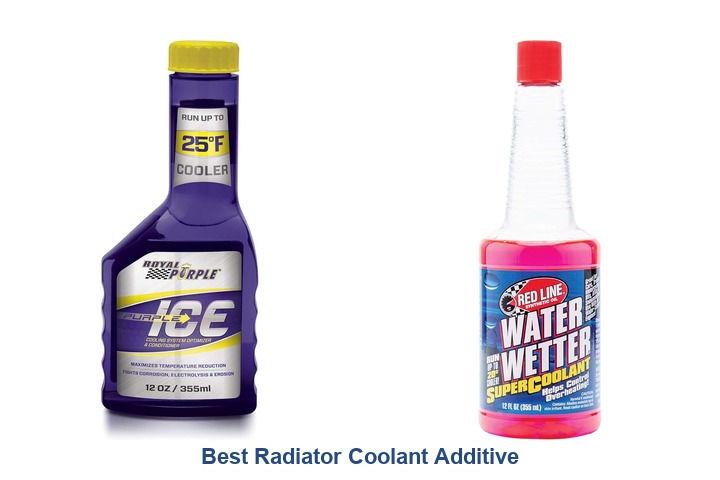
Top Picks- 1  | Royal Purple 01600 Purple Ice Super-Coolant Radiator Additive – 12 Best for: High-performance cooling | Check Price On Amazon |
Top Picks- 2  | Red Line 80204 WaterWetter Super Coolant – 12 Ounce (2 Best for: Super-cooling enthusiasts | Check Price On Amazon |
Top Picks- 3  | Design Engineering Radiator Relief Coolant Additive 16 oz | Engine Best for: Engine cooling support | Check Price On Amazon |
Top Picks- 4  | Subaru Coolant System Conditioner – SOA635071 – Genuine OEM Best for: OEM system maintenance | Check Price On Amazon |
Top Picks- 5  | Red Line 80204 WaterWetter Super Coolant – 12 Ounce Best for: Everyday cooling maintenance | Check Price On Amazon |
1. Royal Purple 01600 Purple Ice Super-Coolant Radiator Additive – 12
Best for: All-coolant protection for daily drivers.
A 12.8-ounce bottle of Royal Purple Purple Ice combines erosion and electrolysis protection with lubricants for the water pump. Its stated compatibility with all coolant types gives owners a flexible additive for maintaining a vehicle-specific cooling system without committing to one antifreeze formulation.
The 3.75-by-1.14-by-7.5-inch package is compact enough for storage in a garage cabinet or vehicle-service kit. Model 01600 carries a 12-volt listing and a center-position specification, while the lubricant content specifically targets water-pump protection. The formula’s corrosion-focused purpose suits drivers prioritizing cooling-system component care alongside coolant compatibility.
Pros
- All-coolant compatibility supports use with different antifreeze formulations
- Erosion protection helps address cooling-system material wear
- Electrolysis protection targets electrical corrosion in the cooling system
- Included lubricants support water-pump protection
Cons
- The listing identifies a vehicle-specific fit type but does not provide application or dosage instructions
Choose Purple Ice if your priority is broad coolant compatibility with added water-pump lubrication. It fits drivers maintaining a vehicle-specific system who want erosion and electrolysis protection in a compact 12.8-ounce bottle.
2. Red Line 80204 WaterWetter Super Coolant – 12 Ounce (2
Best for: Racing and warm-climate cooling systems.
One 12-ounce bottle of Red Line WaterWetter treats 3 to 5 gallons, or 13.2 to 15.9 liters, in most passenger cars and light trucks. Its wetting agent doubles water’s wetting ability, giving racing and warm-climate users a treatment that can work with straight water or reduced antifreeze levels.
Vehicles with larger cooling systems require two bottles, while small systems use 1 ounce, equal to 3 to 4 capfuls, per quart. The formula also works with new or used antifreeze, including DEX-C, and provides rust and corrosion protection. Those dosing ranges make the 12-ounce format easier to match to different cooling-system capacities.
Pros
- 3-to-5-gallon treatment range covers most passenger cars and light trucks
- 13.2-to-15.9-liter guidance supports metric-capacity matching
- Doubles water’s wetting ability for enhanced coolant contact
- Works with straight water or reduced antifreeze in warm climates
Cons
- Larger cooling systems require two 12-ounce bottles
Buy this WaterWetter when you need flexible dosing for a passenger car, light truck, racer, or warm-climate vehicle. It is especially useful when the cooling system uses straight water, reduced antifreeze, or existing antifreeze.
3. Design Engineering Radiator Relief Coolant Additive 16 oz | Engine
Best for: Hot-weather temperature reduction.
Design Engineering Radiator Relief claims temperature reductions of up to 30°F in water-cooled engines. That stated performance target gives hot-weather drivers and motorsport users a coolant additive focused on lowering operating temperatures while also addressing overheating, corrosion, and existing scale buildup.
The 16-ounce bottle provides a defined quantity for treatment planning, and the 1.1-pound listed weight makes it more substantial than many smaller additive formats. Its corrosion-inhibitor role covers both electrolytic and chemical corrosion, while scale reduction targets deposits already present in the cooling system. The formula is specified for any water-cooled engine.
Pros
- Up-to-30°F temperature reduction targets cooler engine operation
- 16-ounce capacity provides a defined treatment quantity
- Electrolytic and chemical corrosion protection covers two corrosion mechanisms
- Scale-buildup reduction addresses existing cooling-system deposits
Cons
- The supplied data does not specify a treatment volume or dosage for the 16-ounce bottle
Radiator Relief suits owners of water-cooled engines that run hot in warm weather. Choose it when a stated temperature-reduction target matters alongside corrosion control and existing scale reduction.
4. Subaru Coolant System Conditioner – SOA635071 – Genuine OEM
Best for: Subaru-specific corrosion protection.
Subaru’s SOA635071 conditioner is a genuine OEM coolant-system treatment specifically formulated for Subaru vehicles. That manufacturer-specific formulation gives Subaru owners a direct-fit maintenance option aimed at preventing corrosion, rather than a universal additive whose compatibility must be inferred from broader coolant claims.
The 5.3-ounce bottle keeps the treatment compact for scheduled service storage, and the machined exterior specification identifies the listed finish attribute. Manufacturer part number SOA635071 matches the OEM part number, helping buyers cross-check the product against Subaru service documentation. Its stated purpose is corrosion prevention inside a Subaru cooling system.
Pros
- Genuine Subaru OEM formulation supports brand-specific maintenance
- 5.3-ounce size is compact for service-kit storage
- Matching manufacturer and OEM part number simplifies part verification
- Corrosion-prevention purpose targets Subaru cooling-system protection
Cons
- The 5.3-ounce listing does not include a dosage or compatible non-Subaru application range
This conditioner is for Subaru owners who prioritize OEM-matched cooling-system maintenance. It makes the most sense when corrosion prevention is the goal and the SOA635071 part number matches the vehicle’s service requirements.
5. Red Line 80204 WaterWetter Super Coolant – 12 Ounce
Best for: Flexible dosing for water or antifreeze.
Red Line WaterWetter arrives as a 12-ounce bottle with a formula that doubles water’s wetting ability. That combination gives racing users and warm-climate drivers a treatment option for straight water, reduced antifreeze, new antifreeze, or used antifreeze while retaining rust and corrosion protection.
One bottle treats 3 to 5 gallons, equivalent to 13.2 to 15.9 liters, in most passenger cars and light trucks. Small cooling systems use 1 ounce, or 3 to 4 capfuls, per quart, while larger systems need two bottles. The bottle container format keeps these quantity calculations tied to a clearly measured product.
Pros
- 12-ounce bottle supports the stated 3-to-5-gallon treatment range
- 13.2-to-15.9-liter guidance helps metric users measure system capacity
- 1-ounce-per-quart direction accommodates small cooling systems
- Straight-water use supports racing and warm-climate applications
Cons
- Large cooling systems need two bottles, increasing the required product count
Select this version for a cooling system where dosing flexibility matters more than a vehicle-specific formula. It suits racers and warm-climate drivers using straight water, reduced antifreeze, or either new or used antifreeze.
6. Mishimoto – MMRALC Liquid Chill Radiator Coolant Additive

Best for: Simple vehicle-size dosing.
Mishimoto Liquid Chill uses a 4-fluid-ounce, non-corrosive formula that requires no mixing. That ready-to-use approach gives owners a straightforward way to reduce high coolant temperatures, prevent future corrosion, and reduce existing buildup without preparing a separate blend before application.
The 2-by-2-by-6-inch package is compact, and the recyclable specification adds a material-handling benefit after use. Mishimoto lists two bottles for trucks and SUVs, one bottle for sport compact cars, and 1 ounce per quart for ATVs and dirt bikes. A lifetime warranty is also listed for the additive.
Pros
- No-mixing formula simplifies coolant-system treatment
- 4-fluid-ounce size supports the stated vehicle-specific dosing guidance
- Non-corrosive formulation targets safer corrosion control
- Recyclable construction reduces disposal impact after use
Cons
- Truck and SUV applications require two 4-fluid-ounce bottles
Liquid Chill fits buyers who want no-mix application with clear dosing by vehicle category. It is particularly practical for sport compact cars, while truck and SUV owners should plan on two bottles.
7. Royal Purple 01600 Purple Ice Radiator Coolant Additive 12 oz.

Best for: Compact Purple Ice replacement bottle.
Royal Purple Purple Ice is listed here in a 12-ounce format with the model number 01600. That size and matching part number give buyers a compact replacement listing for the Purple Ice additive, while the supplied product data confirms its identity without adding unsupported application or performance details.
The package measures 9 by 4.25 by 9.25 inches and has a listed weight of 3.63 pounds. Manufacturer Royal Purple and manufacturer part number 01600 provide two identifiers for checking the bottle against an existing Purple Ice order. Because this listing contains no description text, buyers should verify coolant compatibility and dosing separately before purchase.
Pros
- 12-ounce format provides a clearly identified additive quantity
- Model 01600 supports product matching against an existing Purple Ice listing
- 9-by-4.25-by-9.25-inch package dimensions aid storage planning
- Royal Purple manufacturer labeling simplifies brand verification
Cons
- The supplied listing provides no coolant compatibility, corrosion claim, or dosage instructions
Choose this listing when you specifically need Royal Purple model 01600 in its 12-ounce format. It is best for buyers who can verify the application and dosage through their existing service information.
8. Lubegard 96430 Heavy Duty 2-in-1 Coolant Treatment, 32 fl. oz.

Best for: Heavy-duty wet-sleeve protection.
Lubegard’s Heavy Duty 2-in-1 treatment comes in a 32-fluid-ounce bottle and combines corrosion protection with temperature reduction. That larger capacity suits heavy-duty cooling systems, while protection for wet-sleeve cylinder liners addresses cavitation erosion that passenger-car additives may not specifically cover.
The 9.3-by-5.8-by-2.6-inch package provides a defined storage footprint, and the 2.23-pound listed weight reflects the larger treatment format. Its protection scope includes chemical electrolysis, scale, deposits, and slime, all tied to overheating prevention. The formula also targets water-pump impellers and seals, extending protection beyond coolant passages alone.
Pros
- 32-fluid-ounce capacity suits larger heavy-duty treatment needs
- Wet-sleeve cylinder-liner protection targets cavitation erosion
- Chemical-electrolysis protection covers a stated corrosion mechanism
- Scale, deposit, and slime prevention addresses overheating sources
Cons
- The 32-fluid-ounce bottle is a larger format than needed for buyers treating only a small cooling system
Lubegard 96430 is aimed at heavy-duty owners who need more than basic temperature reduction. Choose it for systems with wet-sleeve liners, water-pump components, and a need for broad deposit and electrolysis protection.
9. Lubegard 96001 Kool-It Supreme Coolant Treatment, 16 oz.

Best for: Metal and deposit protection.
Lubegard Kool-It Supreme arrives in a 16-ounce bottle with protection for all metals against chemical electrolysis. Its stated cooling-system role combines corrosion protection, improved heat transfer, lower operating temperatures, and deposit prevention for buyers focused on maintaining heat-management performance.
The bottle container format keeps the treatment easy to identify and store, while its 190°F upper temperature rating supplies a specific temperature-handling reference. The formula’s deposit-prevention claim targets buildup associated with overheating, and its heat-transfer claim connects directly to reduced operating temperatures. The 16-ounce quantity provides a defined amount for service planning.
Pros
- 16-ounce bottle provides a defined treatment quantity
- All-metal protection covers chemical-electrolysis exposure
- Heat-transfer enhancement targets lower operating temperatures
- Deposit prevention addresses buildup that can lead to overheating
Cons
- The supplied data does not provide dosage instructions for the 16-ounce bottle
Kool-It Supreme suits buyers prioritizing broad metal protection and deposit control in a cooling system. It is a practical match when heat transfer and the listed 190°F upper temperature rating are relevant selection criteria.
10. Cummins Filtration Fleetguard DCA60L Coolant Additive 16oz. DCA4

Best for: Fleet maintenance part-number matching.
Fleetguard DCA60L is a 16-ounce coolant additive identified by Cummins Filtration and part number DCA60L. That clearly labeled format gives fleet-maintenance buyers a compact, traceable product for parts-based purchasing, although the supplied listing does not state the additive’s treatment chemistry or application coverage.
The 7-by-2-by-2-inch package supports compact shelf storage, and the 1.23-pound listed weight provides a second logistical reference for inventory handling. Manufacturer CUMMINS, brand Fleetguard, and the DCA60L part number create multiple identification points for procurement records. A 12-volt specification is also listed, but no coolant-system dosage appears in the data.
Pros
- 16-ounce capacity provides a clearly identified inventory quantity
- DCA60L part number supports fleet procurement and replacement matching
- 7-by-2-by-2-inch dimensions aid shelf and service-vehicle storage
- Cummins Filtration and Fleetguard labeling supports brand verification
Cons
- The supplied listing provides no treatment directions, compatibility statement, or corrosion-performance claim
Choose DCA60L when an existing fleet-maintenance record calls for this exact Cummins Filtration part number. It fits buyers who can confirm the required application through service documentation before ordering.
How to Choose the Best Radiator Coolant Additive
Vehicle and coolant compatibility
Start with the vehicle manufacturer’s coolant specification, not the additive’s broad compatibility claim. Match the product to the coolant already in the system, whether it is conventional green, OAT, HOAT, or another approved hybrid formula. A strong choice clearly names compatible technologies and states whether draining and flushing are required before use.
Avoid any treatment that calls for mixing coolant types without explicit manufacturer approval, since incompatible inhibitors reduce protection. Check the owner’s manual for aluminum-engine and extended-life requirements.
Choose a universal additive only when its label directly covers the installed coolant; otherwise, pick a formula certified for that exact coolant technology.
Cooling and corrosion protection
Prioritize an additive that protects the entire cooling circuit rather than one that only claims rust control. The label should address scale, corrosion, electrolysis, and water-pump wear, with compatibility for the metals in your system, including aluminum, iron, copper, brass, and mixed-metal assemblies. Look for inhibitor technology that supports stable heat transfer and normal operating temperatures without leaving heavy deposits.
A vague “all systems” statement is weaker than documented protection for specific metals and cooling components. Choose a broad mixed-metal corrosion inhibitor for modern vehicles with aluminum radiators and engines; select a conventional inhibitor for older iron-and-copper systems using traditional coolant.
Leaksealing performance
Treat leak sealers as targeted repair aids, not interchangeable maintenance additives. Read the stated leak range and application guidance: a product for pinhole seepage suits a radiator or hose-joint weep, while larger cracks, split hoses, and failed water pumps require mechanical repair. Favor fine-particle or micro-fiber formulas that circulate through narrow passages without forming bulky deposits, especially in vehicles with compact aluminum radiators and heater cores.
Preventive cooling-system treatments belong in a different category and should not promise structural repair. Choose a small-leak sealer for an emergency seep and a residue-controlled preventive treatment for routine protection without active leakage.
Application and dosage
Match the dose to the vehicle’s total cooling-system capacity, not simply the radiator’s visible volume. A clearly marked bottle should state coverage in quarts or liters and identify whether one container treats a compact car, truck, or larger cooling circuit. Confirm the product enters the radiator, overflow reservoir, or a fully drained system, because the correct entry point varies by formula and vehicle layout.
Follow the specified dilution, engine-warming, circulation, and flushing sequence exactly; extra additive does not improve protection. Choose a single-dose bottle for one standard passenger vehicle and a concentrated multi-treatment container for several vehicles or precise workshop dosing.
Formula safety and longterm value
For long-term value, choose a residue-free formula that preserves rubber hoses, seals, gaskets, aluminum, and plastic tanks while maintaining coolant flow. The label should state treatment coverage, recommended maintenance intervals, storage life, and technical support contact details. Concentrates suit drivers with limited storage space or several vehicle sizes because one container permits accurate dosing; premeasured formulas suit owners who want simple, repeatable servicing.
Favor products that document inhibitor stability and do not require unusually frequent reapplication. Choose a concentrated, residue-free treatment with clear interval guidance for garages and multi-vehicle owners; select a premeasured single-service formula for straightforward personal maintenance.
Which Should You Choose?
- If you want broad compatibility with your existing antifreeze and added water-pump protection, choose a universal additive that prevents electrolysis and includes lubricants.
- If you run straight water or reduced antifreeze in a race car or warm climate, choose a wetting-agent formula with rust and corrosion protection.
- If your engine regularly runs hot in summer traffic or demanding conditions, choose a coolant additive designed to lower operating temperatures and improve heat transfer.
- If you own a vehicle requiring a manufacturer-specific coolant treatment, choose the genuine OEM conditioner formulated for that cooling system.
Quick Best Radiator Coolant Additive Buying Checklist
- Check coolant compatibility: Match the additive with your vehicle’s coolant chemistry and manufacturer requirements.
- Verify system capacity: Choose a bottle that treats the full cooling-system volume without guesswork.
- Identify the purpose: Select corrosion protection, temperature support, leak sealing, or a formula that combines suitable functions.
- Inspect material compatibility: Confirm suitability for aluminum radiators, iron components, copper parts, hoses, seals, and water pumps.
- Follow application directions: Use the specified location, dosage, circulation time, and flushing procedure.
- Look for clean operation: Prefer a formula that limits sediment or clogging and has clear storage and handling instructions.
Frequently Asked Questions
Is Radiator Coolant Additive Compatible With Every Type Of Antifreeze?
Radiator coolant additive is not automatically compatible with every antifreeze type, because OAT, HOAT, and conventional formulas use different inhibitor packages. Check the additive label and vehicle manual before mixing, and never combine products when compatibility is uncertain or the coolant already shows contamination.
Can Radiator Coolant Additive Lower Engine Temperature?
Radiator coolant additive can support lower or more stable engine temperatures when deposits, corrosion, or poor heat transfer are limiting the cooling system. It cannot repair a failing thermostat, blocked radiator, damaged water pump, or low coolant level, so diagnose overheating before relying on treatment.
How Much Radiator Coolant Additive Should Be Used?
The correct amount of radiator coolant additive depends on the bottle instructions and the vehicle’s total cooling-system capacity. Many treatments specify one bottle for a defined number of quarts or liters, so measure the system and avoid overdosing, which may increase residue or foaming.
Does Radiator Coolant Additive Stop Leaks Permanently?
Radiator coolant additive may temporarily seal small seepage at a radiator, hose connection, or gasket, but it is not a guaranteed permanent repair. Use only a product labeled for the affected system, monitor the coolant level, and replace damaged components when leakage continues.
When Should Radiator Coolant Additive Be Added?
Radiator coolant additive should be added during a coolant service or when the product directions recommend treatment, with the engine completely cool. Use the specified fill point, circulate the coolant as directed, and avoid opening a hot radiator because pressurized fluid can cause serious burns.
Final Suggestions
Choosing the best radiator coolant additive can improve corrosion resistance, support heat transfer, and help maintain cleaner, more reliable cooling-system operation. The right formula also offers practical value by matching your coolant chemistry, vehicle materials, and maintenance needs without unnecessary complexity. Review compatibility, dosage, and intended purpose carefully, then apply the treatment exactly as directed for a more confident approach to cooling-system care.