Top 10 Best Coolant Pressure Tester: Must-See Picks
As an Amazon Associate we earn from qualifying purchases.
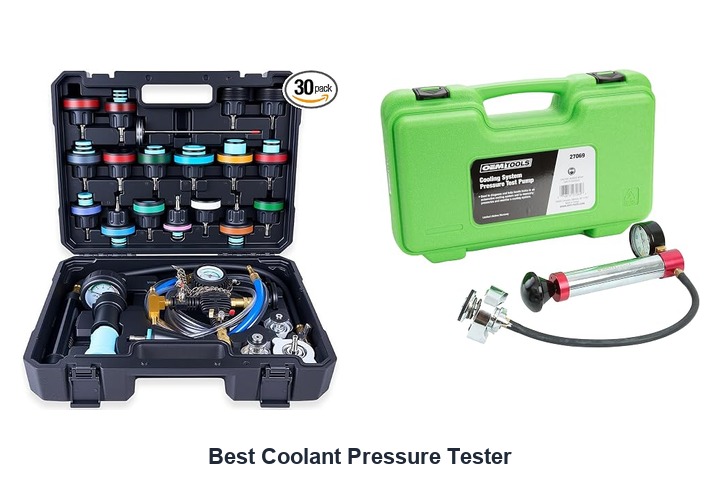
The best coolant pressure tester brings precision to a diagnostic process often clouded by hidden leaks and gradual pressure loss. Modern vehicle maintenance depends on readings that are stable, repeatable, and easy to interpret. A capable coolant leak tester can expose weaknesses in radiators, expansion tanks, heater cores, and hose connections without relying on guesswork.
Radiator pressure test kits also vary in adapter coverage, gauge calibration, corrosion-resistant materials, and seal integrity, all of which influence how confidently a technician can assess the cooling system. Digital pressure displays and improved pump designs are reshaping this compact diagnostic category.
Yet differences in valve control, fitting compatibility, and pressure retention can remain difficult to spot. This guide examines the best coolant pressure tester choices and the details that separate dependable equipment from frustrating tools. Continue reading to see which features deserve the closest scrutiny.
best coolant pressure tester: Top Picks
| Image | Product | Buy |
|---|---|---|
Top Picks- 1  | KOOPOOL 30PCS Radiator Pressure Tester Kit with Vacuum Refill | Best for: Comprehensive refill kits | Check Price On Amazon |
Top Picks- 2  | OEMTOOLS 27069 Cooling System Pressure Test Pump for Most Cooling Best for: Most cooling systems | Check Price On Amazon |
Top Picks- 3  | Astro Pneumatic Tool 7856 Universal Air Powered Cooling System Pressure Best for: Air-powered testing | Check Price On Amazon |
Top Picks- 4  | Coolant Pressure Tester Kit – Radiator System Leak Detector & Best for: Leak detection | Check Price On Amazon |
Top Picks- 5  | 18pcs Universal Radiator Pressure Tester Kit, Coolant Vacuum Refill kit,Coolant Best for: Vacuum refill jobs | Check Price On Amazon |
1. KOOPOOL 30PCS Radiator Pressure Tester Kit with Vacuum Refill |
Best for: Broad-coverage DIY cooling-system diagnosis.
A 30-piece assortment combines 17 color-coded test caps with three test covers, giving DIY mechanics a fast way to match adapters across Japanese, European, and American vehicles. Its hand-operated aluminum pump checks cooling systems from 0 to 35 PSI, while the vacuum-refill setup supports both leak diagnosis and coolant replacement.
Dual rubber rings on the pump support airtight testing, and the upgraded metal filling valve improves vacuum-refill stability. The gauge shows both PSI and bar, so readings suit users who work with either scale. Measuring 13.6 by 5.9 by 16.9 inches and weighing 9.59 pounds, the kit offers a substantial assortment but takes more storage space than compact pump-only testers.
Pros
- 30-piece configuration covers testing and vacuum refill
- 17 color-coded caps simplify adapter selection
- 0-35 PSI range supports cooling-system leak checks
- Aluminum pump with dual rubber rings supports airtightness
Cons
- At 9.59 pounds, the kit is less convenient to carry than lighter alternatives
Choose it if you service mixed Japanese, European, and American vehicle fleets and want vacuum refill capability in the same kit. It suits home garages that need both pressure testing and coolant replacement rather than a pump alone.
2. OEMTOOLS 27069 Cooling System Pressure Test Pump for Most Cooling
Best for: Straightforward pressure testing for mixed vehicles.
Manual operation and a 4-to-30 PSI testing range make the OEMTOOLS 27069 a focused choice for locating leaks in domestic and import cooling systems. Its pump-based format lets a home mechanic pressurize and monitor a system without relying on shop-air equipment or a powered compressor.
The 14-by-9-by-3.5-inch package keeps the tester relatively shallow for toolbox storage, while the 3-pound weight makes it easier to move between vehicles. Compatibility with most adapters broadens its use across cooling systems, but the supplied data emphasizes pressure testing rather than vacuum refill. That makes its core value direct leak diagnosis through manual pressurization.
Pros
- 4-30 PSI range covers common cooling-system test pressures
- Manual pump works without shop-air equipment
- Most-adapter compatibility supports domestic and import vehicles
- 3-pound weight makes mobile garage use easier
Cons
- The listed kit focuses on pressure testing and does not specify a vacuum-refill system
Pick this tester for routine leak checks on domestic and import vehicles when a simple manual pump is enough. It is especially practical for DIY owners who want a lighter pressure-testing kit without prioritizing coolant vacuum filling.
3. Astro Pneumatic Tool 7856 Universal Air Powered Cooling System Pressure
Best for: Fast shop-air testing and system filling.
Shop-air regulation lets the Astro Pneumatic 7856 fill even large cooling systems almost instantly while maintaining constant pressure for tracing leaks. Its quick connector works with nearly all cooling-system testing caps and adapters, giving professional technicians a fast connection point for repeated radiator and cap checks.
The regulator caps pressure at 30 PSI to help prevent damage, and the gauge displays common pressure levels for different cooling systems. As a single included universal air-powered tester, it keeps the workflow focused rather than bundling a large adapter assortment. Constant pressure helps reveal a leak source after the system has been pressurized.
Pros
- Air-powered operation fills large cooling systems quickly
- 30 PSI regulator helps limit excessive pressure
- Quick connector fits nearly all testing caps and adapters
- Constant pressure helps trace the leak source
Cons
- Shop-air operation requires an external compressed-air supply
Buy it for a repair shop that already has compressed air and values rapid repeated testing. It fits technicians who need to fill large systems quickly and hold pressure while tracking leaks.
4. Coolant Pressure Tester Kit – Radiator System Leak Detector &
Best for: Extensive adapter coverage for varied vehicles.
A 27-piece layout pairs a high-pressure hand pump with 22 precision adapters in sizes 3 through 24, giving technicians broad coverage for cars, SUVs, light trucks, and radiator reservoirs. Blue and black pressure-cap testers add dedicated cap-checking options to the same leak-detection kit.
The 22-adapter selection is intended for major-brand radiator and coolant-reservoir caps, including Tesla and Porsche applications listed in the product data. Its 17.24-by-12.95-by-4.29-inch package provides room for the complete assortment, while the 7.92-pound weight reflects a fuller kit for garage storage rather than a minimal pocket-sized tester.
Pros
- 27 pieces combine pump, adapters, and cap testers
- 22 adapters cover sizes 3-24
- Vehicle coverage includes cars, SUVs, and light trucks
- Tesla and Porsche compatibility broadens application range
Cons
- The 7.92-pound package is heavier than compact pressure-test kits
Choose it when one tester must serve multiple vehicle types and cap styles. It is a strong fit for independent garages handling cars, SUVs, light trucks, Tesla, and Porsche cooling systems.
5. 18pcs Universal Radiator Pressure Tester Kit, Coolant Vacuum Refill kit,Coolant
Best for: Portable corrosion-protected kit for DIY garages.
Eighteen color-coded pieces make the Gnhydxfe kit easy to sort when testing cooling systems on most vehicles. Aluminum adapters receive rust and corrosion protection, while high-tenacity rubber and high-impact plastic components support repeated sealing and handling inside the included thickened carrying case.
The 15.67-by-12.71-by-3.7-inch package stores the complete kit in a relatively slim format, and the 5.52-pound weight keeps transport manageable for mobile repairs. Color coding reduces adapter-selection time, while the aluminum construction provides the metal interface for radiator openings. The data identifies testing and coolant vacuum refill as the kit’s intended functions.
Pros
- 18-piece color-coded set simplifies vehicle matching
- Aluminum adapters receive rust and corrosion protection
- High-tenacity rubber supports sealing at connections
- Thickened carrying case supports organized transport
Cons
- The 18-piece count offers fewer adapters than larger master kits
Select it for home or mobile mechanics who want pressure testing and refill functions without a heavy master set. Its case, 5.52-pound weight, and corrosion-protected aluminum adapters suit occasional vehicle maintenance.
6. SIXIWANZI Coolant Pressure Tester Kit, Radiator Leak Detector | 18pc

Best for: All-in-one leak, refill, and air-removal maintenance.
Three functions—leak detection, coolant replacement, and air-bubble removal—make the SIXIWANZI XY0035 more versatile than a pressure-only pump. Its 18 color-coded test caps cover most vehicles, giving DIY mechanics a way to identify connections while handling several radiator-maintenance tasks with one kit.
POM, rubber, and nylon construction provides the listed combination of sealing, strength, and durability across the kit’s components. The 18-cap assortment reduces guesswork when matching a vehicle, and the included manual pressure pump supports hands-on testing without a powered setup. Its stated coolant-replacement system adds vacuum-service capability for refill work.
Pros
- Three functions cover leaks, replacement, and air removal
- 18 color-coded caps suit most vehicles
- POM construction supports component strength
- Rubber and nylon components support sealing and durability
Cons
- The manual pressure pump requires hands-on operation for each test
Buy it if your maintenance routine includes leak checks, coolant changes, and trapped-air removal. It suits DIY owners who want broad service functions and color-coded vehicle coverage in one 18-piece kit.
7. Coolant Pressure Tester Kit, Universal Radiator Pressure Test Pump with

Best for: High-pressure testing with temperature monitoring.
A 35 PSI maximum reading gives this DKwoeshg tester a broad pressure ceiling for radiator and cooling-system checks. The kit also includes a thermometer, steel cap adapters, radiator cap adapters, a gauge-equipped pump, and a carrying case, combining leak testing with temperature observation in one organized package.
High-quality aluminum materials are used for the kit’s construction, supporting the stated durability goal without adding a separate metal-component purchase. At 19 by 16 by 5 inches, the package has a wide footprint for its included accessories, while the 5.26-pound weight keeps it more manageable than several larger kits. The thermometer adds a concrete diagnostic reference alongside pressure readings.
Pros
- 35 PSI maximum supports higher-range cooling-system tests
- Included thermometer adds temperature monitoring
- Aluminum construction supports repeated workshop use
- Steel and radiator cap adapters broaden connection options
Cons
- The 19-by-16-inch package needs substantial shelf or toolbox space
Choose this kit when pressure readings and coolant temperature both matter during diagnosis. It fits DIY and workshop users who want aluminum construction, multiple cap-adapter types, and a case without moving to a larger master kit.
8. BILITOOLS 28-Piece Coolant Pressure Tester, Coolant Vacuum Refill Kit |

Best for: Comprehensive refill and leak-diagnosis workstation.
Twenty-eight pieces give the BILITOOLS kit room to combine pressure testing, vacuum refilling, and an add-on thermometer. The hand-operated pump and refill tool use a gauge marked in both PSI and bar, helping mechanics locate leaks and refill radiators without introducing air pockets.
Its 16.81-by-13.19-by-5.94-inch package organizes a substantial assortment, while the 10.47-pound weight signals a more shop-oriented kit than a lightweight emergency tool. The stated diagnostic coverage includes header and expansion tanks, fittings, head gaskets, radiator cores, heater matrices, water pumps, hoses, and pipes. The thermometer also helps verify that the system is cool before service.
Pros
- 28-piece set combines testing and vacuum refill
- Dual PSI and bar gauge supports two pressure scales
- Vacuum refill helps avoid air pockets
- Add-on thermometer supports cool-system checks
Cons
- At 10.47 pounds, it is one of the heavier kits for mobile use
Pick it for comprehensive cooling-system service where leak location and air-free refilling happen in the same job. It is best suited to workshops that can accommodate the 10.47-pound kit and its larger case.
9. DISEN 33Pcs Coolant Pressure Tester Kit, Master Coolant Vacuum Refill

Best for: Largest adapter assortment for broad vehicle coverage.
Thirty-three pieces make the DISEN master kit the broadest assortment in this roundup, including 23 radiator adapters—22 specific and one universal. That coverage pairs with a vacuum pump, purge-and-refill tool, probe thermometer, wrench, air-intake joints, O-rings, and hoses for complete cooling-system diagnosis and refill work.
The 16.57-by-12.95-by-6.73-inch case holds separate tools for pressure testing, vacuum purging, and coolant replacement, reducing the need to combine kits. EU and US air-intake joints support the listed connection options, while the probe thermometer adds temperature checking during service. O-rings and hoses are included alongside the 23-adapter assortment for a more complete setup.
Pros
- 33-piece configuration covers diagnosis and vacuum refill
- 23 adapters include 22 specific and one universal
- Probe thermometer adds temperature diagnostics
- EU and US air-intake joints support connection flexibility
Cons
- The 6.73-inch case depth and 10.39-pound weight make it bulky for roadside transport
Choose it when maximum adapter variety matters more than carrying convenience. It suits professional or advanced DIY users servicing many vehicles and wanting purge, refill, temperature, and pressure tools together.
10. Astro Tools 78585 Universal Radiator Pressure Tester & Vacuum Type

Best for: Compact branded option for pressure and refill.
A color-coded radiator-cap system makes the Astro Tools 78585 quicker to match at the vehicle, while its vacuum purge-and-refill connection fits nearly all radiator openings. That combination lets domestic and import vehicle owners test cooling systems and refill coolant with fewer connection decisions during routine service.
The blow-molded case protects and organizes the tester between jobs, and the one-piece configuration keeps the kit simpler than multi-adapter master sets. Its one-year warranty adds a defined coverage period, while the vacuum connection addresses air-free coolant replacement rather than pressure testing alone. The supplied data does not specify a PSI range, so buyers should not expect a stated maximum reading.
Pros
- Color-coded test cap simplifies adapter selection
- Vacuum connection fits nearly all radiator openings
- Domestic and import vehicle suitability broadens use
- Blow-molded case supports organized storage
Cons
- No PSI range is listed, limiting pressure-capacity comparison with rated testers
Buy it for domestic or import vehicle maintenance when simple vacuum refill is as important as radiator testing. It is a practical choice for owners who prefer a branded, case-stored setup over a large adapter-heavy kit.
How to Choose the Best Coolant Pressure Tester
Gauge accuracy and pressure range
Start with the vehicle manufacturer’s specified cooling-system pressure, then choose a gauge whose working range places that figure near the middle rather than at the extreme. A 0–30 psi gauge suits many passenger cars and light trucks, while a narrower 0–20 psi gauge gives finer control for systems with lower specifications. Clear numerals, 1 psi increments, a colored warning zone, and a needle that holds steady under pressure make leaks easier to identify.
Choose an analog gauge with a stable needle for general workshop use; choose a digital gauge only when its display remains readable and pressure retention is verified.
Adapter coverage and seal quality
Match the adapter set to the radiator cap necks and expansion-tank openings found across your vehicles, not simply to the number printed on the box. A useful workshop kit includes multiple bayonet and threaded adapters, angled connectors, and sizes covering domestic cars, imports, and light trucks; at least 12 well-chosen adapters gives broader coverage than a handful of universal pieces. Check that each adapter locks with a firm quarter-turn or threaded engagement, uses thick replaceable O-rings, and has smooth sealing surfaces.
Choose the broad-coverage kit with positive-lock adapters for mixed fleets; choose a smaller set only for one known vehicle family.
Pump construction and hose durability
For regular workshop use, choose a pump with a corrosion-resistant aluminum or plated-steel body, metal fittings, and a reinforced handle that does not flex while pressure rises. The hose should bend without flattening, resist kinks near the couplings, and use crimped or threaded ends rather than loose push-fit connections. A smooth pump stroke gives better control when approaching the specified pressure, while a jerky action complicates leak diagnosis and strains seals.
Inspect the gauge connection and hose jacket for strain relief at both ends. Choose a metal-bodied pump with a flexible reinforced hose for frequent service; choose a lighter composite pump for occasional home testing.
Safety and pressure release controls
Pressure release deserves the same attention as pressure generation. Select a tester with a dedicated bleed valve or controlled trigger that lowers pressure gradually, rather than relying on a loose connection or sudden adapter removal. The adapter must lock securely against the filler neck, with a latch or threaded collar that prevents blowoff while the system is pressurized.
The kit should state that testing starts only on a completely cool engine and explain the correct pressure limit for the vehicle. Choose a tester with a positive-lock coupler and metered release valve for workshop work; choose no tester lacking clear cool-engine instructions and a deliberate relief control.
Storage, maintenance, and kit value
Judge kit value by vehicle coverage, serviceability, and protection rather than by accessory count. A molded case with fitted spaces keeps the gauge face, pump, adapters, and hose from striking one another, and it makes missing pieces obvious before a job starts. Confirm that replacement O-rings, caps, hoses, and vehicle-specific adapters are sold separately; disposable seals turn a broad kit into a short-lived purchase.
Compare whether the included accessories solve radiator and expansion-tank applications across your fleet, not whether the package contains filler cones or duplicates. Choose a cased kit with replaceable seals and broad adapter coverage for professional use; choose a compact cased kit for one vehicle family.
Which Should You Choose?
- If you service Japanese, European, and American vehicles, choose a universal kit with numerous color-coded caps and adapters.
- If you need a straightforward tool for manually finding cooling-system leaks, choose a hand-pump pressure tester with a clear pressure gauge.
- If you work in a busy garage with access to shop air, choose an air-powered tester with regulated pressure and a quick-connect fitting.
- If you want to test, vacuum-refill, and purge air from cooling systems in one job, choose a comprehensive kit with 20 or more adapters, a vacuum refill tool, and a thermometer.
Quick Best Coolant Pressure Tester Buying Checklist
- Gauge range: Confirm the pressure scale suits your vehicle’s cooling-system specification.
- Adapter fit: Verify that the included adapters match the radiator or expansion-tank neck.
- Seal integrity: Look for durable O-rings and locking connections that resist leaks.
- Pump quality: Choose a smooth, corrosion-resistant pump with a flexible reinforced hose.
- Safety release: Prefer controlled pressure release and follow cold-engine testing procedures.
- Storage support: Select a protective case with organized spaces for adapters and replacement seals.
Frequently Asked Questions
What Makes The Best Coolant Pressure Tester?
The best coolant pressure tester is a kit with a readable pressure gauge, secure radiator adapters, and a hand pump that builds pressure smoothly. A broad adapter selection matters because domestic, import, and light-truck cooling systems use different filler-neck designs, while a stable gauge helps reveal slow leaks accurately.
How Does A Coolant Pressure Tester Find Leaks?
The coolant pressure tester checks cooling-system integrity by pressurizing the system while the engine is cold and monitoring gauge movement. If pressure drops without visible seepage, inspect hoses, clamps, the water pump area, heater circuit, and combustion-related faults; never remove a hot radiator cap.
Which Materials Are Best For A Coolant Pressure Tester?
Durable materials make a coolant pressure tester more dependable, especially when adapters are repeatedly tightened against filler necks. Choose a corrosion-resistant aluminum or reinforced composite pump, a tough hose, brass or quality polymer adapters, and a gauge lens that remains clear around coolant residue and workshop moisture.
Why Is Adapter Compatibility Important In A Coolant Pressure Tester?
Adapter compatibility determines whether a coolant pressure tester can seal correctly on your vehicle. Before buying, compare the kit’s adapter shapes and locking methods with the radiator or expansion-tank neck, because a gauge is useful only when the seal stays firm at the specified test pressure.
What Pressure Range Should A Coolant Pressure Tester Have?
A suitable pressure range makes a coolant pressure tester safer and more useful across different cooling systems. Select a gauge that covers the vehicle’s specified cap or system pressure without forcing the pump near its limit, and use a relief valve or controlled release feature to prevent abrupt pressure loss.
Final Suggestions
Choosing the best coolant pressure tester means prioritizing accurate gauge readings, dependable seals, broad adapter coverage, and a pump that feels controlled in use. The right kit can expose slow leaks before overheating causes expensive damage, making routine diagnosis faster, clearer, and more confident across compatible vehicles. Compare fit, pressure range, construction, and safety features carefully, then choose a tester ready for the cooling-system problems you actually face.