Best Coolant for Cast Iron: Top 10 Premium Engine Fluids
As an Amazon Associate we earn from qualifying purchases.
The best coolant for cast iron applications plays a crucial role in maintaining engine health and performance. Advanced cooling fluids are engineered to prevent corrosion, manage heat transfer, and support the longevity of heavy-duty cast iron components. Choosing the right coolant involves understanding the unique demands of cast iron materials and their susceptibility to rust and thermal stress.
Modern formulations incorporate inhibitors and additives that address these challenges while enhancing durability and efficiency. Whether for industrial machinery or vehicle engines, selecting high-quality coolant is essential to avoid costly repairs and optimize thermal management.
Exploring the top coolants available reveals innovations in anti-corrosion properties, freeze protection, and compatibility with diverse cooling systems. This makes the decision process both technical and vital for maintaining robust engine function. Keep reading to explore the leading coolant options designed specifically for cast iron performance.
Best Coolant for Cast Iron: Top Picks for 2026
| Image | Product | Buy |
|---|---|---|
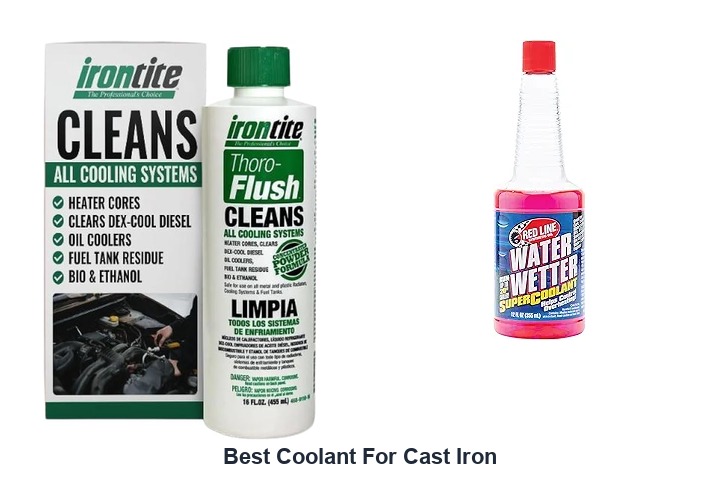
Top Picks- 1  | Irontite Thoro-Flush Coolant System Cleaner – Removes Rust, Scale, Oil, Best for: Rust and scale removal | Check Price On Amazon |
Top Picks- 2  | Red Line 80204 WaterWetter Super Coolant – 12 Ounce Best for: Performance cooling boost | Check Price On Amazon |
Top Picks- 3  | Motorex 198463 Ready to Use M3.0 Ethylene Glycol Coolant, 1 Best for: Ready-to-use convenience | Check Price On Amazon |
Top Picks- 4  | Shell Rotella Nitrite-Free Extended Life ELC Anti-Freeze + Coolant, Pre-Diluted Best for: Extended life protection | Check Price On Amazon |
Top Picks- 5  | Zerex Asian Vehicle Blue Silicate and Borate Free 50/50 Prediluted Best for: Asian vehicle compatibility | Check Price On Amazon |
1. Irontite Thoro-Flush Coolant System Cleaner – Removes Rust, Scale, Oil,
Best for: Effective rust and gelled Dex-Cool remover.
Irontite Thoro-Flush is a 16 oz powerful system cleaner that removes rust, scale, grease, oil, and sludge, enabling enhanced coolant flow and reduced engine overheating risks. Its unique ability to dissolve gelled Dex-Cool antifreeze safeguards cooling systems from clogging caused damage.
Measuring 9 x 3 x 4 inches and weighing 1 pound, this fluid is compatible with multiple materials including cast iron, aluminum, brass, and plastic, making it safe for diverse engine components. Its multi-material safety ensures prolonged durability regardless of your engine’s construction.
Pros
- Removes gelled Dex-Cool that blocks flow
- Compatible with cast iron and aluminum
- Eliminates rust, scale, grease, and sludge
- Compact 16 oz size for targeted system cleaning
Cons
- Not a complete coolant—requires follow-up fill
Ideal for vehicle owners needing to flush their cooling systems before coolant replacement. Its rust and gelled inhibitor removal specifically benefits cast iron systems vulnerable to clogging.
2. Red Line 80204 WaterWetter Super Coolant – 12 Ounce
Best for: Wetting agent for improved cooling efficiency.
Red Line WaterWetter is a 12-ounce bottle that doubles the wetting capacity of water to boost heat transfer in cooling systems, providing superior cooling performance when used with reduced antifreeze levels or straight water.
Designed to treat 3 to 5 gallons (13.2 to 15.9 liters) of coolant, it allows customization by vehicle cooling system size using one or two bottles. Its flash point of 149°C offers safety against thermal breakdown during high temperature operations.
Pros
- Doubles water’s wetting ability
- Rust and corrosion protection properties
- Flexible treatment volume for different system sizes
- Safe thermal profile with 149°C flash point
Cons
- Limited to supplemental additive rather than standalone coolant
Recommended for users wanting to maximize thermal efficiency of cast iron engines operating in hot climates or racing conditions by enhancing water-based cooling systems.
3. Motorex 198463 Ready to Use M3.0 Ethylene Glycol Coolant, 1
Best for: Silicate, nitrite, amine, and borate free formula.
Motorex M3.0 Coolant offers a ready-to-use, ethylene glycol-based fluid free from silicates, nitrates, amines, borates, and phosphates, reducing harmful deposits and protecting cast iron components without the need for dilution.
Supplied as a single 1-count unit, this antifreeze adheres to environmentally conscious standards to avoid harsh chemicals. Its formulation prevents chemical attack on engine parts, maintaining system cleanliness and longevity even in mixed-metal environments.
Pros
- No silicates, nitrites, or amines reduces deposit risks
- Ready to use—no mixing necessary
- Protects against corrosion in multi-metal systems
- Ethylene glycol base with stable chemical profile
Cons
- Limited packaging size with single unit availability
Suited for drivers seeking a low-maintenance, chemically balanced coolant designed for compatibility with cast iron and other metal cooling components.
4. Shell Rotella Nitrite-Free Extended Life ELC Anti-Freeze + Coolant, Pre-Diluted
Best for: Extended life nitrite-free ready coolant.
Shell Rotella Nitrite-Free Extended Life is a pre-diluted coolant that supports up to 1,200,000 miles in heavy-duty diesel Class 8 engines while safely protecting aluminum and cast iron alloys from cavitation and corrosion.
Weighing 9.22 pounds with dimensions of approximately 11.61 x 7.64 x 4.13 inches, it suits a wide range of vehicles including diesel, gasoline, and natural gas engines. This nitrite-free composition enhances compatibility with modern brazed aluminum heat exchangers.
Pros
- Pre-diluted for immediate use
- Up to 1,200,000 miles extended life rating
- Nitrite-free for aluminum and cast iron protection
- Effective against cylinder liner pitting
Cons
- Heavier jug size affects portability for smaller vehicles
A practical choice for commercial truck drivers and fleet maintenance with cast iron components requiring long-life, heavy-duty cooling protection.
5. Zerex Asian Vehicle Blue Silicate and Borate Free 50/50 Prediluted
Best for: Silicate and borate free for Asian vehicles.
Zerex Asian Vehicle Blue is a 50/50 pre-diluted HOAT coolant tailored for Asian makes such as Honda, Nissan, Kia, and Hyundai. Its five-year/150,000-mile protection cycle safeguards cast iron blocks from rust and corrosion without silicates or borates.
With a weight of 9.4 pounds and dimensions of 7.3 x 4 x 12.05 inches, this fluid replaces OEM antifreeze formulas, providing hybrid organic acid technology (HOAT) chemistry to halt scale and deposits formation, important for long-term engine cleanliness.
Pros
- Long-life 5 years/150,000 miles formula
- Silicate- and borate-free eliminating harmful deposits
- OEM-approved for Asian vehicle compatibility
- Pre-diluted 50/50 mix ready to use
Cons
- Primarily formulated for Asian vehicles; application limited in other makes
Perfect for Asian vehicle owners with cast iron engines needing a reliable, long-life coolant without silicates or borates to maintain system health.
6. Genuine Nissan Fluid 999MP-L25500P Blue Long Life Antifreeze/Coolant – 1

Best for: OEM-approved 50/50 premix for Nissan engines.
Genuine Nissan Fluid 999MP-L25500P is an exact OEM 50/50 premixed antifreeze/coolant designed for Nissan vehicles with aluminum and cast iron engine parts, avoiding amines, silicates, and borates that can damage seals and cause corrosion.
The fluid weighs 9.25 pounds and is electrically compatible at 12 volts for seamless interaction with vehicle systems. Its advanced formula supports optimal cooling and protects water pump seals, preventing premature failures common in complex engine designs.
Pros
- OEM formula ensures precise fit and performance
- Free from amines, silicates, and borates
- Premixed 50/50 ratio eliminates need for water addition
- Protects water pump seals and aluminum components
Cons
- Exclusive to Nissan vehicles limits cross-compatibility
Recommended for Nissan owners with cast iron engines requiring manufacturer-specified coolant that safeguards seals and internal metals.
7. CRC Thermocure Cooling System Rust Remover and Flush – Water-Based

Best for: Non-toxic water-based rust remover and flush.
CRC Thermocure offers a water-based, non-toxic, and non-flammable cooling system rust remover formulated to dissolve rust causing overheating, ensuring safer cleaning for systems including cast iron components up to 3 gallons capacity.
Featuring unscented liquid form without harsh chemicals, it applies easily in three steps and leaves no residue behind. Its residue-free cleaning capability preserves metal integrity and prevents corrosion post flush.
Pros
- Non-toxic and non-flammable for safe handling
- Effective removal of rust without scrubbing
- Suitable for cooling systems up to 3 gallons
- Leaves no destructive residue
Cons
- Limited volume restricts use to smaller cooling systems
Well-suited for do-it-yourselfers and professionals seeking a gentle yet effective rust remover compatible with cast iron cooling circuits.
8. Royal Purple 01600 Purple Ice Super-Coolant Radiator Additive – 12

Best for: Radiator additive that prevents erosion and electrolysis.
Royal Purple Purple Ice Super-Coolant is a 12-ounce radiator additive compatible with all coolant types that delivers optimized water pump lubrication and protection against erosion and electrolysis, which is critical for maintaining cast iron engine longevity.
Compact dimensions of 3.75 x 1.14 x 7.5 inches facilitate storage and handling. The additive’s lubrication enhances water pump life, while its universal compatibility allows it to complement existing coolant formulations seamlessly.
Pros
- Protects water pumps via specialized lubricants
- Compatible across all coolant types
- Prevents electrolysis and erosion damage
- Vehicle-specific fit for targeted application
Cons
- Additive form requires base coolant; not standalone
Ideal for owners looking to boost existing coolant system protection against mechanical wear and corrosion in cast iron engines.
9. Shell Zone Dex-Cool Extended Life ELC Antifreeze + Coolant, Pre-Diluted

Best for: Silicate-free extended life pre-diluted coolant.
Shell Zone Dex-Cool is a high-performance, silicate-free antifreeze offering an extended service life up to five years or 150,000 miles, safeguarding aluminum, brass, cast iron, steel, solder, and copper with consistent heat transfer and corrosion resistance.
Though packaged compactly at 0.39 x 0.39 x 0.39 inches and weighing 8.3 pounds, it delivers universal automotive compatibility and suppresses silicate gel formation, enhancing system cleanliness and coolant stability during storage or use.
Pros
- Pre-diluted for immediate use
- Long lifespan up to 150,000 miles
- Silicate-free for reduced deposit buildup
- Corrosion protection across multiple metals
Cons
- Small package size may necessitate multiple units for large systems
Good match for drivers desiring an extended service interval coolant that maintains heat transfer effectiveness in cast iron engines.
10. Mopar 68163849AB 10 Year/150,000 Mile Coolant 50/50 Premixed – Embittered,

Best for: 10 year/150,000 mile premixed coolant for Chrysler vehicles.
Mopar 68163849AB is a 50/50 premixed coolant jug offering up to 10 years or 150,000 miles of protection, formulated to meet Chrysler vehicle requirements including applications with cast iron engine components.
Its high thermal rating supports temperatures up to 265°F, broadening operating range and reliability under heavy load. The embittered, pre-diluted formula simplifies maintenance with direct radiator addition, tailored for selected Chrysler, Dodge, Jeep, and Ram models.
Pros
- Long life rating of 10 years/150,000 miles
- Pre-diluted 50/50 mix for immediate top-up
- High temperature tolerance to 265°F
- Meets specific OEM vehicle applications
Cons
- Vehicle compatibility restricted to select Chrysler and related brands
Perfect for owners of Chrysler family vehicles with cast iron engines seeking a worry-free, long-lasting premixed coolant solution.
How to Choose the Right Coolant for Cast Iron
Material compatibility and protection
Choosing a coolant for cast iron components requires prioritizing corrosion resistance specifically tailored for cast iron’s unique properties. Look for coolants enriched with antirust additives such as silicates, phosphates, or nitrites that actively prevent oxidation and scale buildup on cast iron surfaces. These additives extend the engine’s lifespan by forming a protective layer, reducing wear and metal degradation.
Avoid coolants lacking these inhibitors as they accelerate rusting and pitting. To protect cast iron engines effectively, select a coolant with proven corrosion inhibitors designed for iron alloys, ensuring durability and long-term integrity in heavy-duty or older engines.
Cooling efficiency and heat transfer
The best coolant for cast iron must excel at heat transfer to keep engine temperatures stable under varying conditions. Focus on formulations boasting high thermal conductivity combined with elevated boiling points and sufficient heat capacity to manage thermal stress. A coolant that can withstand temperatures above 265°F (129°C) under pressure prevents overheating, while maintaining fluidity at low temperatures prevents engine damage.
Effective coolants maintain tighter temperature control, safeguarding cast iron from thermal fatigue. Choose coolant blends tested for optimal temperature regulation to ensure steady engine operating temperatures and prevent hotspots.
Formulation type and composition
When selecting coolant formulation, pay attention to the chemical base and compatibility with engine internals. Organic acid technology (OAT) coolants offer longer-lasting corrosion protection and are ideal for cast iron due to their stable inhibitors, whereas inorganic additive technology (IAT) coolants deliver traditional protection but require more frequent changes. Concentrated coolants allow precise dilution to meet specific protection needs and local climate conditions, while premixed solutions favor convenience.
Opt for formulations compatible with your engine’s rubber seals and gaskets, verified by manufacturer specifications, to prevent leaks and seal degradation. For cast iron engines, OAT-based concentrated coolants combined with appropriate antifreeze concentrations provide comprehensive protection and compatibility.
Maintenance and longevity
Maintaining coolant quality is critical for sustaining cast iron engine performance and preventing corrosion-related failures. Follow manufacturer guidelines for change intervals, usually between 3 to 5 years or 60,000 miles for OAT coolants, shorter for others. Overused coolant accumulates acids and loses inhibitors, degrading heat transfer and causing internal rust.
Select a coolant that facilitates thorough flushing without leaving residues that compromise cast iron surfaces. Prioritize products that allow easy system maintenance, with clear instructions on refilling and flushing, to keep your cast iron engine protected and operating efficiently over long service periods.
Environmental and safety features
Environmental and safety features are essential when choosing a coolant for cast iron applications. Pick biodegradable coolants with low toxicity levels to minimize ecological impact and ensure safer handling during service. Ensure the coolant delivers strong freeze protection to at least -34°F (-37°C) and boil-over protection above 265°F (129°C) to match your operating environment.
Balanced formulations that meet standardized safety and environmental certifications reduce risks of harm to technicians and surroundings. Select coolant options offering this balance to protect your cast iron engine while being environmentally responsible and safe during maintenance.
Which Should You Choose?
- If you need to thoroughly clean and remove buildup inside your cast iron cooling system, choose a powerful rust and scale remover designed to flush out rust, oil, and sludge residues.
- If you want to enhance your cooling system’s efficiency and reduce corrosion in high-performance or racing conditions, opt for a water-wetting additive that improves coolant flow and protects against rust with minimal antifreeze concentration.
- If you prefer a ready-to-use coolant that is free of silicates, nitrites, amines, borates, and phosphates for extended protection, select a premixed ethylene glycol coolant formulated for long-lasting, corrosive-resistant performance.
- If you require a long-life, nitrite-free extended performance coolant compatible with various engine types and high mileage use, pick a pre-diluted organic acid technology coolant designed for durable protection of cast iron components.
Quick Best Coolant For Cast Iron Buying Checklist
- Ensure compatibility: Select coolants formulated to protect cast iron surfaces from corrosion and wear.
- Check thermal properties: Opt for coolants with appropriate boiling points and heat transfer efficiency.
- Choose the right type: Decide between OAT, IAT, or hybrid coolant formulations based on engine requirements.
- Maintenance schedule: Follow recommended coolant change intervals to maintain effectiveness.
- Environmental impact: Consider eco-friendly and non-toxic coolant options for safer use.
- System requirements: Verify coolant compatibility with your engine’s seals, gaskets, and cooling system materials.
Frequently Asked Questions
Why Is Using The Best Coolant Important For Cast Iron Engines?
Using the best coolant for cast iron is crucial because it prevents rust and corrosion that can degrade the metal. Proper coolant formulations contain additives tailored to protect cast iron, prolonging engine life and maintaining optimal performance under various temperature conditions.
What Type Of Coolant Works Best With Cast Iron Components?
Coolants formulated with organic acid technology (OAT) or hybrid additives generally work best with cast iron. These types enhance corrosion resistance, especially preventing rust buildup on cast iron, which is more susceptible due to its porous nature compared to aluminum engines.
How Often Should Coolant Be Changed In A Cast Iron Engine?
Coolant in cast iron engines should typically be changed every 2 to 5 years depending on the coolant type and usage. Regular changes ensure the protective additives remain effective against corrosion and that the coolant maintains its thermal performance to safeguard the engine.
Can I Use Premixed Coolant Or Should I Dilute Concentrate For Cast Iron?
Both premixed and concentrated coolants can be used for cast iron, but proper dilution of concentrate with distilled water is essential. Premixed solutions offer convenience and optimal concentration, while correctly mixed concentrates allow customization, ensuring protection and efficient heat transfer.
Are There Safety Concerns When Handling Coolants For Cast Iron Engines?
Yes, safety concerns include the toxicity and disposal of coolants. The best coolants for cast iron should be handled with care, avoiding ingestion and skin contact, and disposed of according to local regulations. Many modern formulations also focus on reduced toxicity and environmental impact.
Final Suggestions
Selecting the best coolant for cast iron ensures superior protection against rust and overheating, promoting engine durability. These coolants offer tailored formulations that enhance heat transfer while safeguarding vulnerable cast iron surfaces. Embrace the right coolant choice to maintain engine efficiency and enjoy reliable performance for the long haul.