Top 10 Best Car Battery Voltage Stabilizer Picks
As an Amazon Associate we earn from qualifying purchases.
Best car battery voltage stabilizer products do far more than sit between your battery and electronics. They help manage unstable power delivery, reduce voltage spikes, and support sensitive systems that depend on steady current flow. In modern vehicles, even small fluctuations can affect ignition response, audio performance, and onboard modules, which is why a reliable battery voltage stabilizer matters.
This category also overlaps with car voltage stabilizer and automotive voltage regulator designs, each built to improve electrical consistency through durable components, heat resistance, and smart circuitry. Understanding how these devices handle load changes, alternator output, and power conditioning can make a real difference when evaluating performance and protection.
The most interesting part is how much innovation is packed into such a compact device—once you compare the options, the differences become impossible to ignore.
1. Auto Dynasty Universal Electric System Car Battery Voltage Stabilizer Regulator

- ▶️ Improves Ignition Flow and Strengthens Starting Power
- ▶️ Stabilizes Voltage, Improves Engine Performance, Audio Quality...
- ▶️ Better Throttle Response / Longer Battery Life Time
- ▶️ Increase Headlight Brightness / Virtually Increases Horse Power and...
- ▶️ Specially Designed with High Water and Heat Resistance
Best for: Simple inline stabilizer for basic upgrades.
A 10 x 5 x 2 inch housing gives Auto Dynasty a compact footprint that fits cleaner than bulkier add-on electrical parts. That smaller size makes it easier to place in a crowded engine bay while still targeting voltage steadiness, ignition flow, and starting strength for drivers who want a straightforward voltage-control upgrade.
At 13 ounces, this unit keeps added mass low, which helps when you want a stabilizer that does not weigh down a tight install area. The manufacturer lists high water and heat resistance, a useful cue for under-hood conditions where splash, warmth, and daily vibration are part of the job. Its stated focus on improving engine performance, audio quality, and fuel efficiency means it is aimed at drivers chasing several small electrical gains at once. The same design also claims better throttle response, longer battery life, and brighter headlights, so the benefit is spread across starting, lighting, and accessory use rather than one system alone.
Pros
- 10 x 5 x 2 inch size fits compact installs
- 13-ounce weight keeps the package light
- High water and heat resistance suits engine-bay exposure
- Targets ignition flow, headlights, and audio in one unit
Cons
- No electrical output rating is listed, so shoppers cannot verify amperage or wattage before buying.
Auto Dynasty is a practical pick if you want a compact stabilizer that focuses on everyday drivability rather than flashy extras. It suits buyers who value a small footprint and a broad set of claimed electrical improvements.
| Specification | Details |
|---|---|
| Brand | Auto Dynasty |
| Manufacturer Part Number | AD-VS-BL |
| Item Weight | 13 ounces |
| Package Dimensions | 10 x 5 x 2 inches |
| Special Features | High water and heat resistance |
| Compatibility | Universal electric system |
| Function | Voltage stabilization |
I’d put this on the shortlist for someone who wants a compact, no-frills stabilizer for a universal setup. The appeal is the small footprint and the broad list of electrical benefits tied to real driving needs like starting, lighting, and audio. If you want a straightforward under-hood add-on without a lot of bulk, this makes sense.
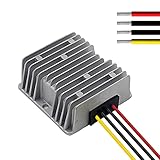
2. Car Voltage Stabilizer, 4A 48W Heavy Duty 12v Voltage Regulator
- [12V DC Voltage Stabilizer ] Heavy-duty car voltage regulator 12v accepts...
- [Protect Sensitive Electronics] This 12v dc voltage regulator safeguards...
- [Waterproof & Rugged Design] 12v surge protector built with IP67 waterproof...
- [Comprehensive Safety Protection] 12v voltage regulator Integrated...
- [Compact & Easy Installation] 12v DC Stabilizer Slim, lightweight build...
Best for: Heavy-duty 12V output for vehicles and off-grid use.
A 12V 4A output with 48W capacity gives this regulator a clear lane: steady power for sensitive 12-volt accessories instead of oversized electrical loads. That output profile makes it useful when you need a compact stabilizer that can keep car electronics, RV gear, or boat systems from seeing unstable voltage swings.
The input range of DC 10-36V is the key advantage here, because it lets the unit accept a wide variety of source voltages and still deliver a regulated 12V output. The 4A ceiling and 48W rating define the load it can handle, which is useful for navigation gear, small electronics, and other lower-draw devices. The listing also calls out cars, trucks, RVs, boats, campers, and solar power systems, so it is positioned for mixed-use power setups rather than just one vehicle type. Its waterproof and rugged design adds practical value when the install may see moisture, vibration, or outdoor exposure.
Pros
- DC 10-36V input supports varied power sources
- 12V 4A output fits many low-draw accessories
- 48W rating gives clear load limits for planning
- Waterproof, rugged housing suits harsher environments
Cons
- The 4A output cap is too low for high-draw equipment, so it is not a fit for heavy electrical loads.
This one makes the most sense for buyers who need stable 12V power for accessories and small systems. It is especially useful when the install may move between vehicles or include outdoor equipment.
| Specification | Details |
|---|---|
| Brand | Cocar |
| Model Number | 12T12-4A |
| Input Voltage | DC 10-36V |
| Output Voltage | 12V |
| Output Current | 4A |
| Wattage | 48W |
| Compatibility | Cars, trucks, RVs, boats, campers, solar power systems |
| Special Features | Waterproof and rugged design |
I’d choose this if the goal is dependable 12V regulation for accessories rather than whole-system power support. The input range is wide, and the output rating is easy to understand, which helps when you want a stabilizer for small electronics on vehicles or off-grid gear. It feels best suited to practical, moderate-demand use.
3. Voltage Stabilizer Car,12V Surge Protector Car Voltage Stabilizer 4A 48W

- [DC Voltage Regulator] This 12 volt Car Voltage Stabilizer, protect your...
- [With Fuse & More Safer] For the safety of users, our 12v converter are...
- [IP67 Waterproof Grade] This 12v dc converter adopted heat conduction...
- [Widely Used and Easy to Install] This voltage regulator only needs to...
- [Best After-Sales Service] Our company provide 12 months warranty. If the...
Best for: Compact surge protection with clear wiring rules.
A DC 10-36V input range paired with a 12V, 4A, 48W output makes this stabilizer easy to match to common automotive electrical setups. That combination is especially helpful for protecting 12V electronics from unstable voltage, peak surges, and wiring surprises in a vehicle that sees frequent accessory use.
The listing gives a direct operating window: DC 10-36V in and DC 12V out, with a maximum current of 4A and maximum power of 48W. Those numbers matter because they tell you exactly how much load the unit can support without guesswork. The product also includes a fuse, which is a concrete safety feature for protecting a circuit when conditions are less than ideal. Its use case extends to 12V electronics that need steady voltage, so it is aimed at radios, dash accessories, and similar low-power equipment. The wiring notes are specific too, including polarity confirmation and a required negative connection to GND, which can help avoid setup mistakes during installation.
Pros
- DC 10-36V input covers many vehicle sources
- 12V output supports standard automotive electronics
- Fuse adds circuit protection at the install point
- Clear wiring instructions help reduce setup errors
Cons
- The negative wire must connect to GND or the output will not change, so installation is less forgiving than simpler plug-in units.
This is a sensible choice for buyers who want basic voltage regulation with explicit wiring guidance. It works best for users comfortable checking polarity and connecting a fused circuit correctly.
| Specification | Details |
|---|---|
| Brand | THLY |
| Model Number | 12T12-4A |
| Input Voltage | DC 10-36V |
| Output Voltage | DC 12V |
| Maximum Current | 4A |
| Maximum Power | 48W |
| Included Protection | Fuse |
| Number of Items | 1 |
My take is that this fits a hands-on buyer who wants a simple 12V stabilizer with basic protection built in. The numbers are modest, but the clear operating limits make it easy to judge whether your equipment belongs in its range. If you are comfortable with wiring and want a compact surge-control option, it is a logical pick.
4. Digital Voltage Stabilizer Kit, 12V Battery Saver for Automotive Vehicles,

- 【Digital Display】: This fuel saver battery precisely presents the...
- 【Highly Effective】: This digital voltage stabilizer can prolongs...
- 【Stable Performance】: This automotive replacement alternator voltage...
- 【Wide Fitment】: Aftermarket digital voltage stabilizer fit all most...
- 【Simple Installation】: Convenient to install, match to your original...
Best for: Digital readout for battery-minded drivers.
A digital display gives this battery saver a practical edge because it shows voltage data instead of leaving you to guess what the charging system is doing. That makes it useful for drivers who want a voltage stabilizer that also helps them monitor what is happening in real time while the car is running.
The digital display is the standout functional element here because it turns the stabilizer into a visible diagnostic aid, not just a passive part. The listing says it is designed to meet or exceed OE specifications, which points to a replacement-style fit and factory-like expectations. It also claims to prolong battery life, increase headlight brightness, eliminate generator ripple, improve horn sound, and optimize audio quality, so the value is spread across lighting and cabin electronics. At 10.6 ounces, the unit stays relatively light, which is useful when you want a smaller add-on near existing vehicle wiring. For buyers who like to see voltage behavior directly, that display is the main reason this model stands out.
Pros
- Digital display shows voltage data directly
- 10.6-ounce weight keeps the unit light
- Claims to reduce generator ripple at the source
- Targets headlights, horn, audio, and battery life together
Cons
- No input or output voltage range is listed, so compatibility has to be inferred from the product type rather than verified from the data.
This model fits buyers who want visible voltage feedback along with stabilization benefits. It is a good match for drivers who prefer a monitored setup and care about multiple electrical symptoms at once.
| Specification | Details |
|---|---|
| Brand | Keenso |
| Item Weight | 10.6 ounces |
| Manufacturer Part Number | Keenso26k1qdphnu-02 |
| Display | Digital display |
| Performance Claims | Eliminates generator ripple, improves audio and headlights |
| Specification Basis | OE specifications |
I like this option for buyers who want to see what their charging system is doing instead of relying on guesswork. The digital display adds real utility, and the battery-and-lighting claims point to a product aimed at everyday driving symptoms. If monitoring matters to you as much as stabilization, this one is appealing.
5. 12V Spannungsregler DC DC Wandler, 144W, 10-36V Input, IP67

- [12V DC Voltage Regulator] Handles DC 10-36V input and provides stable DC...
- [Stable Power for 12V Electronics] The DC DC Wandler helps manage voltage...
- [IP67 Sealed Housing] Heat-conductive silica-gel filling and sealed...
- [Technical Details] Input: DC 10-36V; output: DC 12V, 12A, 144W...
- [Wide Application] Designed for cars, trucks, buses, boats, motors...
Best for: High-capacity sealed stabilizer for harsh installs.
A 144W rating with 12A output puts this regulator in a stronger class for 12V accessories that need more headroom. That higher capacity is useful when the buyer wants stable power for navigation, audio, or monitoring equipment without stepping up to a larger power system.
The listed DC 10-36V input and 12V output make the unit flexible across common vehicle and solar setups, while the 12A ceiling gives it more room than smaller 4A options. Its IP67 sealed housing is the key practical feature, since it supports outdoor installation in rain and demanding conditions where moisture resistance matters. The heat-conductive silica-gel filling and sealed construction are concrete design details that help explain why it is aimed at rougher environments. With 144W output power, the unit is better suited to applications that need more stable current than a basic accessory converter can provide. The listing also points to use in GPS navigation, car audio, LCD TV, intercom, and monitoring equipment, which makes the intended audience very clear.
Pros
- 12A output supports heavier accessory loads
- 144W capacity gives extra power headroom
- IP67 sealed housing suits rain and outdoor use
- Heat-conductive silica-gel filling supports demanding environments
Cons
- The modified sine wave output may be less ideal for some sensitive electronics than a cleaner waveform.
This is a strong fit for buyers who need more capacity and better environmental sealing. It makes the most sense in installations where weather exposure and modestly higher power demand are both part of the job.
| Specification | Details |
|---|---|
| Input Voltage | 10-36V |
| Output Voltage | 12V |
| Output Current | 12A |
| Wattage | 144W |
| Battery Capacity | 12 amp_hours |
| Output Power | 144 watts |
| Electrical Output Waveform | Modified Sine Wave |
I’d recommend this to someone who wants a tougher sealed unit with more output headroom than the smaller 4A stabilizers. The IP67 housing and 12A rating make it feel better suited to exposed installs and larger accessory loads. If your priority is stable 12V power in rough conditions, it is a compelling choice.
6. DROK DC-DC Stabilizer, 9V-36V to 12V Boost Buck Converter 5A

- PARAMETER --- DROK DC-DC converter input voltage range is DC 9~36V (12V...
- APPLICATION --- the 12v buck boost converter module can be used in...
- PROTECTION --- this voltage stabilizer comes with over-current protection...
- FEATURE --- the step down power module adopts high-integrated chip, stable...
- NOTE --- Leave a margin for the power supply to ensure it can long-term...
Best for: Balanced 5A converter for mixed vehicle gear.
A 5A output and 60W power rating put this DROK converter in a useful middle ground for vehicle electronics that need steadier 12V power without jumping to a larger module. That makes it practical for radios, displays, and light automation systems where a measured amount of current is enough.
The input range of DC 9-36V is broad, so the converter can work with many vehicle and solar sources while still producing a DC 12V output. Its 5A current and 60W power limit are the key numbers for buyers comparing load capacity, because they define how much equipment it can support in normal use. The application list includes car radio, audio, bus display screens, taxi advertising screens, LCD television, LED gear, solar systems, and interphones, showing how wide its use case is. Protection against over-current is listed as part of the design, which matters when the wiring environment is not perfectly controlled. For buyers who need a compact stabilizer for mixed electrical tasks, the spec set is nicely balanced.
Pros
- DC 9-36V input works across many sources
- 5A output suits moderate accessory loads
- 60W rating provides practical midrange capacity
- Over-current protection helps guard the circuit
Cons
- The 60W limit leaves less room for power-hungry accessories than higher-capacity regulators.
This converter suits buyers who need a balanced 12V stabilizer for moderate loads and varied equipment. It is especially practical for vehicle electronics that benefit from stable voltage but do not require a high-amperage unit.
| Specification | Details |
|---|---|
| Brand | DROK |
| Model Number | 200494 |
| Input Voltage | DC 9-36V |
| Output Voltage | DC 12V |
| Output Current | 5A |
| Output Power | 60W |
| Protection | Over-current protection |
| Number of Items | 1 |
My opinion is that this is a sensible middle-tier pick for buyers who want more capacity than a tiny 4A regulator but do not need a heavy-duty unit. The broad input range and over-current protection make it feel flexible and practical. It should satisfy users with moderate accessory demands and a fairly standard 12V setup.
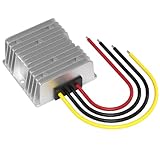
7. 8-40V to 12V Amp DC Voltage Stabilizer 120W Car Power
- Wide voltage input, built-in over current, over voltage, over temperature...
- Waterproof, dustproof, shockproof, small volume, simple installation.
- Not isolation shape DC regulated power supply module, high stability of...
- Great for on-board electrical appliances,LED displays, cable TV,outdoor...
- Condition: 100% Brand New. Shell Material: Aluminum. Type:DC-DC Boost&Buck...
Best for: Rugged 120W option for outdoor vehicles.
A 120W power rating and wide 8-40V input make this stabilizer a strong fit for vehicles and outdoor equipment that need reliable 12V conversion across variable sources. That combination gives buyers more flexibility when the electrical supply is not perfectly consistent and the install space is exposed to the elements.
The unit accepts 8-40V input and outputs 12V, so it covers a wider source range than many basic automotive stabilizers. Its 120W capacity is the headline number for buyers who need more room for onboard electrical appliances, LED displays, or communication gear. The listing also specifies over-current, over-voltage, over-temperature, short-circuit, and automatic protection, which is a meaningful set of safeguards for real-world use. Waterproof, dustproof, and shockproof construction adds another layer of practicality for outdoor or mobile setups. The small volume and simple installation language suggest a compact module that is easier to place in crowded vehicle or equipment spaces.
Pros
- 8-40V input supports variable power sources
- 120W rating suits moderate-to-higher accessory loads
- Multiple protection functions cover common electrical faults
- Waterproof, dustproof, and shockproof housing suits rough use
Cons
- No detailed current rating is listed, so load planning has to rely mainly on the 120W power figure.
This model fits buyers who want a sturdy 12V stabilizer for exposed or mobile installs. It has the protection set and output capacity to make sense for rugged everyday use.
| Specification | Details |
|---|---|
| Brand | Areyourshop |
| Model Number | I015-A039~PMS001AMZUS |
| Input Voltage | 8-40V |
| Output Voltage | 12V |
| Wattage | 120W |
| Protection | Over current, over voltage, over temperature, short circuit, automatic protection |
| Special Features | Waterproof, dustproof, shockproof |
| Number of Items | 1 |
I’d lean toward this if the stabilizer may live in a rougher environment or needs to handle changing input voltage. The protection list is a real selling point, and the 120W rating gives it more breathing room than smaller units. It looks well matched to outdoor or vehicle-mounted gear that needs dependable 12V regulation.
8. D1 Spec Voltage Stabilizer Battery Condenser Charging System

Best for: Specialty D1-spec battery condenser setup.
A D1 Spec voltage stabilizer battery condenser is aimed at buyers who want a more specialty-oriented charging system component rather than a basic universal converter. That focus matters if the goal is to support a car audio or vehicle battery setup with a part built around condenser-style voltage support.
The product identity itself is the main data point here: it is a D1 Spec voltage stabilizer battery condenser charging system under the Remix Custom brand. Because the listing does not provide dimensions, current, voltage range, or material details, the buyer is essentially choosing based on its intended specialty role rather than broad technical specification. That makes it most relevant to users who already know they need a D1-spec style component for an automotive electrical setup. Since the available data is limited, the best buying angle is compatibility with the intended system rather than comparison on hard numbers. In practice, this is a niche pick for a specific battery-condenser application.
Pros
- D1 Spec designation narrows the intended application
- Battery condenser charging system role is clearly stated
- Brand identification is provided for matching purposes
- Specialty format suits buyers seeking a dedicated component
Cons
- No electrical ratings or dimensions are listed, so performance and fit cannot be verified from the product data.
This is a niche choice for buyers already shopping within a D1-spec battery condenser category. It makes sense when the system callout matters more than broad universal compatibility.
| Specification | Details |
|---|---|
| Brand | Remix Custom |
| Product Type | Voltage stabilizer battery condenser |
| Spec | D1 Spec |
| System | Charging system |
I would only point someone to this if they are specifically targeting a D1-spec battery condenser setup. The listing is too sparse for broad comparison, but that also means the buyer likely already has a defined use case in mind. For a specialty application, it may be exactly the right kind of part.
9. 16V 58F Super Capacitor Module(Second-Hand) – 16V 58F Car Audio

- 【High-Performance 58F Capacity】 – Built with genuine ultracapacitor...
- 【Protects & Extends Battery Life】 – Stabilizes vehicle voltage...
- 【Enhances Ignition & Engine Response】 – Provides an instant power...
- 【Upgrades Car Audio Performance】 – Delivers stable voltage to...
- 【Compact & Easy Installation】 – Dimensions: 225mm × 50mm × 75mm...
Best for: High-capacity ultracapacitor for audio and starting.
A genuine 58F ultracapacitor module gives this unit a clear advantage for handling short bursts of demand in starting and audio systems. That capacity is what makes it useful when a buyer wants instant power compensation instead of relying only on the vehicle battery during peak draw.
The 58F capacitance is the key figure here because it indicates strong short-term energy storage for voltage support during high-demand moments. The module is rated for 16V operating and maximum voltage, which aligns it with 12V vehicle electrical systems that need headroom above nominal battery voltage. Its rectangular shape makes placement more predictable in an audio or battery bay, especially when space is limited and a tidy footprint matters. The product also states that it reduces voltage drop during peak demand, stabilizes vehicle voltage, and helps reduce frequent deep discharges on lead-acid batteries. That makes it relevant to start-stop vehicles, aging batteries, and heavier electrical loads where quick support is more valuable than continuous regulation.
Pros
- 58F capacitance supports short peak-demand bursts
- 16V operating and maximum voltage provide electrical headroom
- Rectangular shape helps with installation planning
- Targets voltage drop, battery discharge, and peak demand together
Cons
- It is listed as second-hand, so condition consistency may vary from unit to unit.
This module makes the most sense for buyers who need burst power support for audio or starting loads. It is a specialized pick for systems where voltage dip is the main concern.
| Specification | Details |
|---|---|
| Capacitance | 58 farad |
| Maximum Voltage | 16 volts |
| Item Shape | Rectangular |
| Product Type | Super capacitor module |
| Condition | Second-Hand |
My view is that this suits someone who understands capacitor modules and wants help with short, high-demand voltage dips. The 58F rating is the meaningful number here, and it points to fast compensation rather than general-purpose regulation. If your audio or starting system needs burst support, this is the most specialized option in the group.
10. VEVOR Dual Battery Isolator, 12V 300 Amp, Manual and Automatic

- High Battery Compatibility: With 300A high current, our dual battery...
- Manual & Automatic Modes: No more breakdowns! This voltage sensitive relay...
- Intelligent Delay Function: With an adjustable delay time of 3-60 seconds...
- Dual Voltage Display: The high-brightness display shows the accurate...
- All-Round Protection: Featuring overvoltage and undervoltage protection...

Best for: Dual-battery control for high-current systems.
A 300A current rating sets this dual battery isolator apart immediately, because it is meant for serious charging and switching in high-capacity dual-battery systems. That high current handling makes it a strong choice for buyers who need a control point between batteries rather than a small accessory stabilizer.
The 12V coil voltage and normally open contact type show that this unit is built around a relay-style switching function, not simple inline voltage smoothing. Its 300A contact current rating is the big spec for buyers comparing load handling, because it indicates compatibility with high-current battery management needs. Screw connectors and surface-mount installation give the installer a mechanical, permanent-style setup rather than a loose temporary connection. The manual and automatic modes are especially useful because they let the user choose between automatic management and one-click manual switching when a depleted main battery needs support from a charged auxiliary battery. Compatibility with lithium, lead-acid, and other battery types broadens its usefulness across mixed dual-battery systems.
Pros
- 300A rating suits high-current dual-battery systems
- Manual and automatic modes add control options
- Compatible with lithium and lead-acid batteries
- Screw and surface-mount setup supports secure installation
Cons
- It is an isolator rather than a voltage stabilizer, so it is aimed at battery switching instead of direct voltage smoothing.
This is the strongest fit for buyers managing a dual-battery setup that needs high-current switching. It is ideal when the job is battery coordination, not just voltage regulation.
| Specification | Details |
|---|---|
| Brand | VEVOR |
| Coil Voltage | 12 volts |
| Contact Type | Normally Open |
| Mounting Type | Surface Mount |
| Operation Mode | Automatic, Manual |
| Connector Type | Screw |
| Compatibility | Lithium, lead-acid and other battery types |
I’d choose this for a buyer with a true dual-battery setup and the need to manage high current cleanly. The 300A rating and the manual/automatic modes make it far more specialized than a basic stabilizer. If your system is about isolating and coordinating batteries, this is the right kind of hardware.
How to Choose the Best Car Battery Voltage Stabilizer
Voltage regulation and output stability
Choose a stabilizer that matches your vehicle’s electrical range exactly and keeps output steady at idle, cruise, and hard acceleration. A strong unit holds voltage close to the target without visible dips when headlights, blower, or audio systems switch on, and it reacts fast enough that dashboard electronics do not flicker. Look for a stated operating range that matches 12V systems, tight regulation tolerances, and a response time that is clearly specified rather than vague.
For most drivers, the best pick is a 12V stabilizer with tight regulation and quick load response for smooth daily use.
| Type | Best for | What to check |
|---|---|---|
| Wide-range regulator | Mixed driving conditions | Stable output across idle and acceleration |
| Fast-response unit | Accessory-heavy cars | Quick correction after load changes |
| Tight-tolerance stabilizer | Sensitive electronics | Minimal voltage swing from the target |
Safety protections and circuit control
Choose protection features that stop problems before they reach the car’s electronics. Good stabilizers include overvoltage and undervoltage cutoff, reverse-polarity protection, and short-circuit control, plus thermal shutdown or overload limiting that activates before the housing overheats. Weak units list only basic protection or leave out clear trigger points.
Look for fused input, clear fault indicators, and protections that reset safely after the issue clears. For the safest install, pick a stabilizer with full polarity, short, and heat protection plus visible fault control for everyday confidence.
| Protection | Best for | Good sign |
|---|---|---|
| Over/undervoltage | Sensitive modules | Defined cutoff thresholds |
| Reverse polarity | First-time installers | Immediate shutoff on wrong connection |
| Thermal/overload | Hot engine bays | Automatic limit or shutdown |
Build quality and installation fit
Pick a housing that survives heat, vibration, and cramped mounting spaces without loose parts or flexing connectors. A strong unit uses thick ABS, aluminum, or a metal-composite shell, sealed seams, and firm terminals that do not wiggle under cable tension. Compact dimensions matter under the hood, so check length, width, and height before buying, along with mounting holes or brackets that line up cleanly.
A tidy wiring layout with clearly marked inputs and outputs shortens installation time and reduces mistakes. The best choice for most buyers is a compact, heat-resistant unit with rigid terminals and simple mounting points.
Compatibility with vehicle electronics
Match the stabilizer to the full electrical load of the vehicle, not just the engine size. Cars, SUVs, and accessory-heavy setups need different headroom, especially when modern ECUs, infotainment screens, cameras, sensors, audio amplifiers, or auxiliary lighting draw power at the same time. Good compatibility means the stabilizer supports stable operation under combined loads and works cleanly with factory electronics without introducing faults or display errors.
Check rated amperage or power capacity, confirm 12V system support, and verify coverage for aftermarket additions. For upgrade-heavy vehicles, choose a higher-capacity stabilizer with broad ECU and accessory compatibility for the best fit.
| Vehicle need | Best type | Check before buying |
|---|---|---|
| Standard sedan | Mid-capacity stabilizer | Factory electronics support |
| SUV or crossover | Higher-capacity unit | Load handling under accessories |
| Audio or lighting upgrades | Heavy-duty stabilizer | Ampere rating and surge response |
Efficiency, warranty, and longterm value
Choose for low power loss, dependable support, and minimal upkeep so the stabilizer protects the battery instead of draining it. Efficient units waste less energy as heat, run cooler, and keep the charging system from working harder than necessary. Look for clear efficiency claims, a low idle draw, and a design that does not require frequent adjustment or replacement parts.
Warranty matters too: solid coverage and responsive brand support show that the maker stands behind the circuit and components. For long-term value, pick an efficient stabilizer with a clear warranty, low heat output, and simple maintenance for dependable service over time.
| Value factor | Best sign | What poor looks like |
|---|---|---|
| Efficiency | Low heat and low draw | Noticeable waste or warmth |
| Warranty | Clear coverage terms | Vague or short support |
| Maintenance | Simple, sealed design | Frequent checks or parts swaps |
Which Should You Choose?
- If you want smoother starts, brighter headlights, and a simple upgrade for everyday driving, choose a universal 12V stabilizer that focuses on ignition support and voltage smoothing.
- If you run trucks, RVs, boats, or other 12V setups with higher accessory loads, choose a heavy-duty DC-DC regulator with a wide 10-36V input and at least 4A to 12A output.
- If your main concern is protecting sensitive electronics from surges and unstable power, choose a 12V surge protector with built-in over-voltage and short-circuit protection.
- If you want real-time monitoring or need to track battery behavior closely, choose a stabilizer with a digital display that shows voltage clearly.
Quick Best Car Battery Voltage Stabilizer Buying Checklist
- Check voltage range. Confirm the stabilizer matches your vehicle’s electrical system and expected operating output.
- Look for strong protection features. Prioritize overvoltage, undervoltage, reverse polarity, and short-circuit protection.
- Inspect build quality. Choose a sturdy, heat-resistant unit that can withstand vibration and engine-bay conditions.
- Verify vehicle compatibility. Make sure it works with your car’s ECU, sensors, and added electrical accessories.
- Review installation requirements. Select a model with secure connectors and a mounting style that fits your available space.
- Consider efficiency and support. Favor low-loss operation, reliable performance, and clear warranty coverage.
How a Car Battery Voltage Stabilizer Regulates Electrical Fluctuations
A car battery voltage stabilizer works by smoothing sudden changes in system voltage so sensitive electronics receive a steadier supply. In a typical vehicle, voltage can rise during alternator output spikes or dip when heavy accessories switch on. The stabilizer helps buffer those swings, reducing stress on ECUs, infotainment units, lights, and sensor modules.
Some units use capacitor-based storage to absorb short bursts, while others rely on electronic regulation to clamp unstable voltage. The result is not extra power, but more consistent power delivery.
That distinction matters, because a stabilizer is meant to support electrical stability, not replace a weak battery or failing alternator.
Different Stabilizer Designs and Where They Fit Best
Voltage stabilizers are not all built the same, and their design affects how they behave in real driving conditions. Capacitor-style units are often compact and respond quickly to short transients, while regulator-based models are better suited to broader voltage control. Some are designed for add-on audio systems or performance builds, and others focus on OEM-style protection for daily drivers.
Understanding the trade-off between fast transient response and continuous regulation helps explain why one unit may feel more effective than another in a specific vehicle. Size, internal capacity, and connection method also influence installation flexibility and long-term practicality.
| Type | Best for | Main trade-off |
|---|---|---|
| Capacitor-based | Quick spike absorption | Limited sustained regulation |
| Electronic regulator | Steadier system control | More complex circuitry |
| Hybrid design | Mixed daily and accessory use | Usually bulkier hardware |
How to Install a Voltage Stabilizer Without Creating Electrical Problems
Proper installation is critical because even a well-made stabilizer can underperform if the wiring is loose or the grounding point is poor. Most units should be mounted securely in a dry, ventilated location away from heat and moving parts. The positive lead should be connected with the correct fuse protection, and the ground connection should use clean metal contact for low resistance.
Before finalizing the install, it helps to check battery terminals, inspect cable condition, and confirm the alternator is charging within normal range. If the vehicle has advanced electrical controls or a start-stop system, the installer should verify compatibility with the factory wiring layout rather than guessing at a universal connection point.
Maintenance Checks That Keep the Stabilizer Performing Properly
A voltage stabilizer does not usually require frequent service, but basic inspections help preserve reliability. Look for corrosion on terminals, loose mounting hardware, cracked insulation, or signs of heat damage around the wiring. If the vehicle begins showing dimming lights, erratic accessories, or warning indicators, the stabilizer should be checked alongside the battery and charging system.
Cleaning terminal contacts and ensuring the ground remains tight can prevent many common problems. It is also wise to verify that the unit is not exposed to water intrusion or excessive engine-bay heat.
Regular visual checks take only a few minutes and can prevent intermittent electrical issues that are hard to diagnose later.
Common Compatibility Problems With Modern Vehicle Electronics
Compatibility is one of the most overlooked issues when using a car battery voltage stabilizer. Modern vehicles often have sensitive control modules, smart charging systems, and battery monitoring sensors that react differently to added devices. A stabilizer that works well in one car may behave unpredictably in another if the alternator strategy or grounding architecture is different.
Vehicles with high electrical loads, turbo timers, large audio systems, or aftermarket lighting may need a unit that can handle frequent transients without confusing factory diagnostics. It is also important to avoid stacking multiple power-conditioning devices unless the manufacturer explicitly approves it, since overlapping functions can create measurement errors or reduce overall effectiveness.
Frequently Asked Questions
What Does A Car Battery Voltage Stabilizer Actually Do?
A car battery voltage stabilizer helps keep a vehicle’s electrical supply steady, which is important for the best car battery voltage stabilizer use case. It smooths sudden voltage swings caused by load changes, helping protect sensitive electronics, lights, and audio components from inconsistent power delivery.
How Do I Know If A Voltage Stabilizer Is Compatible With My Car?
A voltage stabilizer is compatible when its input and output range matches your vehicle’s electrical system and accessory demands. The best car battery voltage stabilizer should also fit your car’s wiring layout and support modern electronics such as ECUs, sensors, and infotainment units.
What Safety Features Should I Look For First?
Safety features matter because the best car battery voltage stabilizer should protect both the battery and onboard electronics. Look for overvoltage, undervoltage, reverse-polarity, short-circuit, and thermal protection, since these controls reduce the risk of damage during installation or heavy electrical loads.
Can A Voltage Stabilizer Help With Aftermarket Accessories?
Yes, a voltage stabilizer can help support aftermarket accessories by keeping power delivery more consistent under load. The best car battery voltage stabilizer is useful for audio systems, auxiliary lighting, and other add-ons that can create voltage dips when they start drawing current.
How Important Is Installation Quality When Choosing One?
Installation quality is very important because the best car battery voltage stabilizer only performs well when it is mounted securely and wired correctly. A compact unit with solid connectors, heat-resistant housing, and clear terminal markings is easier to install and more reliable over time.
Final Suggestions
Choosing the best car battery voltage stabilizer can help keep your vehicle’s electrical system steadier, protect sensitive components, and support smoother performance under changing loads. It is a practical upgrade for drivers who want better reliability, cleaner power delivery, and added peace of mind. With the right features and fit, you can make a smart choice that supports your vehicle for the long run.