Top 10 Best Battery Kill Switch For Car
As an Amazon Associate we earn from qualifying purchases.
Best battery kill switch for car setups play a bigger role than many drivers realize. In modern vehicles, a smart disconnect can help reduce parasitic drain, improve theft deterrence, and add an extra layer of electrical control when a car sits unused. The best battery kill switch for car buyers often compare compact cutoff switches, anti-theft battery disconnects, and heavy-duty power isolators, all built around reliable terminals, corrosion-resistant materials, and fast manual or remote operation.
From daily drivers to project cars, these components can influence safety, maintenance, and battery life in subtle but important ways. Understanding how each design handles current load, fitment, and ease of use is where the real difference begins, and the most interesting options are just ahead.
Quick Comparison Table of Best Battery Kill Switches for Cars
| Product Name | Type | Voltage | Current | Best For | Check Price |
|---|---|---|---|---|---|
| Joinfworld Top Post Battery Disconnect Switch | Top post | 12-48V | 250A | Cars and RVs | Check Price |
| Top Post Battery Disconnect Switch 12V | Top post | 12V | 300A | Seasonal storage | Check Price |
| Remote Battery Disconnect Switch 12v, Kill | Remote | 12V | 250A | Anti-theft use | Check Price |
| Remote Battery Disconnect Switch 12v, Kill | Remote | 12V | 240A | Auto voltage cutoff | Check Price |
| 12V 240A Remote Battery Disconnect Switch | Remote | 12V | 240A | Heavy-duty protection | Check Price |
| RED WOLF Top Post Battery Switch | Top post | 12-48V | 250A | Negative terminal | Check Price |
| BURMONG Battery Disconnect Switch 12V-48V 275A | Rotary | 12-48V | 275A | Universal vehicles | Check Price |
| Remote Battery Disconnect Switch 12V, 240A | Remote | 12V | 240A | Cars and trucks | Check Price |
| Remote Battery Disconnect Switch 12V 240A | Remote | 12V | 240A | Voltage display | Check Price |
| 250A Smart Remote Battery Disconnect Switch | Smart remote | 12V/24V | 250A | Multi-vehicle use | Check Price |
In-depth Reviews of the Best Battery Kill Switch for Car
1. Joinfworld Top Post Battery Disconnect Switch 12V-48V Battery Kill Switch
No products found.
Best for: Simple top-post manual control.
A 250A DC continuous rating and 1000A DC cranking rating give this top-post disconnect the headroom for routine battery isolation and short high-load starts. The 12V-48V operating range makes it useful across multiple vehicle setups, while the on/off two-position layout keeps the battery cut-off action direct for storage, service, or theft deterrence.
The clamp-style top-post connection, negative battery placement, and tapering post make it a straightforward fit for many car, truck, RV, and boat batteries without adding a remote module. A 2-way circuit and normally open contact type keep the switch behavior simple and predictable when power needs to be interrupted. The surface-mount format, hinge lever actuator, and spade terminal are practical details for a clean mechanical install. The 90 °C upper temperature rating adds confidence for engine-bay use where heat is part of the job. Touch control keeps operation immediate, and the single-position layout keeps the user interface easy to understand at a glance.
Pros
- 250A DC continuous rating handles regular battery isolation
- 1000A DC cranking rating supports brief high-demand starting loads
- 12V-48V operating range covers several vehicle types
- Clamp connection with tapering post simplifies top-post installation
Cons
- Only one on/off position, so there is no remote or automatic cut-off feature.
This is a straightforward choice when you want manual battery isolation without extra electronics. It suits drivers who value a simple switch for storage, service, or basic anti-drain use.
| Specification | Details |
|---|---|
| Circuit Type | 2-way |
| Contact Type | Normally Open |
| Connector Type | Crimp |
| Mounting Type | Surface Mount |
| Actuator Type | Hinge Lever |
| Compatible Vehicle Type | Car, Truck, RV, Boat |
I’d pick this for someone who wants a direct, no-nonsense battery cut-off on a top-post setup. The clamp-style installation and broad voltage range make it appealing for mixed vehicle use, especially when the goal is simple power isolation rather than remote convenience. It makes the most sense for owners who prefer a manual lever and clear on/off behavior.
2. Top Post Battery Disconnect Switch 12V, Car Battery Disconnect Switch

- ...
- ...
- ...
- [𝐄𝐚𝐬𝐲 𝐭𝐨 𝐈𝐧𝐬𝐭𝐚𝐥𝐥] This battery...
- ...
Best for: Seasonal storage and maintenance use.
A 300A current rating and 3600-watt capacity make this top-post disconnect a strong fit for vehicles that sit unused for stretches and need dependable power isolation. The Nylon 66 body with solid brass construction points to a practical setup for reducing drain during parking, while the rotary, three-position design gives the user a more tactile control point than a basic flip switch.
The clamp connector, panel-mount format, and screw terminal give this switch a tidy mechanical layout for vehicles where a fixed install is preferred. Its 12V operating voltage and 2-way circuit make it straightforward for cars, RVs, boats, trucks, ATVs, marine vessels, motorcycles, tractors, campers, and trailers. The 185 °F upper temperature rating is a useful detail for warmer engine compartments and enclosed mounting spots. A mechanical knob controller keeps operation manual and obvious, and the full control type makes the switch easy to understand. Three positions are especially useful when you want more than a simple binary feel in the control path.
Pros
- 300A current rating supports heavier battery loads
- Nylon 66 and solid brass construction add useful material strength
- Three-position rotary control offers more tactile switching
- Compatible with cars, RVs, boats, trucks, ATVs, and more
Cons
- Panel-mount installation is less convenient if you want a quick clamp-on setup.
This one makes the most sense for seasonal storage and vehicles that need a fixed manual disconnect. It is a strong fit when you want a durable switch with broad compatibility and a more deliberate rotary control.
| Specification | Details |
|---|---|
| Wattage | 3600 watts |
| Circuit Type | 2-way |
| Connector Type | Clamp |
| Mounting Type | Panel Mount |
| Actuator Type | Rotary |
| Number of Positions | 3 |
| Compatible Vehicle Type | Car, RV, Boat, Truck, ATV, Marine, Motorcycle, Tractor |
I like this option for owners who store a vehicle for weeks or months at a time and want a dependable way to stop drain. The rotary knob and panel mount suit a permanent installation better than a temporary clamp-style tool. If your priority is stable, everyday access to battery isolation across multiple vehicle types, this is an easy one to consider.
3. Remote Battery Disconnect Switch 12v, Kill Switch for Car Truck,

- Ultimate Protection: The remote battery disconnect switch easily solves the...
- Premium Quality: Remote battery kill switch Instantaneous current of up to...
- Effortless Installation: Our upgraded remote battery kill switch for cars...
- Versatile Use: Our 12V remote kill switch for cars is suitable for cars...
- Reliable Quality: If it cannot be used normally after installation, please...
Best for: Remote control with anti-drain focus.
A 250A rated current and 450A instantaneous current give this remote disconnect the muscle to interrupt battery power while keeping everyday operation off the battery terminals. The push-button actuator, two-position layout, and through-hole mounting make it a clean fit for drivers who want remote control without adding a complicated dashboard switch bank.
The normally closed contact type and clamp connector define a setup aimed at controlled power interruption for cars, trucks, RVs, travel trailers, campers, and motorcycles. A 12V operating voltage keeps the unit in the common automotive range, while the 3000-watt rating shows it is meant for substantial electrical systems. The 2-way circuit and through-hole mount support a secure installation, and the X-10 connectivity protocol gives the remote control path its functional identity. The 200 °F upper temperature rating matters when the switch lives near heat. Two positions keep the interface simple, so the user is focused on battery protection rather than managing extra modes.
Pros
- Remote control lets you disconnect power without opening the battery area
- 450A instantaneous current helps with brief high-load events
- Normally closed contact type supports a defined default state
- 200 °F upper temperature rating suits warmer under-hood conditions
Cons
- Through-hole mounting is less flexible than a simple top-post clamp install.
This is a good match for buyers who want remote battery isolation with a straightforward control layout. It fits best when the main goal is battery drain prevention without giving up access from the driver’s seat or key area.
| Specification | Details |
|---|---|
| Instantaneous Current | 450 A |
| Wattage | 3000 watts |
| Circuit Type | 2-way |
| Mounting Type | Through Hole Mount |
| Actuator Type | Push Button |
| Control Type | remote |
| Compatible Vehicle Type | Cars, Trucks, RVs |
I’d choose this for someone who wants the convenience of remote battery cut-off and does not mind a more involved install. The higher instantaneous current and push-button control make it appealing for practical daily use, especially if the vehicle sits often. It is most satisfying for drivers who value quick access to battery isolation from inside the cabin or from a remote control path.
4. Remote Battery Disconnect Switch 12v, Kill Switch for Car Truck,

- Smart Voltage Safet Kill Switch: If the voltage is lower than 11.8V, the...
- Iterative upgrade: Remote battery disconnect switch is an upgraded version...
- Manual Control Option: Remote battery disconnect switch 12v includes a...
- Protect and extend battery life: Due to its long-term parking function...
- Reliable Quality: Your satisfaction is our motivation and quality...
Best for: Automatic low-voltage protection.
A 240A current rating paired with a 2880-watt load limit makes this remote disconnect a practical guard for cars, trucks, and RVs that need battery protection rather than constant manual attention. The low-voltage cutoff at 11.8V and the automatic 120-second shutoff sequence give this switch a clear function: preserve battery reserve before the vehicle is stranded.
The surface-mount design, rotary actuator, and through-hole terminal make the installation style more fixed than portable, which suits a permanent power-management setup. Remote and manual controller types offer two ways to operate it, so the driver can choose convenience or direct input. The X-10 connectivity protocol keeps the control path tied to remote operation, while the 12V operating voltage keeps it in standard vehicle territory. A 300 °C upper temperature rating is an unusually high heat tolerance figure, useful where engine-bay temperatures can climb. Because the switch is for cars, trucks, and RVs, it suits owners who want both anti-drain behavior and simple override control in one unit.
Pros
- 11.8V cutoff helps protect batteries from deep discharge
- 120-second auto shutoff adds practical battery management
- 300 °C upper temperature rating handles high-heat environments
- Remote and manual control options improve day-to-day usability
Cons
- Surface-mount installation is less discreet than a hidden inline style.
This is the strongest pick for someone who wants automatic low-voltage protection as part of the disconnect function. It works best for drivers who need battery preservation more than a purely manual kill switch.
| Specification | Details |
|---|---|
| Wattage | 2880 watts |
| Mounting Type | Surface Mount |
| Actuator Type | Rotary |
| Controller Type | Remote, Manual |
| Control Type | remote |
| Compatible Vehicle Type | Car, Truck, RV |
| Connectivity Protocol | X-10 |
I like this most for owners who want more than a simple on/off cutoff. The automatic low-voltage behavior is a real advantage if the vehicle sits unused or the battery is prone to drain. If you want a remote disconnect that also acts like a battery safeguard, this is the most purpose-driven choice in the group.
5. 12V 240A Remote Battery Disconnect Switch Kill Switch Automatic Power
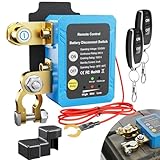
- Heavy Duty: This remote battery disconnect switch handles 240A continuous...
- Energy Efficient: Featuring an advanced magnetic latching relay, kill...
- Protect and Prolong Your Battery's Life: This power shut off switch helps...
- Safe Driving Guard: For driving safety, the remote is disabled during...
- Easy Installation: This 12V battery cut off switch is designed for easy...
Best for: Low-draw remote cutoff for daily use.
A 240A continuous rating and 1000A instant current make this remote battery disconnect suitable for regular vehicle isolation without adding unnecessary bulk to the control path. The magnetic latching relay and 3mA standby draw are the key facts here, giving the switch a battery-saving profile that matters when the car, truck, or boat spends time parked.
The 12V operating voltage, panel-mount format, and push-button actuator keep the setup geared toward a fixed install with remote control convenience. A normally open contact type and 1-way circuit create a simple power path, while the screw terminal and plug-in connector give the unit a practical connection style. The 2880-watt rating is enough to support common automotive electrical demands, and the 11.8V cutoff protects the battery when voltage falls too low. The 90 °C upper temperature rating is a useful operating limit for enclosed spaces. Compatible with auto, car, truck, and boat applications, this switch is aimed at drivers who want a low-draw remote solution that stays out of the way until needed.
Pros
- 3mA standby draw keeps parasitic load very low
- 1000A instant current supports brief surge conditions
- 11.8V low-voltage cutoff helps protect the battery
- Magnetic latching relay reduces ongoing power consumption
Cons
- The 1-way circuit offers less wiring flexibility than a 2-way setup.
This is a smart fit for buyers who care about minimizing standby draw while keeping remote battery isolation close at hand. It works especially well for parked vehicles, boats, and daily drivers that still need a simple cutoff tool.
| Specification | Details |
|---|---|
| Instant Current | 1000 A |
| Standby Consumption | 3 mA |
| Wattage | 2880 watts |
| Circuit Type | 1-way |
| Mounting Type | Panel Mount |
| Control Type | remote |
| Compatible Vehicle Type | Auto Car Truck Boat |
I’d recommend this for someone who wants a remote kill switch with very low standby draw. The 3mA figure is the real selling point because it keeps the switch from becoming its own drain. If your main priority is preserving battery life while keeping remote control, this is one of the most sensible picks here.
6. RED WOLF Top Post Battery Switch for 15mm-17mm Negative Terminal,

- Working Parameters: Engineered for standard 15-17mm (0.59-0.67in) negative...
- Prevent Battery Drain: DC 12V-48V Battery cut off switch prevents battery...
- Removable knob Security Top Post Battery Switch: Battery kill switch...
- Easy installation: Top post battery quick disconnect switch...
- Solid & Durable Quality Build: Top Post Battery disconnect switch adopts...
Best for: Long-post vehicles and heavy equipment.
An M8-stud top-post design on 15-17 mm negative battery posts gives this switch a direct fit for many car, truck, RV, boat, and marine setups. That sizing matters because it lets you isolate power without cable gymnastics, making it practical for vehicles that sit idle or run auxiliary DC systems from 12V to 48V.
Its 250A continuous rating, 400A intermittent rating, and 700A cranking rating make it suitable for demanding starts and heavier electrical loads. The two-position ON/OFF layout keeps operation simple, while the normally open contact type means the circuit stays open until you choose to connect it. A screw connector and blade terminal support a secure, straightforward installation on a surface mount. The switch is also listed for heavy duty equipment, so it suits buyers who need one disconnect solution across multiple vehicle types rather than a one-off specialty part. The 100°C upper temperature rating adds peace of mind in hot engine-bay environments.
Pros
- 15-17 mm negative-post fit matches standard top-post batteries
- 250A continuous rating supports everyday disconnect use
- 700A cranking rating covers demanding start-up loads
- Works with 12V-48V systems across multiple vehicle types
Cons
- Requires a 15-17 mm negative battery post, so it will not fit smaller or nonstandard terminals.
For anyone wanting a simple manual battery cut-off on standard top-post systems, this is a practical fit. It makes sense for vehicles, boats, and equipment that need dependable isolation during storage or service.
| Specification | Details |
|---|---|
| Product Type | Top Post Battery Switch |
| Compatible Battery Post Size | 15mm-17mm negative terminal |
| Number of Positions | 2 |
| Mounting Type | Surface Mount |
| Connector Type | Screw |
| Control Type | Manual |
I would pick this for a buyer who already knows they have a standard top-post negative terminal and wants a straightforward disconnect without extra electronics. The 12V-48V range and heavy starting ratings make it especially useful for mixed-use fleets, RVs, boats, and equipment that may sit unused. If your priority is simple on/off isolation with broad vehicle compatibility, it looks like a sensible choice.
7. BURMONG Battery Disconnect Switch 12V-48V 275A – Universal Battery Kill
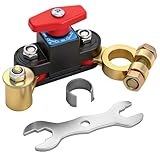
- 【Extend Battery Life & Prevent Drain】This battery disconnect switch...
- 【Easy & Secure Installation】Featuring a simple bolt-on design, the...
- 【Durable & Corrosion-Resistant Build】Constructed with a solid brass or...
- 【Safety Protection & Power Isolation】Acting as a reliable safety...
- 【Versatile 12V-48V Application】With a continuous rating of up to 275A...
Best for: Multi-vehicle storage protection.
A universal 12V-48V disconnect with a rotary ON/OFF layout gives this switch broad usefulness across cars, trucks, RVs, boats, ATVs, and campers. That range lets a buyer use one disconnect on different machines, while the clamp connector supports fast wiring when the goal is stopping parasitic drain during storage or travel prep.
The 275A model rating and 600-watt wattage figure point to a switch meant for practical battery isolation rather than light-duty tinkering. Its two-position operation keeps the user path simple, and the normally open contact type helps the circuit stay separated until you turn it on. Surface-mount installation makes placement flexible, while the screw terminal gives a mechanically secure connection once mounted. The 176°F upper temperature rating is useful in warmer compartments, and the full-control wording matches buyers who want direct manual authority over the battery circuit. It also works with battery banks, which helps if the same disconnect needs to serve more than one power source.
Pros
- 12V-48V compatibility suits many vehicle and storage setups
- 275A model rating supports broader battery-disconnect use
- Rotary switch type gives clear manual control
- Clamp connector supports straightforward installation on many systems
Cons
- The listed current rating is 12 A in the technical data, so buyers should verify the application if they need a high-load switch.
This is a practical pick for owners who want one disconnect across several vehicle types and battery-bank setups. It fits best when the main goal is stopping drain during storage with simple manual control.
| Specification | Details |
|---|---|
| Wattage | 600 watts |
| Switch Type | Rotary |
| Connector Type | Clamp |
| Number of Positions | 2 |
| Mounting Type | Surface Mount |
| Compatible Devices | Cars, Trucks, RVs, Marine Boats, ATVs, Campers, Battery Banks |
I like this option for people who need one switch that can move between a truck, camper, boat, or ATV without being locked to a single use case. The clamp connector and rotary action make it easy to understand and install, and the 12V-48V range is genuinely handy. Just pay attention to the technical current figure if your application pulls heavily, because that detail matters more than the broader marketing language.
8. Remote Battery Disconnect Switch 12V, 240A, Kill Switch for Car

- [Powerful Disconnection with High Capacity]: This battery disconnect switch...
- [Innovative Magnetic Latching for Energy Efficiency]: Our remote battery...
- [Intelligent LED Voltage Display for Real-Time Monitoring]: The LED voltage...
- [Effortless Installation and Safe Operation]: Designed for simple setup...
- [Battery Protection and Lifespan Extension]: Using this wireless battery...
Best for: Remote control for 12V systems.
A remote control battery disconnect with a 240A rating and 12V operation puts one-button isolation in reach for cars, trucks, RVs, and boats. That means you can cut power without opening the hood, which is useful when the battery is tucked away or the vehicle is parked for long stretches.
The switch claims up to 1000A instant current handling while drawing only 3mA on standby, so it is aimed at preserving battery life between uses. The power-off threshold of 11.8V ± 0.2V adds an automatic safeguard against deep discharge, which helps protect batteries in storage or infrequent-use vehicles. Its latching magnetic design is intended to keep energy use low, and the remote control method reduces the need to reach the battery directly. A panel-mount format, one-position layout, and plug-in connector keep the hardware profile compact. The 90°C upper temperature rating is lower than some alternatives, so it makes more sense for moderate-heat locations than extreme engine-bay mounting.
Pros
- 240A rating suits common 12V vehicle disconnect needs
- 3mA standby draw helps reduce idle battery drain
- 11.8V ± 0.2V cutoff adds low-voltage protection
- Remote control lets you isolate power without accessing the battery directly
Cons
- The 90°C upper temperature rating is lower than many under-hood switches, so location choice matters.
This is a strong fit if you want remote operation and automatic low-voltage protection in a 12V vehicle. It is especially useful for owners who store cars, RVs, or boats and want quick power isolation without opening panels.
| Specification | Details |
|---|---|
| Standby Current | 3 mA |
| Power-off Threshold | 11.8V ± 0.2V |
| Control Method | Remote |
| Mounting Type | Panel Mount |
| Number of Positions | 1 |
| Compatible Vehicles | Auto, truck, RV, boat |
I would choose this for someone who values convenience and automatic protection more than simple mechanical switching. The remote access is the biggest advantage because it keeps the disconnect easy to use when the battery is hard to reach. If the vehicle lives in a moderate-temperature spot and the 12V use case matches, it offers a very practical balance of control and low standby draw.
9. Remote Battery Disconnect Switch 12V 240A with LED Voltage Display

- 👍【What's Battery Disconnect Switch Like】Remote Battery Disconnect...
- 👍【Intelligent Protection】12V Battery Cut Off Switch is Smarter, When...
- 👍【Easy to Install】This Battery Kill Switch is Connected to the...
- 👍【How Battery Kill Switch Work】The Auto Anti Theft Kill Switch Stops...
- 👍【Widely Application】This Battery Kill Switch 12V is Suitable for...
Best for: Auto-cutoff with voltage display.
A 12V remote disconnect with an LED voltage display gives you two useful tools in one body: power isolation and battery status visibility. That combination helps a driver see what the battery is doing before starting, while the 240A rating keeps the switch relevant for cars, trucks, boats, RVs, and more.
Its standby current is only 0.001A, so the switch itself adds very little drain while parked. The starting current can reach 1200A, which is helpful when a system needs a brief surge during startup. An automatic disconnect below 11.8V after 300 seconds gives the battery a deeper protection layer than a purely manual switch. The push-button actuator and remote/touch control methods make operation simple from the cabin or a reachable mounting point. With a surface mount, blade terminal, and 2-way circuit design, the unit is set up for straightforward installation. The one-position layout keeps the interface uncluttered for users who want a single clear power state.
Pros
- LED voltage display shows battery status at a glance
- 0.001A standby current minimizes self-drain
- 1200A starting current supports short high-load bursts
- Automatic disconnect below 11.8V helps protect against over-discharge
Cons
- The switch has only one position, so it offers less manual flexibility than two-position disconnects.
This model makes the most sense for buyers who want both battery protection and live voltage feedback. It is especially helpful in vehicles that sit often, where seeing and preserving battery health matter every time you park.
| Specification | Details |
|---|---|
| Standby Current | 0.001A |
| Auto-disconnect Threshold | 11.8V |
| Auto-disconnect Delay | 300s |
| Control Method | Remote, Touch |
| Actuator Type | Push Button |
| Mounting Type | Surface Mount |
I like this one for buyers who want a smarter disconnect rather than a plain cutoff. The voltage display and automatic low-voltage behavior make it easier to manage a battery that gets parked often or used seasonally. If you want a clear readout plus remote control in a 12V setup, it is one of the more useful choices in the group.
10. 250A Smart Remote Battery Disconnect Switch 12V 24V – Kill

- 【1-Click Protection - Upgraded Heavy Duty 250A】Tap the keychain remote...
- 【Dual Control Mode - Remote & Manual Convenience】Switch effortlessly...
- 【Smart Voltage Guardian - 12/24V Wide Voltage Compatibility】The kill...
- 【Long-Lasting Performance - Ultra-Low Standby Current】With a standby...
- 【Premium Copper & Anti-False Contact Protection - Durable...
Best for: Dual-control anti-theft setups.
A 250A heavy-duty disconnect with push-button and remote control gives this switch a flexible way to cut power on 12V cars, RVs, trucks, trailers, ATVs, and marine boats. That means the buyer can use one unit for theft prevention, storage protection, or wiring changes without leaving the battery accessible all the time.
The normally closed contact type keeps the circuit behavior straightforward for a disconnect application, while the 1-way circuit design focuses the switch on a single battery path. Its clamp connector and screw terminal combine quick connection with a secure hold once installed. The surface-mount format and one-position layout keep the hardware compact, which is useful when space near the battery is limited. Because it supports dual control, the user can isolate power locally or through the remote, depending on access. The 250A current rating is a practical match for everyday vehicle disconnect needs, and the 12V operating voltage keeps it centered on common automotive systems rather than wide-voltage specialty rigs.
Pros
- 250A rating fits common 12V vehicle disconnect use
- Dual control adds both remote and push-button operation
- Clamp connector supports easier attachment during installation
- Surface-mount design keeps the switch compact near the battery
Cons
- It is limited to 12V systems, so it will not suit higher-voltage battery setups.
This is a sensible pick for someone who wants anti-theft power cut-off plus the option to operate it from two places. It fits best on 12V vehicles where quick access and simple power isolation both matter.
| Specification | Details |
|---|---|
| Control Method | Push Button, Remote |
| Control Type | dual |
| Mounting Type | Surface Mount |
| Number of Positions | 1 |
| Connector Type | Clamp |
| Terminal | Screw |
| Circuit Type | 1-way |
| Compatible Vehicle Type | Car, RV, Truck, Trailer, ATV, Marine Boat |
I would point to this switch for people who want a practical anti-theft and storage solution without moving up to a more complex system. The dual-control setup is the real advantage because it gives flexibility when the battery is hard to reach. If your use is strictly 12V and you want one switch for several vehicle types, it looks well matched.
How to Choose the Best Battery Kill Switch for Car
Current rating and load capacity
Choose a switch with a continuous current rating above your vehicle’s normal draw and a peak rating that clears the starter surge without strain. For most 12-volt cars and light trucks, the right choice is a unit rated for the exact battery system voltage and a load margin that covers accessories, audio amplifiers, and cold-start demand. Weak picks list only vague amp claims, thin terminals, or no surge rating at all.
Strong picks state both continuous and peak capacity clearly and use thick copper or brass contacts. For standard passenger vehicles with modest electrical loads, pick a true 12-volt disconnect with a clearly stated peak rating and heavy-duty terminals.
Installation style and fit
Choose the installation style around your battery layout and how often you want access. Manual knife-style and rotary cutoff switches suit direct control and simple wiring, while remote and anti-theft versions suit hidden operation and fast shutdown from inside the cabin. Check whether the terminals accept ring lugs or clamp-style ends, because clean cable routing depends on the connection type.
Measure battery tray clearance before buying, and match the switch to top-post or side-post hardware exactly. For most daily drivers, pick a compact manual or remote cutoff that lists both post compatibility and cable terminal type.
| Type | Best for | What to check |
|---|---|---|
| Manual rotary | Simple service access | Compact body, direct cable path, clear on/off stop |
| Knife-style cutoff | Fast visible disconnection | Heavy contacts, firm lever lock, enough mounting room |
| Remote cutoff | Cabin control and theft deterrence | Relay quality, wiring length, dependable trigger switch |
| Post-specific adapter style | Top-post or side-post fitment | Exact terminal match, solid clamp engagement, no wobble |
Safety features and isolation quality
Pick a switch that fully isolates the battery so parasitic draw stops completely, not just reduced. Good units give a crisp mechanical break, tight contact pressure, and spark-reduction features such as precharge paths or anti-arc housings. Poor units feel loose, show exposed contact points, or reconnect too easily from vibration.
For theft protection, the best choice has a removable key, covered lever, or hidden actuator that prevents accidental bumping and deliberate tampering. For cars stored for long periods, pick a full-disconnect model with secure locking and zero-play contact design.
Build materials and weather resistance
Choose corrosion-resistant metal parts and a sealed body if the switch will live near road spray, engine heat, or a damp battery tray. Brass, copper, tinned terminals, stainless hardware, and reinforced polymer housings hold up far better than thin plated steel or bare alloys. Heat tolerance matters near turbocharged or tightly packed engine bays, so look for a clear temperature range and a housing that does not soften or crack.
For rough-road use, pick a sealed, vibration-resistant switch with protected screws and enclosed terminals. Heavy-duty sealed brass or copper switches are the best fit for trucks, winter use, and exposed mounting locations.
| Material / Feature | Best for | What good looks like |
|---|---|---|
| Tinned copper or brass contacts | Low resistance and long life | Thick contact surfaces, no rough plating, firm clamp force |
| Stainless hardware | Corrosion resistance | Rust-free screws, washers, and fasteners |
| Sealed polymer housing | Moisture and dust exposure | Tight cover fit, protected internals, clean edges |
| Heat-rated body | Engine-bay placement | Stable shape, no softening near hot components |
Ease of use and maintenance
Pick the switch you will actually use without fuss, because a disconnect that takes effort gets ignored. Large, clearly marked controls, positive detents, and obvious on/off position indicators make daily use faster and safer. Infrequent-service owners do best with simple manual access and low-maintenance contacts, while storage users need a switch that stays clean and tight over time.
Check for accessible terminals, removable covers, and hardware that can be retightened without full disassembly. For the easiest ownership, choose a clearly labeled cutoff with smooth action, minimal maintenance, and a control you can reach without tools.
Which Should You Choose?
- If you want a simple manual cutoff for a standard 12V car, choose a top-post on/off switch with a 250A continuous rating and 1000A cranking support.
- If your vehicle sits unused for weeks or you store it seasonally, choose a disconnect switch built to stop parasitic drain and preserve battery charge during long parking periods.
- If you need to control power from outside the vehicle or want theft protection, choose a remote kill switch with key fob operation and automatic shutoff features.
- If you drive a truck, RV, or higher-demand 12V system and want extra protection, choose a heavy-duty remote switch rated around 240A-250A with low-voltage cutoff and instant surge handling.
Quick Best Battery Kill Switch For Car Buying Checklist
- Confirm amperage rating enough for your car’s electrical load and starting demands.
- Choose the right fit for top-post, side-post, or custom battery terminals.
- Look for secure isolation that truly cuts parasitic drain when off.
- Prioritize corrosion resistance for long-term reliability in a harsh engine-bay environment.
- Check switch accessibility so operation is quick, clear, and convenient.
- Verify hardware quality including clamps, screws, and mounting strength.
How a Car Battery Kill Switch Interrupts Power Flow
A car battery kill switch works by breaking the connection between the battery and the vehicle’s electrical system, which stops parasitic drain and can reduce the risk of battery theft or unwanted starting. When the switch is open, current cannot flow to most accessories, modules, or the starter circuit, depending on how the device is wired. Some setups disconnect the negative terminal, while others interrupt the positive cable or use a remote solenoid.
The result is the same: the battery is isolated from the car’s loads. This makes the switch useful for stored vehicles, weekend cars, or any application where battery preservation matters.
Manual, Remote, and Hidden Switch Designs Compared
Battery kill switches come in a few common designs, and each one serves a different use case. Manual switches are simple and direct, often mounted where the driver can reach them. Remote designs use a relay or solenoid so the battery can be disconnected from inside the cabin or with a control signal.
Hidden switches add a security benefit because they are less obvious to anyone trying to start the car. The main trade-off is convenience versus concealment, along with differences in current rating and wiring complexity.
Choosing the right style depends on how often you need access and whether your priority is theft prevention or routine storage control.
| Type | Best for | Main trade-off |
|---|---|---|
| Manual toggle | Simple storage use | Easiest to understand, but visible |
| Remote solenoid | Cabin access | More wiring and components |
| Hidden switch | Theft deterrence | Less convenient to operate |
Installation Points That Affect Reliability
Reliable installation matters as much as the switch itself. The cable size must match the vehicle’s current demand, and the terminals should be tightly secured to prevent heat buildup. Most installers place the switch on a clean, dry surface close to the battery or along a protected cable run, reducing voltage drop and abrasion risk.
If the switch is used for theft deterrence, the mounting location should still allow safe access in an emergency. It is also important to confirm whether the vehicle uses sensitive electronics that need memory power, because some systems may require a bypass or alternate power strategy.
A poor installation can cause intermittent power loss, hard starting, or damaged wiring.
Common Mistakes That Reduce Switch Performance
One common mistake is choosing a switch with insufficient amperage capacity, which can lead to overheating or premature failure when the starter draws heavy current. Another issue is placing the switch in a location exposed to moisture, vibration, or accidental contact. Loose terminals, undersized cables, and poor grounding can also create voltage drop that affects cranking performance.
Some owners disconnect the battery too often without considering clock settings, alarm memory, or engine control adaptations. Others install the switch in a way that is hard to reach during an emergency.
A well-designed setup avoids these problems by matching the hardware to the vehicle’s electrical load and using secure, protected connections.
Maintenance and Testing for Long-Term Use
Regular checks help a battery kill switch stay dependable. Inspect the terminals for corrosion, looseness, or discoloration, since these are signs of resistance and heat. Make sure the housing is not cracked and that the lever, key, or button moves smoothly.
If the switch has a solenoid or relay, listen for consistent engagement and look for any delayed response when power is restored. Testing should also include a simple crank check after reconnection to confirm that the vehicle starts normally and that no accessories lose memory unexpectedly.
Periodic maintenance is especially important in cars that sit unused for long stretches, because dust, moisture, and vibration can slowly degrade electrical contacts.
Frequently Asked Questions
What Does A Battery Kill Switch Do In A Car?
A battery kill switch for car disconnects power from the battery so the vehicle cannot draw current when parked. This helps prevent drain from electronics and can add an anti-theft layer when the switch is placed in an accessible but hidden location.
How Do I Choose The Right Amperage For A Battery Kill Switch?
The right battery kill switch for car should handle your vehicle’s continuous and peak electrical demand without overheating. Check the switch’s current rating against starting loads and choose a unit built for automotive use, especially if your car has high accessory draw.
Are Manual Or Remote Battery Kill Switches Better?
Manual and remote battery kill switches for car each fit different needs, but manual switches are usually simpler and more reliable. A remote option offers convenience and hidden control, while a manual design often gives clearer feedback and fewer electronic parts to fail.
Can A Battery Kill Switch Stop Parasitic Battery Drain?
Yes, a battery kill switch for car can stop parasitic battery drain by cutting power to the electrical system when the vehicle is off. It works best when installed to isolate the battery fully, which is especially useful for cars stored for long periods.
What Should I Look For In A Durable Battery Kill Switch?
A durable battery kill switch for car should use corrosion-resistant metal contacts, solid terminal hardware, and a housing that tolerates vibration and moisture. Look for secure clamp points and a design that stays tight after repeated use, especially in engine-bay conditions.
Final Suggestions
Choosing the best battery kill switch for car can help protect the battery, reduce unwanted drain, and add a practical layer of security. The right switch combines strong current handling, reliable isolation, and easy operation for everyday use or long-term storage. With the right fit and features, you can keep your vehicle better protected and ready to go.